The Refined Imperative: Navigating the Geopolitical Arbitrage of Global Energy Markets
As refined energy product prices decouple from crude oil benchmarks, global leaders face a harrowing set of economic trade-offs. This editorial examines the systemic shifts in refining capacity and geopolitical risk.
The global energy landscape is currently defined by a persistent and structural divergence between raw commodity pricing and the cost of delivered energy. While crude oil markets have occasionally flirted with stability, the prices of refined energy products remain stubbornly elevated, creating a significant inflationary drag on industrial economies. This phenomenon is not merely a transient glitch in the supply chain, it is the result of a decade of under-investment in downstream infrastructure combined with a geopolitical environment that has grown increasingly hostile to traditional trade flows. As Treasury Secretary Scott Bessent has recently noted, the global economy is currently navigating a profound energy supply shock that complicates the broader fight against inflation. For the major economies of the West, the challenge is no longer just about securing a volume of barrels, it is about the capacity to convert those barrels into the specific fuels that power modern commerce. The resulting price wedge between crude and refined products has become a primary driver of economic uncertainty, forcing national leaders into increasingly painful trade-offs between fiscal stability and industrial competitiveness.
The Downstream Bottleneck and Price Divergence
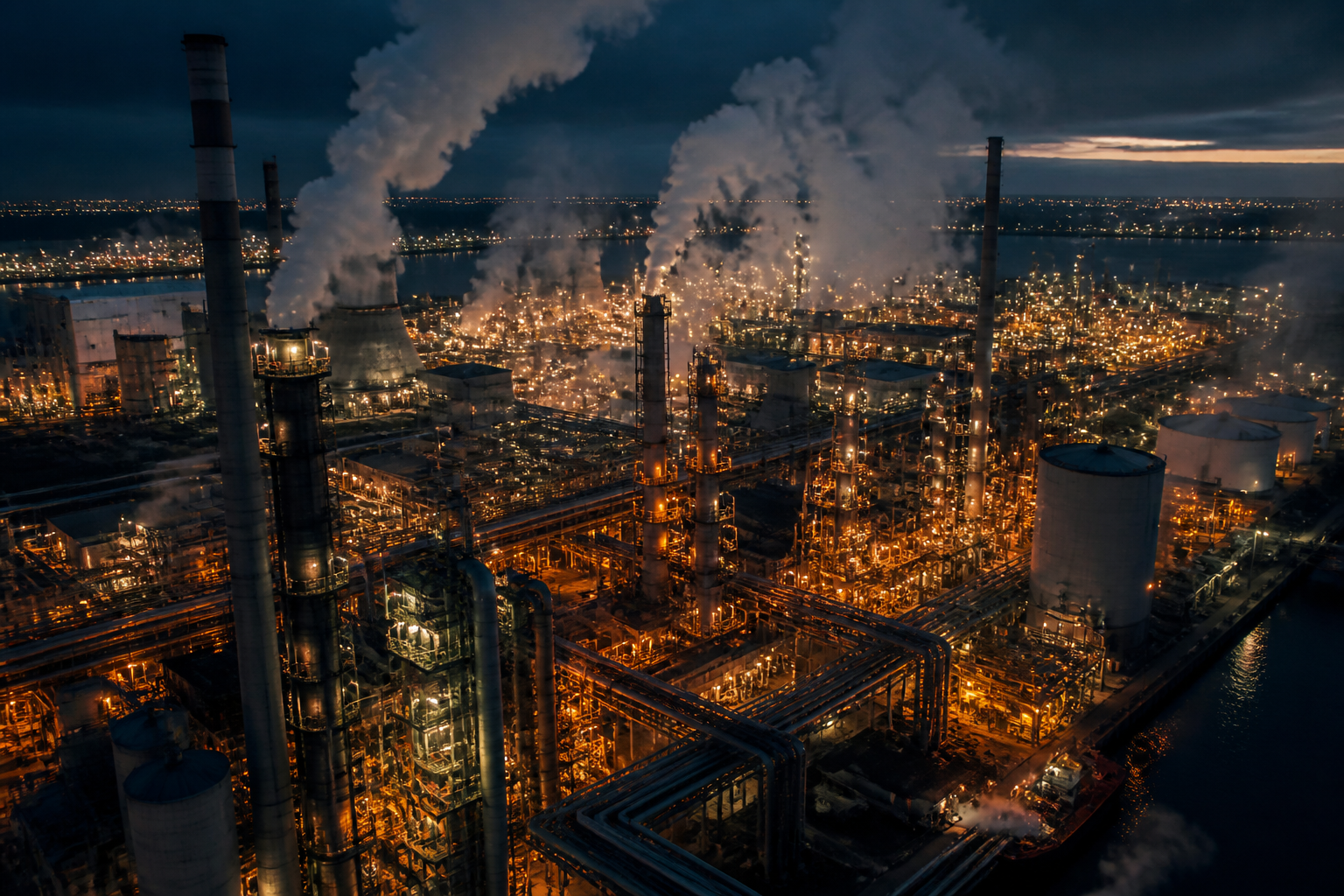
The fundamental tension in current energy markets lies in the widening crack spread, the difference between the price of crude oil and the refined products derived from it. Data from Deloitte Insights suggests that refined product prices have remained elevated even during periods when the underlying cost of crude has softened. This decoupling is a direct consequence of a global refining sector that is running at near-total capacity with very little margin for error. In the Eurozone, where recent business surveys have pointed to a surprise pickup in activity, the fragility of this energy balance is particularly acute. The manufacturing heartlands of Germany and northern Italy are especially sensitive to the costs of diesel and industrial lubricants, meaning that any disruption in the refining process is immediately felt in the form of compressed corporate margins. The scarcity of refining capacity is not a localized issue but a systemic one, as older facilities in North America and Europe have been decommissioned in anticipation of a green transition that has not yet fully replaced the logistical requirements of the fossil-fuel era. This has left the global market vulnerable to even minor technical failures or maintenance cycles at major hubs.
Geopolitical Tensions and the Sino-American Pivot
The broader energy narrative is inextricably linked to the shifting sands of diplomatic relations between the United States and China. The recent summit between President Xi Jinping and the American administration has highlighted the fragility of trade agreements that underpin the global industrial order. Companies like Boeing find themselves at the centre of these tensions, as energy-intensive sectors are often the first to suffer when trade de-escalation fails to materialize. The prospect of renewed tariffs or trade barriers between these two giants adds a layer of complexity to energy procurement. If the United States moves toward a more protectionist stance, as suggested by the recent political rhetoric surrounding the summit, the flow of energy-related technology and capital could be severely restricted. This is particularly concerning for the development of new energy infrastructure, which requires a high degree of international cooperation and a stable investment climate. The uncertainty surrounding these high-level summits creates a chilling effect on the long-term capital commitments needed to expand global energy supply, effectively locking in the current supply shock for a longer duration.
The European Dilemma and Transatlantic Alliances
Europe finds itself in a precarious position as it attempts to navigate the fallout from the energy crisis while maintaining its commitments to decarbonisation. The surprise resilience in Eurozone business activity, as reported by the Wall Street Journal, suggests a level of adaptability that few analysts predicted. However, this resilience is being tested by the high cost of energy imports. The continent is increasingly reliant on liquefied natural gas and refined imports from the United States and the Middle East, a shift that has fundamentally altered its trade balance. There is a growing concern that political shifts in North America could lead to a redirection of these flows. Discussion regarding whether a new American administration could block or redirect energy alliances, such as those forming between Canada and Europe, underscores the geopolitical risks inherent in the current market. European leaders are forced to weigh the benefits of cheap energy from politically volatile sources against the high cost of self-sufficiency. This struggle is not merely economic but existential, as the ability to maintain a manufacturing base depends entirely on the availability of affordable, reliable energy.
Fiscal Policy and the Inflationary Shadow
Treasury Secretary Scott Bessent’s observations on the state of the American economy provide a crucial lens through which to view the energy shock. Inflation, while cooling in some sectors, remains a potent threat due to the volatility of energy inputs. The American administration is attempting to manage a delicate balancing act, stimulating domestic production while trying to shield consumers from the global price spikes. The fiscal implications of sustained high energy prices are severe, as they necessitate higher interest rates for longer periods to combat the secondary inflationary effects. This environment creates a difficult climate for businesses that are already struggling with high debt-servicing costs. The energy shock acts as a regressive tax on both households and corporations, draining liquidity from the system and reducing the capital available for innovation. Furthermore, the reliance on strategic reserves to stabilize markets is a finite strategy that cannot substitute for structural increases in refining capacity or a more diversified energy mix. The fiscal room for manoeuvre is shrinking, leaving policy makers with few tools to address the next inevitable supply disruption.
The Transition Gap and Infrastructure Investment
One of the most significant challenges facing the energy sector is the gap between the retirement of legacy assets and the deployment of new, cleaner technologies. The market is currently stuck in a middle ground where investment in oil and gas is discouraged by climate mandates, yet the infrastructure for renewables and hydrogen is not yet ready to shoulder the full burden of global demand. This transition gap is a primary reason why refined product prices remain so high. Investors are hesitant to commit the billions of dollars required to build new refineries that may become stranded assets in twenty years. However, without that investment, the current shortage of refining capacity will persist, keeping prices elevated and volatility high. The energy sector requires a pragmatic approach that acknowledges the continued necessity of fossil fuels in the medium term while aggressively building the infrastructure of the future. The current policy environment, often characterized by rapid shifts and regulatory uncertainty, does little to encourage the long-term thinking required to bridge this gap effectively.
Strategic Foresight and the Road Ahead
Looking toward the end of the decade, the energy market is likely to remain characterized by a high degree of fragmentation and regionalism. The era of seamless global trade in energy appears to be receding, replaced by a system of strategic alliances and localized supply chains. The success of national economies will depend on their ability to secure not just raw energy, but the technological and industrial capacity to process it. The ongoing tension between the United States and China will continue to dictate the terms of global trade, with energy serving as a primary lever of geopolitical influence. For Europe, the challenge will be to maintain its industrial core in the face of structurally higher energy costs compared to its global peers. The surprise pickup in Eurozone business surveys provides a glimmer of hope, but it must be supported by a coherent and long-term energy strategy that moves beyond emergency measures. The global economy is on the other side of the initial shock, but the structural imbalances that the shock revealed are far from resolved. The path to stability requires a renewed focus on downstream capacity, a pragmatic approach to the energy transition, and a diplomatic effort to maintain the flow of essential commodities across increasingly divided borders.