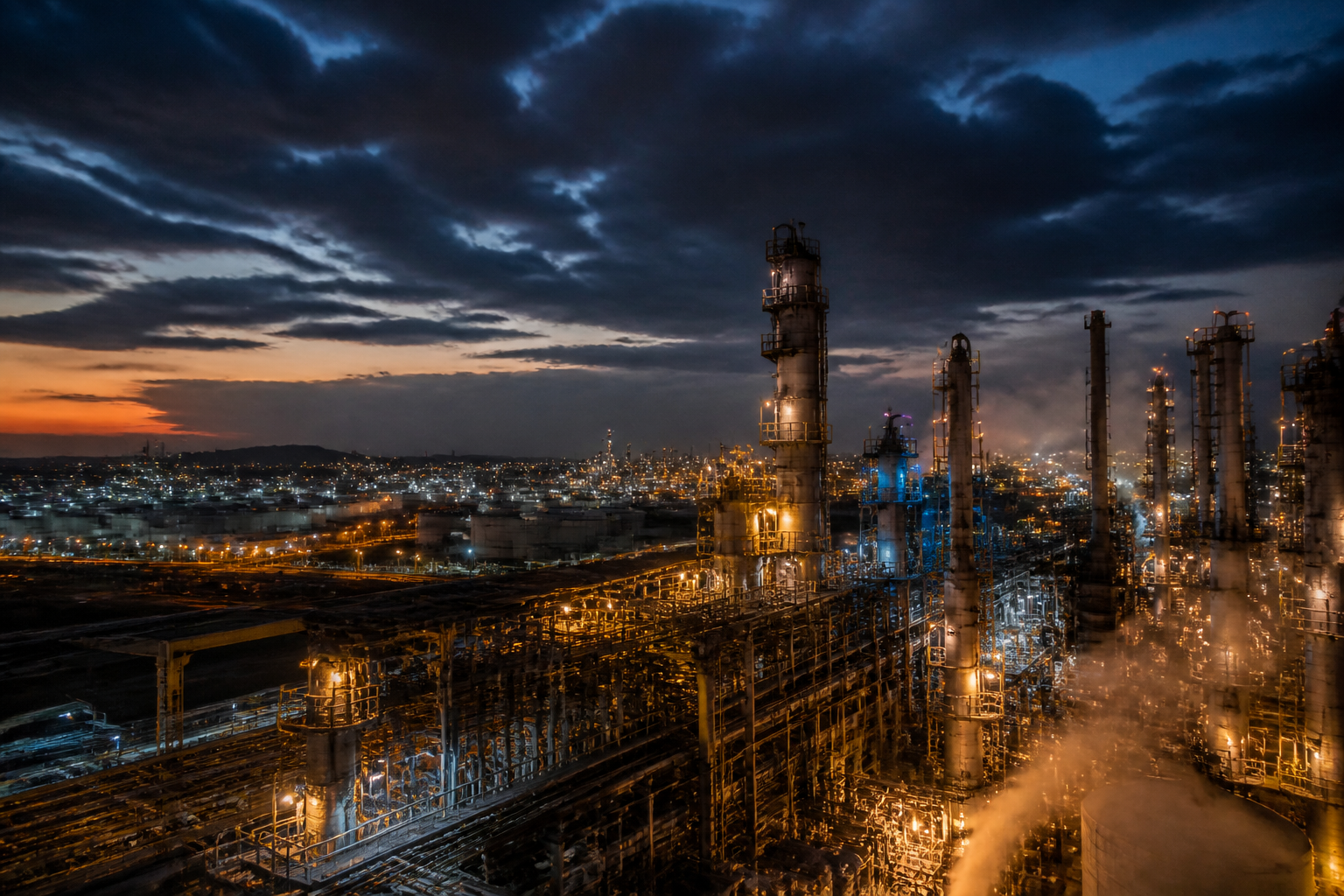
The Refined Reality: Navigating the Structural Shift in Global Energy Markets
A deep analysis of the decoupling between crude oil prices and refined products, exploring the systemic pressures on the United Kingdom's energy bills and the geopolitical tensions affecting international supply chains.
The global energy complex is currently navigating a period of profound structural realignment, characterized by a persistent and troubling divergence between the cost of raw crude oil and the market price of refined petroleum products. While headline Brent and West Texas Intermediate figures often capture the attention of casual market observers, the underlying reality for industrial consumers and households is one of sustained inflationary pressure that shows little sign of abating. This phenomenon, frequently described as the refining margin or the crack spread, has remained at historically elevated levels, suggesting that the bottleneck in global energy security has shifted from extraction to processing capacity. As the northern hemisphere approaches the colder months, the resilience of the global economy is being tested by this new paradigm, where even stable production levels at the wellhead fail to translate into relief at the fuel pump or the domestic boiler. The implications for central bank policy and sovereign fiscal stability are significant, particularly as political leaders attempt to balance the immediate demands of energy affordability with the long-term necessity of the green transition.
The Widening Chasm in Product Pricing
Recent data from Deloitte Insights highlights a critical imbalance that has come to define the post-pandemic energy landscape. Refined products, ranging from ultra-low sulphur diesel to aviation turbine fuel, are trading at premiums that far exceed historical norms relative to the price of crude oil. This dislocation is not merely a transient spike caused by seasonal demand, rather it reflects a systemic shortfall in global refining infrastructure. For decades, investment in traditional hydrocarbon processing has been curtailed by a combination of environmental regulatory pressures and a strategic pivot toward renewable energy sources. Consequently, the global refining fleet is operating near its nameplate capacity, leaving the market exceptionally vulnerable to even minor operational disruptions. When a refinery in the Gulf of Mexico or the Mediterranean undergoes unscheduled maintenance, the resulting supply shock is magnified, leading to price volatility that complicates the financial planning of logistics firms and manufacturing conglomerates alike. Businesses are finding it increasingly difficult to set long-term prices for their own goods when their primary input costs are subject to such erratic fluctuations.
British Domestic Pressures and the Burnham Mandate
In the United Kingdom, the intersection of global market trends and domestic policy has created a particularly acute crisis for the consumer. Analysis from Bloomberg Economics suggests that British energy bills could see a staggering jump of twenty-five percent in January, a development that threatens to undermine the central economic pillars of the current administration. Prime Minister Andy Burnham, who has staked significant political capital on easing the cost of living, faces a daunting challenge as international wholesale prices bypass domestic mitigation efforts. The British energy market remains uniquely exposed to the volatility of natural gas prices, which serve as the marginal price setter for electricity generation. Despite a push toward wind and solar, the intermittency of these sources requires a robust gas-backed baseload, which currently remains tethered to the whims of the European spot market. The projected increase in January is not merely a statistical anomaly, it represents a genuine threat to discretionary spending across the British economy, potentially dragging on Gross Domestic Product growth just as the country seeks to establish a new post-Brexit equilibrium.
Geopolitical Volatility and the Hormuz Factor
External shocks continue to be the primary driver of risk premiums in the energy sector, with the Middle East remaining the most volatile theatre of operations. Recent escalations, including attacks involving United States and Iranian interests, have sent tremors through the shipping lanes of the Strait of Hormuz. As one of the world's most critical maritime chokepoints, any threat to the free flow of tankers through this region has an immediate and visceral impact on global oil prices. For major integrated firms such as Chevron and ExxonMobil, these geopolitical tensions necessitate a complex balancing act between maximizing production and navigating a minefield of international sanctions and security risks. While Chevron has seen some gains following strategic deals involving Venezuelan assets, the overarching narrative remains one of uncertainty. The potential for a wider regional conflict that could physically obstruct energy exports remains a tail-risk that investors are finding increasingly expensive to hedge against, contributing to the persistent floor under global energy prices.
The Strategic Pivot of Integrated Majors
As the price environment remains elevated, the corporate strategies of the world's largest energy entities are under intense scrutiny. Firms like Halliburton and Schlumberger are seeing increased demand for sophisticated extraction and optimization technologies as producers seek to squeeze every possible drop of value from existing assets. However, the investment remains cautious. The boardrooms of these giants are haunted by the prospect of stranded assets in a decarbonizing world, leading to a preference for returning capital to shareholders via buybacks and dividends rather than embarking on massive new greenfield refinery projects. This capital discipline, while lauded by institutional investors on Wall Street and in the City of London, ensures that the current supply constraints in the refining sector will persist. The lack of new capacity means that the global economy must learn to operate within the limits of its current infrastructure, a reality that virtually guarantees that energy will remain a significant contributor to core inflation for the foreseeable future.
Corporate Uncertainty and the Pricing Dilemma
Across the Atlantic, American businesses are grappling with an environment where traditional pricing models have become obsolete. A recent report from the Wall Street Journal notes that many firms have no clear strategy for managing energy costs that refuse to return to pre-2020 averages. In sectors ranging from heavy manufacturing to retail, the inability to predict energy expenses is leading to a defensive posture in capital expenditure. If a firm cannot be certain of its utility costs six months from now, it is far less likely to commit to building a new factory or expanding its workforce. This institutional paralysis has broader implications for global productivity. When energy costs are high and unpredictable, the cost of doing business rises, and the resulting margin compression leads to a slowdown in innovation. The economic calendar is now watched with a level of anxiety usually reserved for interest rate decisions, as every data point regarding energy inventory or refinery utilisation is parsed for hints of future price direction.
A Forward Looking Perspective on Energy Security
Looking ahead toward the end of the decade, the narrative of energy markets will likely be defined by the tension between the immediate need for hydrocarbon reliability and the long-term goal of electrification. The current crisis in refined product pricing serves as a stark reminder that the transition to a greener economy cannot be achieved by simply starving the old system of investment before the new system is fully ready to take the mantle. Policy makers must adopt a more nuanced approach, one that encourages the modernization and efficiency of existing refineries even as they subsidize the rollout of heat pumps and electric vehicle infrastructure. For the United Kingdom and the broader European Union, the path forward involves a diversification of supply that prioritizes regional security over the lowest possible cost. We should expect a continued era of high energy prices, driven by the dual pressures of geopolitical instability and the structural costs of transitioning the global industrial base. Investors and businesses should prepare for a world where energy is no longer a cheap, invisible commodity, but rather a strategic, high-cost input that requires constant and expert management. The stability of the global economic order may well depend on how successfully nations navigate this refined reality, ensuring that the lights stay on and the wheels of industry turn, even as the price of doing so continues to climb.