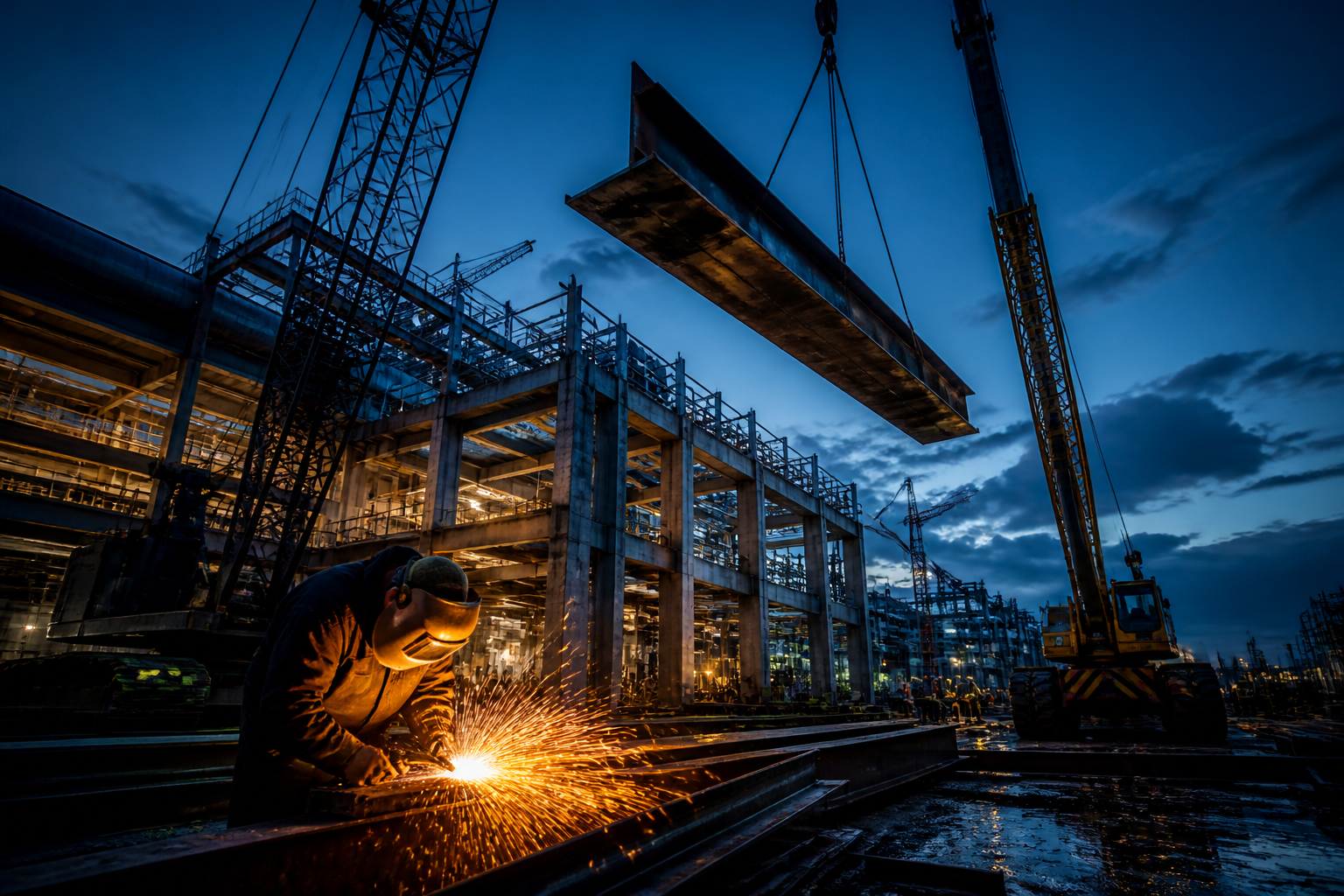
The Strategic Imperative: Rebuilding Industrial Sovereignty In A Volatile Global Market
As Treasury bond buybacks and geopolitical tensions reshape the global landscape, we examine the critical pivot toward domestic industrial infrastructure and the urgent need for workforce development in the West.
The global economic architecture is currently enduring a period of profound structural realignment, characterized by a return to industrial dirigisme and a heightening of geopolitical friction that has not been witnessed in decades. While financial markets have been momentarily calmed by the United States Treasury and its aggressive maneuvers to rein in yields through doubled bond buybacks, the underlying volatility signals a deeper anxiety regarding the long-term sustainability of the current order. This volatility is compounded by the looming prospect of a renewed economic confrontation with Iran, described by some as an impending economic D-Day, which threatens to further destabilise energy markets and supply chains. In this climate, the physical infrastructure of a nation is no longer merely a utility but a primary instrument of statecraft and economic survival. The transition from a services-dominated economy back toward a robust manufacturing and industrial base requires more than just capital, it demands a radical reimagining of the logistical and human infrastructure that supports it.
The New Treasury Orthodoxy And Capital Allocation
The recent intervention by the United States Treasury to stabilize the bond market serves as a stark reminder of the fragility inherent in contemporary fiscal policy. By doubling bond buybacks, the authorities have effectively acknowledged that the threat of a yield-driven recession is too great to ignore, particularly as the cost of servicing sovereign debt continues to climb. For the infrastructure sector, this move provides a temporary window of liquidity, yet it also underscores the precariousness of long-term project financing. Institutional investors are increasingly looking for tangible assets that can weather the inflationary pressures and the whiplash of interest rate cycles. As capital migrates toward safer havens, the focus has shifted toward high-utility infrastructure such as energy grids, advanced manufacturing facilities, and transport hubs. These assets provide the essential backbone for the next phase of economic development, serving as a hedge against the ephemeral nature of digital and financial markets. The challenge for policymakers now lies in ensuring that this stabilized capital is directed toward productive industrial capacity rather than speculative ventures, a task that requires a sophisticated understanding of how physical assets drive national productivity.
Geopolitical Tensions As A Catalyst For Domestic Re-shoring
The rhetoric surrounding the isolation of Iran and the promise of severe economic pressure marks a significant pivot in global trade relations. This stance, often articulated with the intensity of a military campaign, suggests that the era of unfettered globalization is rapidly being replaced by a system of regional blocs and strategic decoupling. For Western economies, the implications are clear, they must secure their own supply chains or face the consequences of systemic vulnerability. The reliance on external partners for critical components, ranging from microchips to heavy machinery, is being reassessed under the lens of national security. Infrastructure is the primary beneficiary of this strategic shift, as the construction of new semiconductor foundries and battery production plants becomes a matter of urgent public policy. Companies such as Caterpillar are already responding to these trends by investing heavily in regional hubs, ensuring that the machinery required for this industrial renaissance is produced closer to the point of consumption. This movement toward domestic self-sufficiency is not merely a reaction to external threats but a proactive attempt to capture the high-value segments of the global value chain.
The Human Infrastructure Deficit And Workforce Initiatives
No amount of capital investment in physical facilities can succeed without a concurrent investment in human capital. The recent launch of a three million dollar workforce initiative in Arkansas by Caterpillar serves as a microcosm of a much larger challenge facing the industrial West. For decades, the emphasis on tertiary education in the liberal arts and services has led to a significant skills gap in the technical and vocational sectors. The modern factory is no longer a site of unskilled labor, it is a high-technology environment that requires proficiency in robotics, data analytics, and precision engineering. Bridging this gap requires a collaborative effort between the private sector and educational institutions to create specialized training programs that reflect the needs of a 21st-century economy. As artificial intelligence continues to reshape the job market, the demand for workers who can manage and maintain the physical infrastructure of these AI hubs is growing exponentially. The ability of a region to attract and retain a skilled workforce is now a key metric in site selection and economic development, far outweighing traditional incentives such as tax breaks or cheap land.
China And The Challenge Of Manufacturing Dominance
The dominance of China in the manufacturing of electric vehicles, batteries, and other green technologies presents a formidable challenge to the established order. By purging corruption and streamlining its state-owned enterprises, Beijing has created a manufacturing powerhouse that can produce at a scale and efficiency that is difficult for Western firms to match. This capability is not just an economic advantage, it is a geopolitical tool that allows China to exert influence over the global energy transition. The response from the West has been a mixture of protectionist measures and massive subsidies, such as those found in the Inflation Reduction Act. However, these policies can only be effective if they are accompanied by a modernization of the physical infrastructure required to support these new industries. This includes the expansion of the electrical grid to accommodate increased demand from electric vehicles and the development of specialized ports and rail links to handle the movement of bulky industrial components. The competition is no longer just about who can design the best technology, it is about who can build the infrastructure to support its mass adoption.
Artificial Intelligence As The Engine Of Infrastructure Growth
Recent reports from organizations such as CBRE highlight the transformative impact of artificial intelligence on the demand for specialized infrastructure. The growth of AI jobs is concentrated in North American hubs that possess the unique combination of high-speed digital connectivity and reliable energy supplies. Data centres, once considered peripheral assets, have become the central nodes of the modern economy, requiring unprecedented levels of cooling infrastructure and power redundancy. This surge in demand is placing a significant strain on existing utilities, necessitating a massive wave of investment in energy generation and transmission. The convergence of AI and physical infrastructure creates a virtuous cycle, where the insights generated by AI can be used to optimize the operation of the grid, while the growth of the AI sector drives the demand for new construction. For cities and regions, becoming a hub for AI is not just about attracting software developers, it is about building the physical foundations that allow these technologies to thrive in a competitive global market.
The Strategic Outlook For Industrial Resilience
Looking ahead, the success of the global economy will be determined by the ability of nations to balance the needs of the digital future with the requirements of the industrial past. The current era of treasury volatility and geopolitical posturing is unlikely to subside in the near term, making the case for infrastructure investment even more compelling. The focus must remain on building resilience into every layer of the economy, from the supply of raw materials to the training of the next generation of technicians. As we move toward a more fragmented and competitive global landscape, those nations that have invested in their physical and human infrastructure will be best positioned to lead. The task is immense, requiring a sustained commitment from both the public and private sectors, yet the costs of inaction are far greater. By prioritizing the development of robust, domestic industrial bases and the infrastructure that supports them, the West can ensure its continued relevance and prosperity in an increasingly uncertain world. The coming years will be a test of whether the current impetus for renewal can be sustained or whether it will falter in the face of political and economic headwinds.