The Twilight Of The Infrastructure Investment And Jobs Act
This editorial examines the looming expiration of the Bipartisan Infrastructure Law in 2026, the shift toward a forty-five billion dollar state-led investment model, and the regulatory tensions surrounding autonomous transit.
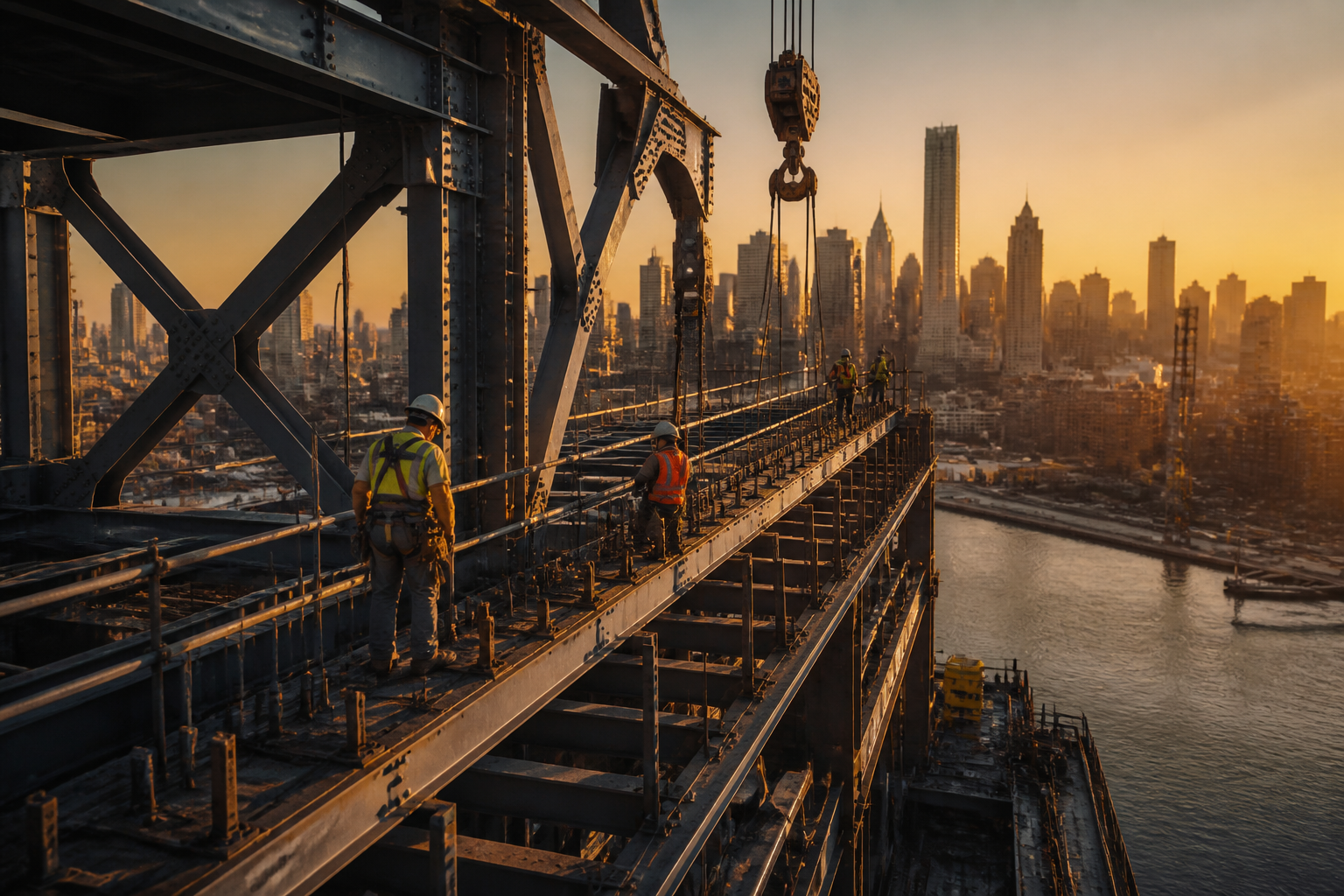
The impending conclusion of the Bipartisan Infrastructure Law in September 2026 marks a pivotal juncture for the American economic landscape, signaling the end of an era of historic federal largesse. In cities like Philadelphia, the tangible manifestations of this capital infusion are visible in the skeletal frames of the Christian to Crescent Connector Bridge and the comprehensive modernisation of airport transit corridors. Yet, as the Philadelphia Infrastructure Solutions Team prepares its final progress reports, the broader discourse is shifting from the jubilation of construction to the anxiety of fiscal sustainability. The sunsetting of this federal mandate necessitates a fundamental re-evaluation of how metropolitan centres maintain the momentum of urban renewal without the safety net of Washington. This transition is not merely a budgetary hurdle but a systemic challenge that will define the competitive standing of American logistics and livability for the next decade.
The Fiscal Cliff Of Municipal Ambition
The expiration of the Bipartisan Infrastructure Law represents a looming deadline that threatens to truncate several multi-year civil engineering projects currently in their infancy. In Philadelphia, where the administration has documented significant economic progress through the 2026 Infrastructure Solutions Team, the stakes remain exceptionally high. The city has utilised federal grants to address foundational issues ranging from the provision of potable water to the enhancement of pedestrian safety in high-traffic districts. However, the reliance on one-time federal injections has created a precarious dependency. As the September 2026 deadline approaches, municipal leaders are forced to confront the reality that the next phase of development must be anchored by local revenue streams or innovative private-sector partnerships. This shift is mirrored across the North American continent, where the initial euphoria of renovated transport hubs is being replaced by a sober assessment of long-term maintenance liabilities.
A Forty-Five Billion Dollar Blue Print
While federal support begins its inevitable retreat, certain states are attempting to fill the vacuum with aggressive domestic spending programmes. North Carolina recently unveiled an Economic Blue Print that outlines a staggering forty-five billion dollars in projected spending over the coming six years. This plan, which encompasses public highways, hospitals, and educational facilities, serves as a significant case study in regional autonomy. By prioritising a diversified portfolio of physical assets, the state aims to insulate its economy from the volatility of federal legislative cycles. The inclusion of healthcare and education infrastructure within this blueprint acknowledges that economic productivity is as much a function of human capital as it is of asphalt and steel. Nevertheless, the success of such an ambitious local mandate depends entirely on the resilience of state tax bases and the ability to attract external investment in an environment of fluctuating interest rates.
The Regulatory Conflict Of Autonomous Transit
The future of American mobility is currently being debated in the sterile corridors of regulatory agencies, where the tension between innovation and safety is most palpable. Tesla, under the leadership of Elon Musk, continues to push the boundaries of vehicle design with its Cybercab, a vehicle notably absent of traditional steering mechanisms. Federal regulators have recently opened a rigorous probe into whether such designs conflict with established safety standards, questioning the feasibility of human intervention in emergency scenarios. This conflict illustrates a broader philosophical divide in infrastructure planning. While the tech sector advocates for a rapid transition to fully autonomous networks that promise to reduce congestion and human error, the state remains tethered to a cautious framework of liability and public protection. The outcome of these investigations will dictate the architectural requirements of future roadways, determining whether they must accommodate traditional human-operated vehicles or if they can be optimised for a seamless, AI-driven transport grid.
Institutional Capital And Emerging Markets
The broader investment climate is undergoing a recalibration as global asset managers seek yield in a post-inflationary world. The BlackRock Investment Institute has recently moved to an overweight position on emerging market equities, reflecting a belief that the long-term growth potential in these regions outweighs the immediate geopolitical risks. This shift in institutional appetite has direct implications for domestic infrastructure projects. As global capital flows toward high-growth markets in Asia and Latin America, American infrastructure must compete with increasingly attractive international alternatives. The U.S. Chamber of Commerce has noted that the domestic housing crisis and the need for small-business integration are critical components of a stable investment environment. To retain the interest of institutional titans, American infrastructure projects must demonstrate not only social utility but also a clear and transparent path to profitability, free from the entanglements of protracted bureaucratic delay.
The Resilience Of The Urban Fabric
The discourse surrounding infrastructure often focuses on the grand scale of bridges and highways, yet the true measure of success lies in the resilience of the urban fabric. In Baltimore, initiatives such as the Build Forward programme demonstrate how targeted investment in housing and small-business support can create a multiplier effect within the local economy. Infrastructure is the scaffolding upon which social mobility is built. When a city invests in safer streets and reliable water systems, it is essentially lowering the barriers to entry for commercial activity. The success of the 2026 Philadelphia progress report suggests that when civil engineering is aligned with community needs, the resulting economic opportunities are both profound and measurable. The challenge for the coming years will be to ensure that these local victories are not erased by the withdrawal of federal oversight, necessitating a more robust role for state-level governance and philanthropic participation.
Strategic Outlook For The Next Decade
Looking toward the conclusion of the current decade, the trajectory of infrastructure development appears to be moving toward a model of decentralised funding and technological integration. The sunsetting of the Bipartisan Infrastructure Law should not be viewed as a terminal point but as a catalyst for a more sustainable, market-driven approach to public works. We anticipate a surge in public-private partnerships where the risks of large-scale construction are shared between the taxpayer and the institutional investor. Furthermore, the resolution of the current regulatory standoff regarding autonomous vehicles will likely pave the way for a new generation of smart infrastructure that prioritises data connectivity as much as physical durability. Those regions that can successfully marry the forty-five billion dollar spending models seen in the South with the technological ambition of Silicon Valley will be the ones that thrive. The era of the federal blank cheque is ending, and in its place, a more disciplined, innovative, and competitive landscape is beginning to emerge. The focus must now shift to the legacy of these investments, ensuring that the foundations laid during this brief period of federal abundance are capable of supporting the economic demands of the mid-twenty-first century.