The Strategic Bifurcation: Navigating Energy Security and Global Sustainability Disparity
A deep analysis of the widening gulf in global energy strategies, where China's rapid renewable expansion contrasts with Western preoccupations with short-term security and the volatility of fossil fuel markets.
The global energy landscape is currently defined by a profound and unsettling paradox. Whilst the imperative for a decarbonised future has never been more scientifically urgent, the immediate geopolitical reality has forced a regression into the protective embrace of traditional energy security. Recent market movements, characterised by muted oil prices amidst delicate diplomatic negotiations between Washington and Tehran in Switzerland, underscore a tenuous stability that masks deeper structural fractures. As the World Economic Forum recently observed, the energy transition is no longer a synchronised global movement but a fragmented series of regional pivots. This fragmentation reflects a fundamental tension between the long-term goal of equity and the short-term necessity of security, creating a strategic bifurcation that could define the economic hierarchy of the mid-twenty-first century.
The Divergent Paths of China and the West
Nowhere is this fragmentation more evident than in the contrasting trajectories of the world’s two largest economies. China is currently positioned approximately five years ahead of its wind and solar installation targets, a feat of industrial mobilisation that underscores Beijing’s view of the energy transition as a matter of both national security and global competitive advantage. By monopolising critical mineral supply chains and outspending the West in photovoltaic manufacturing, China is not merely transitioning its energy mix; it is re-engineering the global supply chain to revolve around its domestic industrial base. This proactive stance contrasts sharply with the reactionary posture often seen in Western capitals, where the focus remains stubbornly fixed on mitigating the inflationary pressures of fossil fuel volatility rather than aggressively de-risking the future through infrastructure investment.
Deloitte’s latest economic insights suggest that while the United States and the European Union have introduced significant legislative frameworks, such as the Inflation Reduction Act and the Green Deal Industrial Plan, the actual implementation faces significant headwinds. High interest rates, dictated by central banks' efforts to curb persistent inflation, have increased the cost of capital for capital-intensive renewable projects. In the West, the energy transition is being treated as a market-led evolution, whereas in the East, it is treated as a state-led imperative. This difference in approach is creating a disparity in scale and speed that may soon become insurmountable for European and American manufacturers who lack the same level of integrated state support.
Geopolitics and the Fragility of Oil Markets
The current state of the petroleum market serves as a stark reminder of the fragile peace upon which the global economy rests. The recent cooling of prices is not a sign of fundamental oversupply but rather a reflection of the market’s cautious optimism regarding diplomatic overtures in the Middle East and the potential for a renewed understanding between Iran and the West. However, as noted by analysts monitoring the Federal Reserve's latest decisions, the broader economic sentiment remains cautious. The interplay between central bank policy and energy prices creates a feedback loop that continues to destabilise long-term planning. When the Fed maintains a restrictive stance to combat inflation, much of which was originally driven by energy shocks, it inadvertently stifles the investment needed to move away from the very fuels causing the volatility.
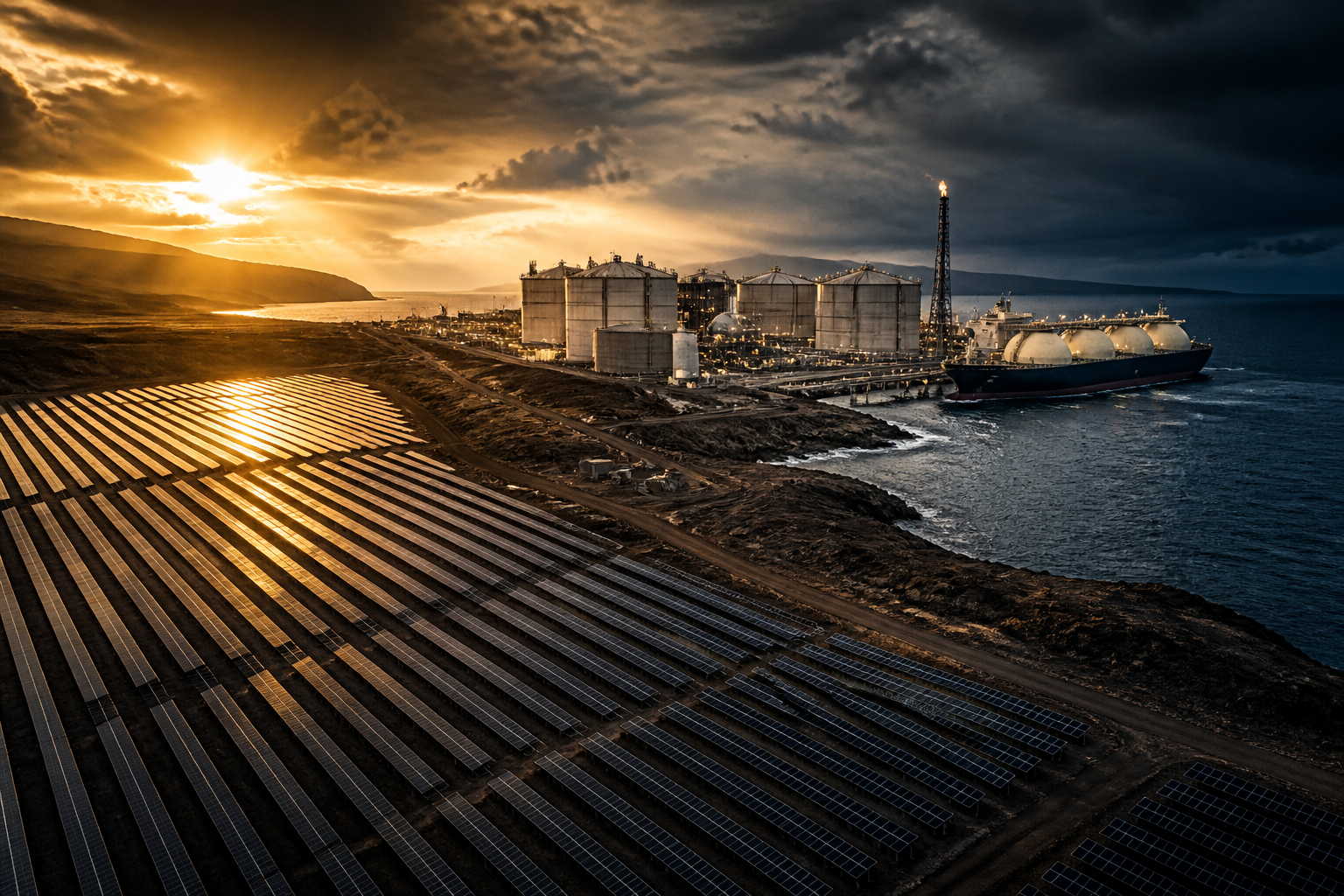
Furthermore, the pivot towards energy security has seen a resurgence in coal and liquefied natural gas (LNG) as reliable backstops. Germany’s rapid construction of LNG terminals and Britain’s renewed interest in North Sea exploration are pragmatic responses to the loss of Russian pipeline gas, but they represent a diversion of capital away from the sub-sectors required for a total transition. This 'security-first' mantra has fragmented the global movement, as developing nations, particularly in the Global South, find themselves priced out of both the gas markets and the technologies required for a green leapfrog. The equity that the World Economic Forum identifies as suffering is the most significant casualty of this shift, as the divide between energy-wealthy and energy-poor nations deepens.
The Capital Cost of Transition Frustration
The financial apparatus underpinning the energy sector is currently navigating a period of intense reappraisal. Institutional investors, once vocal about Environmental, Social, and Governance (ESG) mandates, are now facing a reality where traditional energy stocks have outperformed green indices in the short term. This has led to a cooling of rhetoric and a more forensic approach to transition finance. The economic calendar, as tracked by major financial institutions, shows a marked increase in the scrutiny of earnings reports from green energy giants like Orsted and Siemens Energy, both of which have faced significant setbacks due to supply chain disruptions and escalating costs. The difficulty lies in the fact that the transition is not merely a technological switch but a wholesale replacement of the global industrial infrastructure.
For the European Union, the challenge is exacerbated by a lack of coordinated fiscal policy. While the United States can deploy a singular federal incentive structure, European nations are often bogged down by domestic political pressures and the constraints of the Eurozone’s fiscal rules. This creates a fragmented investment environment that deters the massive, long-term capital commitments required for projects like green hydrogen or large-scale offshore wind. Without a unified approach to lowering the cost of capital for transition technologies, the West risks falling into a 'transition trap,' where it is too expensive to go green but too volatile to stay with fossil fuels.
The Strategic Imperative of Mineral Sovereignty
Central to the current energy discourse is the concept of mineral sovereignty. The energy transition is effectively a shift from a fuel-intensive system to a material-intensive one. The demand for lithium, cobalt, nickel, and rare earth elements is projected to grow exponentially, yet the processing and refining of these materials remain heavily concentrated in a handful of geographies. China’s dominance in this sector is perhaps the most significant strategic challenge facing the G7 nations. Recent efforts to diversify supply chains, such as the Minerals Security Partnership, are a step towards addressing this vulnerability, but they are hampered by the long lead times required to bring new mines and refineries online.
This bottlenecks the ambitions of automotive manufacturers and battery producers in North America and Europe. Companies like Tesla and Volkswagen are increasingly being forced to secure direct agreements with mining firms, bypassing traditional middlemen to ensure a stable supply of materials. However, this race for resources is also creating new geopolitical tensions, as the competitive pursuit of 'green' minerals often leads to environmental degradation and social instability in the nations where these resources are located. The irony of damaging the environment to save the climate is not lost on international observers, and it highlights the need for a more circular economy based on recycling and material efficiency, rather than just extraction.
Institutional Inertia and the Regulatory Gap
The pace of technological innovation is currently far outstripping the pace of regulatory and institutional reform. Grid modernisation remains one of the most significant hurdles to the integration of renewable energy. In the United Kingdom and across much of the United States, solar and wind projects are facing wait times of up to a decade to connect to the national grid. This institutional inertia acts as a de facto tax on the energy transition, increasing the risk for developers and the cost for consumers. The existing grid infrastructure, designed for a hub-and-spoke model of centralised power plants, is fundamentally unsuited for the bidirectional, intermittent nature of renewable energy.
Addressing this requires a fundamental shift in how we value and regulate utilities. It requires a move towards a 'smart grid' that can manage demand dynamically and integrate distributed energy resources. However, the regulatory frameworks in most developed economies are still geared towards maintaining low prices in the short term, rather than incentivising the long-term capital expenditure required for modernisation. Without a radical overhaul of the regulatory landscape, the energy transition will remain stalled by the very institutions designed to manage it. This is a failure of governance that could have profound implications for national competitiveness as the world moves toward a more electrified future.
Toward a New Energy Realism
As we look toward the horizon, it is clear that the energy transition will not be the smooth, linear progression many had hoped for. Instead, we are entering an era of 'new energy realism,' where the pursuit of sustainability must be tempered by the realities of geopolitics, inflation, and industrial capacity. The next five years will be decisive. If Western economies cannot find a way to lower the cost of capital for green projects and secure their supply chains for critical minerals, the strategic advantage will tilt decisively in favour of those who have already integrated their industrial and energy policies.
Success in this new era will require a more nuanced understanding of international cooperation. While competition is inevitable, the sheer scale of the energy challenge demands a level of coordination that transcends current geopolitical rivalries. The forthcoming meetings between world leaders and the ongoing climate dialogues must address the fragmentation that is currently undermining global progress. For investors and policymakers alike, the key will be to balance the immediate need for energy security with the long-term necessity of a sustainable and equitable energy system. Those who can navigate this complexity, anticipating the shifts in policy and the breakthroughs in technology, will be the ones who lead the global economy into its next phase of development. The stakes could not be higher, and the window for effective action is narrowing.