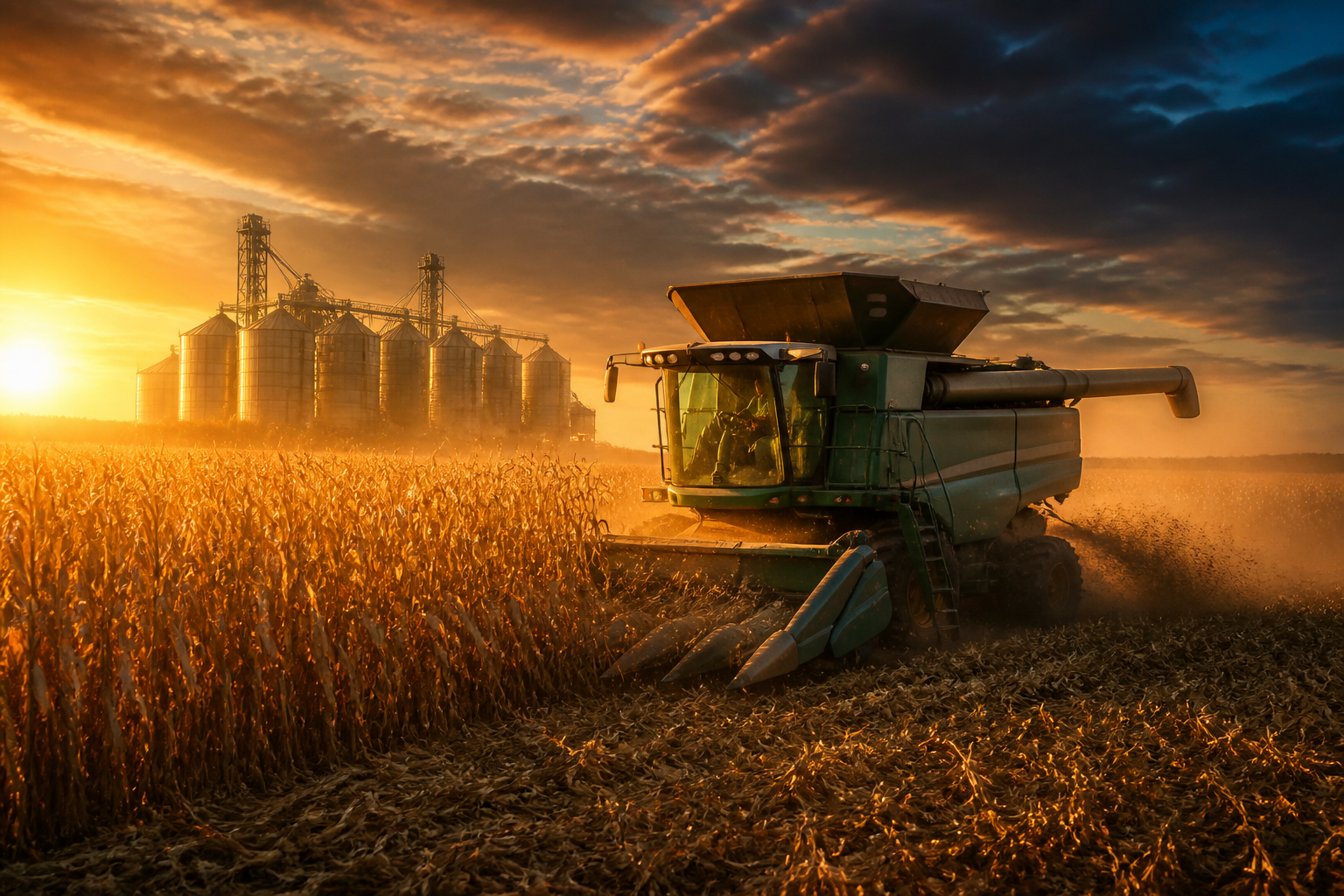
The Squeeze On The Heartland: Navigating The Structural Erosion Of Agricultural Margins
A deep dive into the systemic pressures facing the corn and soybean sectors, examining how rising inputs, geopolitical shifts, and technological mandates are reshaping the economic viability of the modern farmstead.
The global agricultural apparatus is currently navigating a period of profound structural dissonance, where the immense physical productivity of the land is increasingly decoupled from the financial solvency of those who tend it. Recent data from the United States Department of Agriculture and international market monitors suggest that while grain volumes remain robust, the underlying economics of the sector are fraying under the weight of compressed margins. This paradox of plenty is particularly evident in the American Midwest and the broader grain belts of the Western Hemisphere, where record harvests are frequently met with depressed prices and an unrelenting rise in the cost of inputs. As the industry grapples with the transition from a period of high commodity valuations to a more austere fiscal reality, the resilience of the global food supply chain is being tested not by a scarcity of produce, but by a scarcity of profit. The situation demands a rigorous interrogation of the factors driving this margin compression, from the inflationary pressures on seeds and fertilisers to the shifting geopolitical dynamics that dictate the flow of trade.
The Paradox Of Productivity And Price
The fundamental challenge facing the modern grower is the widening chasm between gross production value and net income. In regions such as Butte County, the agricultural industry has reported impressive gross figures, yet these numbers often mask a more complex narrative of diminishing returns. For instance, while the rice industry in certain locales saw a slight decrease in production per acre, the expansion of planted acreage allowed for a modest increase in total value. However, such gains are frequently offset by the rising costs of land management, water rights, and mechanical upkeep. The National Agricultural Statistics Service highlights a trend where the volume of output no longer serves as a reliable hedge against market volatility. This is particularly acute in the corn and soybean sectors, where despite recent incremental rises in market prices, the overarching pressure on margins remains severe. The cost of doing business in the agricultural sector has undergone a permanent upward shift, driven by the global energy transition and the increasing sophistication of agricultural machinery, leaving little room for error in the seasonal balance sheet.
Input Inflation And The Seed Monopoly
A critical component of the current margin squeeze is the escalating cost of proprietary technologies, specifically in the realm of seeds and chemical inputs. The consolidation of the global seed market has granted a handful of multinational corporations significant pricing power, which in turn places a heavy burden on the individual producer. As growers strive to maintain yields in the face of changing climatic conditions, the reliance on high-tech, drought-resistant, or pest-resistant cultivars becomes a mandatory expense rather than a discretionary investment. This technological dependency, while beneficial for aggregate food security, creates a rigid cost structure that does not fluctuate in tandem with the price of the harvested crop. When corn and soybean prices experience downward pressure, the fixed costs of these inputs do not recede, creating a fiscal trap for the mid-sized family farm. The irony of the situation is that the very innovations designed to protect the farmer against environmental risk have introduced a new form of systemic financial risk, whereby the price of entry into the market is perpetually rising.
The Ethanol Engine And Global Demand
The role of American-grown corn extends far beyond the silos of the Midwest, serving as a primary driver for both the global food supply and the burgeoning biofuels industry. Institutions such as East Kansas Agri-Energy exemplify the dual nature of modern grain production, where the crop is as much an energy commodity as it is a dietary staple. Economists from the USDA Economic Research Service, including Karen Maguire and Steven Ramsey, have noted that the integration of agriculture and energy has provided a vital floor for demand, yet this relationship is not without its complications. The volatility of the global oil market now bleeds directly into the agricultural sector, influencing the viability of ethanol production and, by extension, the price of corn. As the world moves towards a more decarbonised economy, the agricultural sector finds itself at a crossroads, where the demand for bio-based fuels must be balanced against the necessity of food sovereignty. This dual mandate adds a layer of complexity to market forecasting, as farmers must now monitor legislative shifts in energy policy with the same scrutiny they once reserved for weather patterns.
Geopolitical Tensions And Trade Flows
The international trade environment for agricultural commodities has become increasingly fragmented, influenced by the shifting alliances of the twenty-first century. The Agricultural and Processed Food Products Export Development Authority, alongside other international trade bodies, has highlighted the impact of protectionist policies and trade disputes on the flow of grains. For the grain producers of the Western Hemisphere, the reliance on large-scale export markets such as China remains a source of both opportunity and vulnerability. Any disruption in these trade corridors, whether due to diplomatic friction or the rise of competing producers in Brazil and Argentina, can lead to immediate domestic surpluses and subsequent price collapses. The global grain market is no longer a simple matter of supply and demand, it is a sophisticated arena of statecraft where agricultural exports are often used as leverage in broader economic negotiations. This geopolitical uncertainty makes long-term planning difficult for growers who must commit to planting cycles months or even years before the ultimate destination of their produce is secured.
The Burden Of Debt And Infrastructure
Behind the pastoral imagery of the agricultural industry lies a massive infrastructure of debt and capital investment. The modern farm is a high-leverage enterprise, requiring significant loans to cover the purchase of land, advanced harvesting equipment, and seasonal operating expenses. As interest rates have remained elevated to combat broader economic inflation, the cost of servicing this debt has become a significant drain on farm liquidity. The infrastructure required to move grain from the field to the global market, including rail networks, grain elevators, and port facilities, also requires constant reinvestment. In many regions, the aging nature of this infrastructure adds to the logistical costs borne by the producer. When margins are tight, the ability to reinvest in the farmstead is diminished, leading to a slow erosion of competitiveness. This cycle of debt and underinvestment is a silent threat to the long-term health of the sector, as it discourages the next generation of farmers from entering an industry that appears increasingly stacked against the independent operator.
Technological Adaptation As A Survival Strategy
In response to these mounting pressures, the agricultural sector is undergoing a rapid digital transformation, aimed at squeezing every possible efficiency from the land. The adoption of precision agriculture, which uses satellite imagery and soil sensors to optimize the application of water and fertilisers, is no longer a luxury for the avant-garde farmer, it is a survival strategy. By reducing waste and maximizing the effectiveness of every input, growers are attempting to claw back the margins lost to inflation and market volatility. However, the capital required to implement these systems is substantial, further widening the gap between large-scale corporate operations and smaller independent farms. The rise of data-driven farming also introduces new questions regarding data ownership and the role of technology providers in the agricultural ecosystem. As the industry becomes more reliant on algorithms to dictate planting schedules and harvesting windows, the traditional knowledge of the farmer is being augmented, and in some cases replaced, by a digital architecture that prioritises efficiency above all else.
A Forward-Looking Outlook On Agricultural Resilience
The trajectory of the agricultural sector over the coming decade will be defined by its ability to navigate a landscape of permanent volatility. The era of cheap inputs and predictable trade relations appears to have concluded, replaced by a more complex and contested reality. While the demand for food and fuel will continue to grow alongside the global population, the financial sustainability of the producers who meet this demand is not guaranteed. Policymakers and industry leaders must address the structural imbalances that allow for record production in the face of declining farm incomes. This may require a fundamental rethinking of crop insurance, trade agreements, and the regulation of agricultural monopolies. The resilience of the global food system depends not just on the fertility of the soil, but on the economic health of the farming community. Unless a more equitable distribution of value is achieved across the agricultural supply chain, the squeeze on the heartland will continue to threaten the very foundations of international food security, necessitating a shift from a focus on sheer volume to a focus on sustainable, long-term profitability.