The New Agrarian Resilience: Navigating Trade Volatility and Climatic Disruption
A deep analysis of the shifts in global agriculture, exploring how state-led financing in Canada, trade tariffs in the United States, and El Niño patterns are forcing a fundamental rethink of agrifood logistics.
The global agrifood sector is currently traversing a period of profound structural adjustment, characterized by the intersection of escalating protectionist trade policies, volatile climatic patterns, and a fundamental shift in how sovereign states finance domestic production. As the United States Department of Agriculture provides increasingly granular data on production fluctuations, it becomes evident that the era of unfettered agricultural globalization is yielding to a more fragmented, security-orientated model. The recent introduction of significant tariff barriers and the subsequent response from trading partners have forced a re-evaluation of supply chain dependencies. This shift is not merely a tactical response to short-term geopolitical friction but represents a strategic pivot toward what policymakers describe as agricultural self-reliance. From the investment corridors of Ottawa to the drought-stressed plains of Mexico, the industry is grappling with a dual mandate to increase yields while insulating itself from the whims of international trade disputes and the intensifying unpredictability of the El Niño-Southern Oscillation.
The Strategic Pivot Toward Domestic Processing and Finance
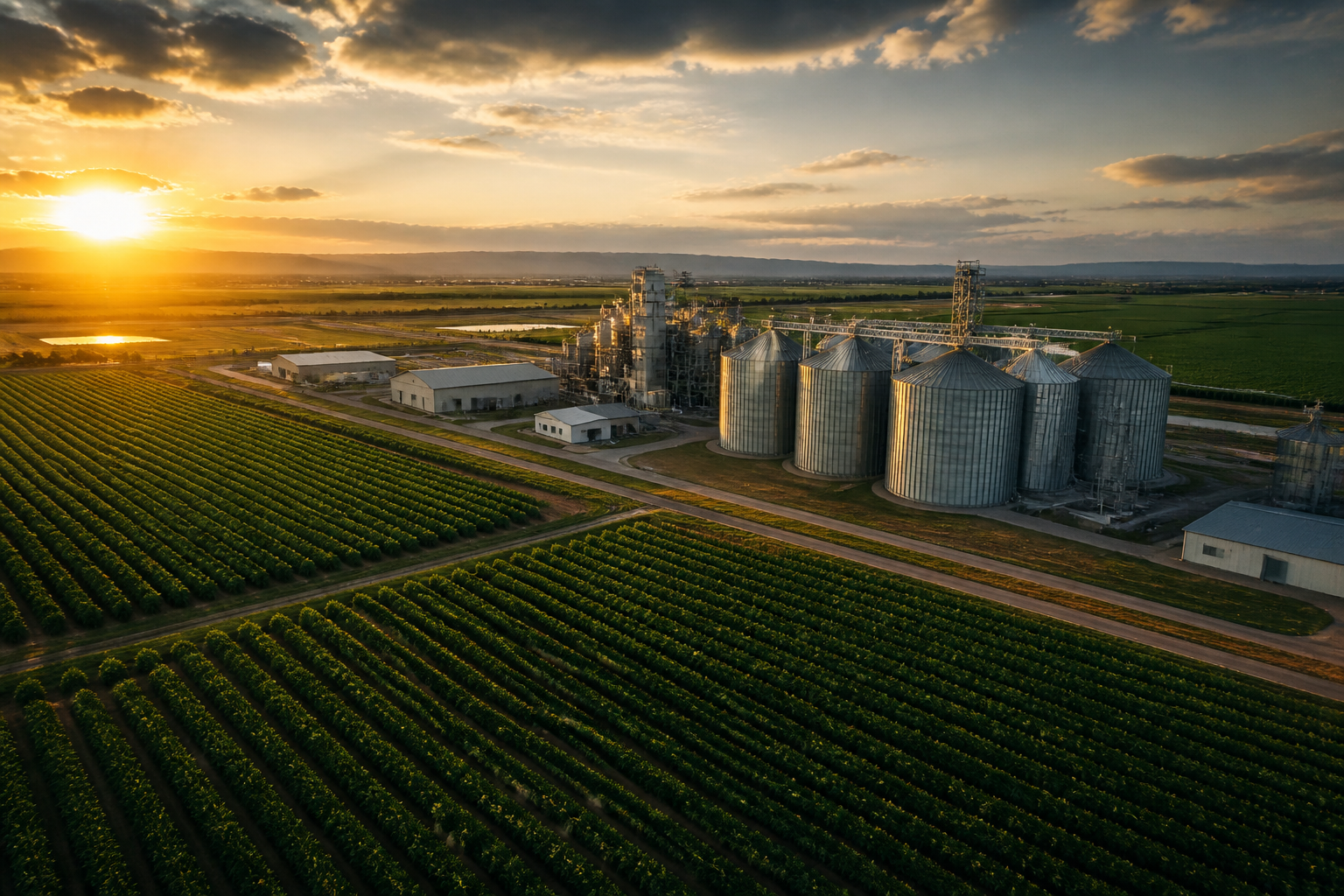
In response to the looming spectre of increased trade barriers and the potential for disrupted export routes, the Canadian government has initiated a significant fiscal intervention that signals a broader trend in the Commonwealth and beyond. The launch of a one billion dollar Agri-food Project Finance Fund, administered through Farm Credit Canada, serves as a definitive marker of this new era. This capital injection is specifically designed to enhance domestic processing capabilities, thereby reducing the historical reliance on exporting raw commodities for external refinement. By fortifying the mid-stream segments of the value chain, the Canadian administration seeks to build a buffer against the volatility introduced by the United States tariff regime. This approach reflects a growing consensus amongst middle-power economies that food security is inextricably linked to the physical infrastructure of food transformation. Rather than relying on the traditional market mechanisms of comparative advantage, states are increasingly viewing agricultural processing as a critical national asset that requires direct institutional support to survive the shocks of a more insular global market.
Climatic Volatility and the El Niño Factor
While trade policy creates man-made barriers, the resurgence of the El Niño phenomenon is imposing natural constraints that are equally disruptive to the global agrifood balance sheet. The impact on Latin American markets, particularly in Mexico, serves as a cautionary tale for global commodity traders. El Niño traditionally alters rainfall patterns, leading to severe droughts in some regions and catastrophic flooding in others, which directly threatens the stability of crop yields and pushes commodity prices upward. The Agricultural and Processed Food Products Export Development Authority in India and similar bodies in the Southern Hemisphere are closely monitoring these meteorological shifts, as they often lead to sudden export bans or quotas intended to protect domestic food inflation. The resulting price volatility is not merely a concern for local consumers but reverberates through the global futures markets in Chicago and London. For agribusinesses, this necessitates a more sophisticated approach to risk management, involving the use of advanced satellite monitoring and predictive analytics to anticipate yield failures before they manifest in the spot market.
Risk Mitigation in a Fragmented Global Marketplace
As the complexities of international trade multiply, the role of specialized risk management firms such as Cotecna has moved from the periphery to the centre of corporate strategy. Navigating the current marketplace requires a multifaceted approach that includes supply chain diversification and the adoption of high-frequency technology for logistical tracking. The traditional reliance on single-source suppliers or established trade corridors is no longer a viable long-term strategy in a world where a sudden policy shift in Washington or a drought in the Mekong Delta can instantly render a business model insolvent. Modern agricultural enterprises are increasingly adopting contingency planning frameworks that were once the exclusive domain of the energy and aerospace sectors. This includes the implementation of robust verification protocols for quality control and the utilization of trade finance instruments that can withstand the sudden imposition of tariffs. The goal is to create a more elastic supply chain that can reroute flows in response to political or climatic triggers without suffering catastrophic losses in margin or delivery capacity.
Data Sovereignty and the Role of Institutional Statistics
In this environment of heightened uncertainty, the data provided by the National Agricultural Statistics Service of the United States Department of Agriculture has become a critical benchmark for global price discovery. The precision of these reports allows market participants to gauge the health of the American agricultural engine, which remains a primary driver of global grain and livestock trends. However, there is an increasing demand for similar levels of transparency and data integrity from emerging markets and state-led economies. The ability to access real-time information on planting intentions, stocks, and harvest progress is essential for preventing the kind of panic-buying and hoarding that characterized the food price spikes of the past decade. As digital transformation sweeps through the rural economy, the integration of on-farm sensors and automated reporting systems is expected to enhance the accuracy of these institutional datasets, providing a clearer picture of the global supply-demand balance and reducing the impact of speculative bubbles driven by misinformation.
The Financialization of Agricultural Infrastructure
The shift toward capital-intensive agricultural projects requires a new alignment between private equity, sovereign wealth funds, and traditional lenders. The aforementioned Canadian initiative is likely a precursor to similar large-scale financing schemes across Europe and Australasia, as governments seek to attract private capital into the expansion of cold-storage facilities, grain elevators, and advanced milling operations. This financialization of infrastructure is a necessary response to the rising costs of technology and the need for greater efficiency in a high-interest-rate environment. By creating dedicated project finance funds, the public sector can de-risk these investments for private players, ensuring that the necessary physical assets are built to sustain a more localized and resilient food system. This trend also opens new avenues for institutional investors looking for long-term, inflation-protected assets that are decoupled from the high volatility of the public equity markets. The result is a gradual professionalization of the entire agrifood value chain, moving away from fragmented family-owned operations toward integrated, industrial-scale ecosystems that are better equipped to handle global shocks.
Outlook for the Global Agrifood Architecture
Looking toward the end of the current decade, the agrifood sector will likely be defined by a state of permanent adaptation. The convergence of protectionist trade sentiment and climatic instability is not a temporary disruption but the new baseline for global commerce. We should expect to see a continued proliferation of state-led investment funds aimed at ensuring domestic food sovereignty, alongside a more disciplined and tech-heavy approach to international trade logistics. The success of agricultural businesses will depend on their ability to integrate these geopolitical and environmental risks into their core operational models. While the dream of a frictionless global market for food may have receded, the emerging model of strategic resilience offers a more robust, albeit more expensive, framework for feeding a growing global population. The transition will undoubtedly be painful for those wedded to the old ways of trading, yet it remains an essential evolution for an industry that sits at the very heart of human civilization and economic stability.