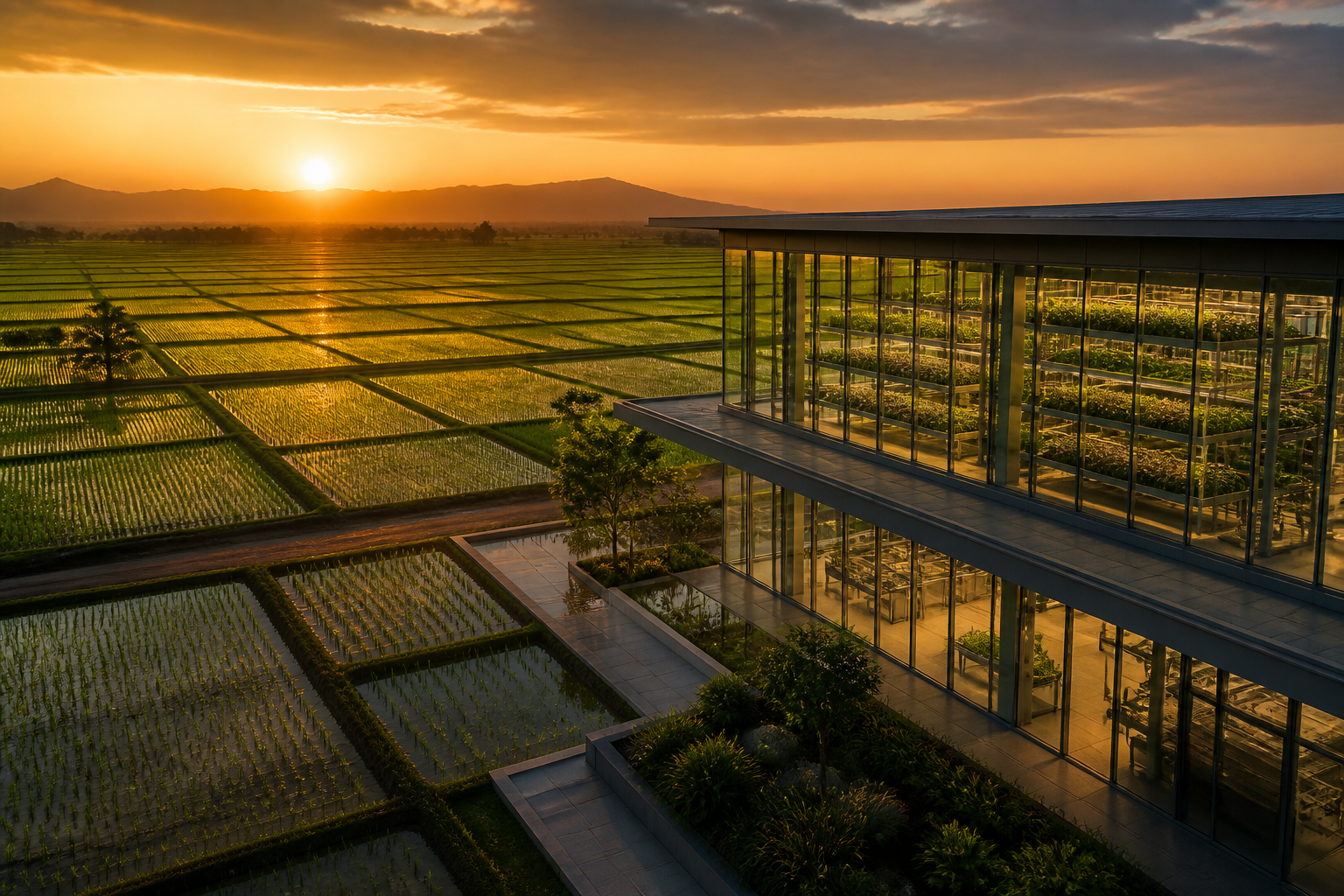
The New Agrarian Realism: Navigating The Structural Shifts In Global Agribusiness
Agriculture is undergoing a profound structural transformation. From the rising investment in Fijian smallholders to the academic evolution in Tennessee, a new era of capital-intensive, data-driven farming is emerging.
The global agricultural sector is currently navigating a period of profound structural realignment, characterized by the convergence of heightened capital flows, technological integration, and a renewed emphasis on institutional resilience. While the fundamental nature of the primary industry remains rooted in the cultivation of land and the management of livestock, the economic frameworks supporting these activities have evolved into a sophisticated web of multi-national investment and academic rigor. Recent developments across disparate geographies, ranging from the burgeoning entrepreneurial landscape in Fiji to the established production hubs of the American Midwest, indicate that the industry is moving away from purely cyclical dependencies towards a model of sustainable growth and institutional stability. This transition is not merely a response to market pressures, but a proactive reimagining of the agricultural value chain, where the roles of farmers, processors, and educators are increasingly intertwined in the pursuit of long-term food security and fiscal viability.
The Strategic Pivot Toward Localized Investment Ecosystems
In the Pacific region, particularly within the sovereign borders of Fiji, a significant shift in investment philosophy is taking hold. Investment Fiji has recently highlighted a paradigm where agricultural funding is no longer viewed as a peripheral developmental concern, but as a core pillar of national economic strategy. By funneling capital into local businesses and smallholder farming communities, the Fijian government is attempting to create a self-sustaining cycle of wealth generation that mitigates the risks of import dependency. This localized investment model serves as a microcosm for a broader global trend where emerging economies seek to institutionalize their agricultural output. The success stories emerging from this region emphasize that investing in agriculture equates to investing in social infrastructure, as the dividends of increased productivity are directly reinvested into community health and local commerce. This approach reflects a sophisticated understanding of the multiplier effect, where every dollar spent on improving irrigation or seed quality yields exponential returns in the form of reduced poverty and enhanced regional stability.
Academic Institutionalization and the Professionalisation of Agribusiness
The intellectual foundation of the sector is also undergoing a significant upgrade, as evidenced by the University of Tennessee Herbert College of Agriculture. The introduction of new online undergraduate degrees in agricultural business signifies a recognition that the modern farm operator must be as proficient in financial modeling and supply chain logistics as they are in agronomy. This move towards digital education reflects a necessity to prepare the next generation of industry leaders for a world where data is as vital as soil quality. By making these qualifications accessible to a wider demographic, the University of Tennessee is effectively democratizing the expertise required to navigate the complexities of international trade and environmental regulation. This professionalisation is a critical component of the new agrarian realism, ensuring that future managers are equipped to handle the sophisticated financial instruments and risk management strategies that now define the global food market. The transition from traditional farming to data-driven agribusiness is no longer a luxury but a requirement for those who wish to maintain competitiveness in an increasingly crowded global arena.
Production Dynamics and the Resilience of Specialty Crops
In Northern California, the agricultural industry in Butte County provides a compelling case study in the resilience of traditional commodities when faced with fluctuating market conditions. The county recently reported a total gross production value that underscores the enduring importance of high-yield crops like rice and nuts. Despite a slight decrease in production per acre, the rice industry managed to increase its total value by five million dollars through the strategic expansion of planted acreage. This ability to offset lower yields with increased scale demonstrates a sophisticated approach to volume-based profitability. Furthermore, the performance of Butte County suggests that the agricultural sector remains a vital engine of regional wealth, even when confronted with the challenges of climate variability and rising input costs. The data from this region serves as a reminder that while technological advancement is crucial, the physical expansion of cultivation remains a primary lever for economic growth in established agricultural hubs.
The Complexity of Input Costs and Commodity Flow
Research from the Kansas State University Department of Agricultural Economics provides a sobering look at the intricate web of costs that define modern farming. The relationship between farmers and their suppliers is a delicate balance of necessity and fiscal constraint. Producers must navigate a constant stream of expenditures, including fuel, fertilizer, machinery, seed, and electricity, all of which are subject to the whims of global energy markets and geopolitical tensions. On the output side, the sale of commodities to elevators, processors, and livestock feeders creates a complex revenue stream that is often disconnected from the immediate costs of production. The Kansas State findings highlight the immense pressure placed on individual operators to manage these disparate financial variables. This economic pressure is driving a consolidation of the industry, as smaller farms struggle to absorb the volatility inherent in both input procurement and commodity sales. The role of ethanol plants and livestock feeders as primary buyers further complicates the landscape, as these sectors are themselves subject to shifting consumer preferences and environmental mandates.
Technological Integration and the Virtual Assistant Revolution
The digital transformation of agriculture is not limited to the classroom or the laboratory, as evidenced by the implementation of advanced tools like the APEDA AgriExchange virtual assistant. This technology represents a significant leap forward in how market intelligence is disseminated to stakeholders. By providing real-time access to news and trade data, such platforms empower producers to make informed decisions about when and where to sell their products. This democratization of information reduces the power asymmetry that has historically favored large-scale processors and international trading houses. The integration of artificial intelligence and automated assistants into the daily workflow of the agricultural professional is a testament to the sector's adaptability. As these tools become more sophisticated, they will likely evolve from simple information repositories into predictive engines that can forecast price movements and identify emerging market opportunities with high precision.
Environmental Stewardship and the Greenhouse Gas Narrative
Perhaps the most significant challenge facing the industry is the evolving discourse around greenhouse gas emissions and environmental sustainability. Documents from Kansas State University suggest that the agricultural sector is under increasing scrutiny to reduce its carbon footprint while simultaneously increasing its output to feed a growing global population. This paradox requires a fundamental shift in how farming is practiced, moving away from high-input models towards regenerative techniques that sequester carbon and preserve biodiversity. The financial implications of this shift are immense, as farmers may soon be compensated not only for the food they produce but for the environmental services they provide. The development of carbon credit markets and green subsidies is creating a new revenue stream for those who can demonstrate a commitment to sustainable practices. However, the transition to a low-carbon agricultural economy is fraught with technical and financial hurdles that will require sustained support from both the public and private sectors.
Forward Looking Outlook: The Era of Strategic Consolidation
Looking ahead, the global agricultural industry appears to be entering a phase of strategic consolidation and heightened sophistication. The traditional image of the isolated farmer is being replaced by the reality of the agrifood executive who must navigate a landscape defined by global trade policy, technological disruption, and environmental accountability. The expansion of academic programs and the rise of digital market tools suggest that the industry is building the intellectual and technical infrastructure necessary to survive in a more volatile world. We can expect to see a continued emphasis on localized investment, as nations strive for greater food sovereignty, alongside a drive for increased efficiency through the adoption of precision agriculture. The primary challenge will remain the management of input costs and the mitigation of climate-related risks, but the resilience shown in regions like Butte County and the innovation seen in Fiji provide reason for cautious optimism. The future of agriculture will be defined by those who can successfully merge the ancient traditions of land stewardship with the cutting-edge requirements of modern global finance.