The Silent Engine Stalls: Navigating the Contraction of Global Agrifood Systems
A deep dive into the systemic pressures facing the global agricultural industry, from the decline in major machinery investment to the strategic necessity of rural business benchmarking as commodity markets face unprecedented volatility.
The global agricultural sector, long regarded as the bedrock of macroeconomic stability, is currently weathering a period of profound structural adjustment. For decades, the narrative surrounding the agrifood system was one of expansion, technological exuberance, and the inexorable integration of global supply chains. However, recent indicators suggest that the engine of primary production is beginning to stall under the weight of escalating capital costs, dampened commodity prices, and a cooling of the industrial demand that once propelled the world’s largest machinery manufacturers to record profits. The systemic nature of this slowdown is evidenced not merely by fluctuating grain prices, but by the strategic retreats of industrial behemoths and a fundamental reassessment of trade policy in the world's most productive breadbaskets. As the industry grapples with these headwinds, the focus is shifting away from pure volume toward a more nuanced paradigm of operational resilience and state-supported risk mitigation.
The Industrial Retrenchment and the Capital Ceiling
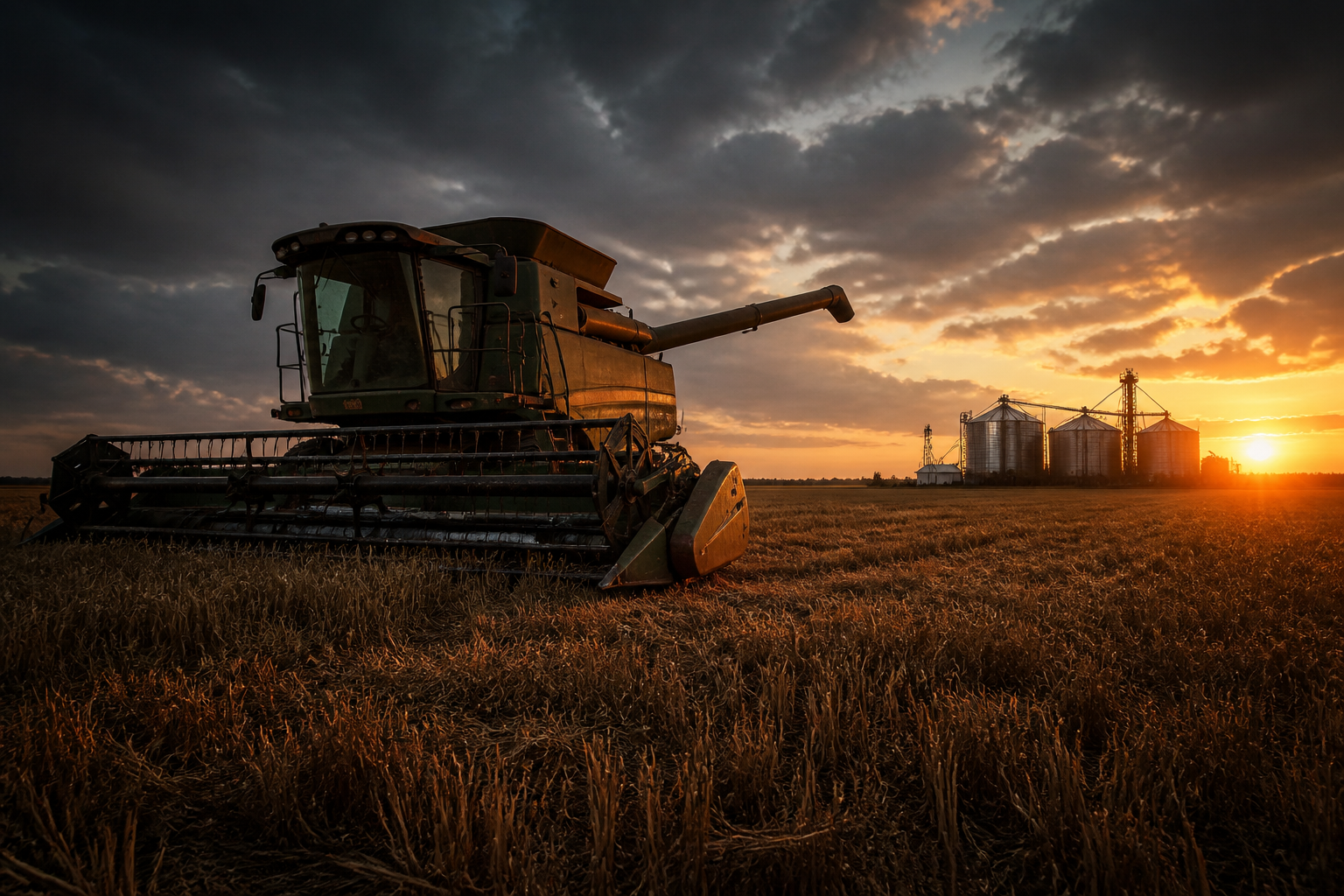
The most visible herald of the current downturn is the significant contraction in the agricultural machinery market, a sector often viewed as a leading indicator for the health of the broader rural economy. When international equipment manufacturers begin to aggressive cut their workforces, it signals a deeper malaise in the capital expenditure cycle of primary producers. Recent announcements from industry leaders, including John Deere, underscore this reality. The firm’s decision to reduce its headcount by approximately 100 personnel, contributing to a broader sectoral loss of some 170 jobs in key manufacturing hubs, reflects a cooling of the replacement cycle that has sustained the industry since the post-pandemic recovery. These redundancies are not merely isolated corporate restructurings; they represent a calculated response to a sluggish global economy where high interest rates have made the financing of high-tech harvesters and autonomous tractors increasingly prohibitive for mid-scale enterprises.
This softening of demand is particularly acute in the North American and European markets, where the inflationary pressures on inputs, ranging from diesel to potash-based fertilisers, have squeezed farm margins to their thinnest in a decade. When the cost of capital remains elevated, the incentive for technological upgrades diminishes, leading to a secondary impact on the innovation pipeline. The result is a paradox: while the long-term solution to agricultural productivity lies in precision technology and automation, the current financial environment suppresses the very investment required to bring these efficiencies to scale. This industrial hiatus suggests that the ‘ag-tech’ revolution may be entering a more sober, consolidate phase where the focus shifts from speculative acquisition to the preservation of existing assets.
Trade Volatility and the Geopolitics of Food Security
Beyond the factory floor, the mechanisms of global agricultural trade are undergoing a rigorous stress test. According to the Organisation for Economic Co-operation and Development (OECD), the role of trade in supporting the livelihoods of millions of workers across the value chain cannot be overstated. Yet, the relative stability of the international market is being challenged by a return to protectionist rhetoric and the weaponisation of food exports. The interdependence of global markets, while efficient, has exposed a vulnerability to regional shocks that local production systems are ill-equipped to handle alone. This has prompted a renewed emphasis on the ‘strategic autonomy’ of food supplies, particularly within the European Union and Southeast Asia, as nations seek to balance the benefits of open trade with the necessity of domestic security.
In this context, institutions such as the United States Department of Agriculture (USDA) continue to advocate for a leadership role in global markets, yet the path forward is fraught with regulatory complexity. The tension between the need for export-led growth and the domestic requirements for sustainability and carbon sequestration is creating a fractured trade environment. As carbon border adjustment mechanisms and environmental standards become integrated into trade agreements, the cost of compliance for exporters in developing nations is rising. This creates a two-tier system where only the most sophisticated and well-capitalised producers can navigate the maze of international standards, potentially further centralising the control of global food supplies into the hands of a few dominant players.
Benchmarking and the Cultivation of High-Performance Estates
As profit margins tighten, the internal management of agricultural businesses is moving to the forefront of the editorial and policy agenda. In Scotland, for instance, there is a growing consensus that rural businesses must be positioned at the absolute centre of national economic growth strategies. Reports from bodies such as Scottish Land & Estates argue that the traditional model of landed estates and family farms must evolve into a more rigorous, data-driven framework. The call for expanded support in benchmarking, business planning, and on-farm management improvement is not merely a bureaucratic preference; it is a survival strategy for a post-subsidy world. By adopting the traits of high-performing farms, such as meticulous soil health monitoring, diversified revenue streams, and lean management principles, businesses can insulate themselves against the volatility of the global marketplace.
This shift toward benchmarking reflects a broader trend across the Commonwealth and Europe, where the ‘professionalisation’ of the farmer is seen as the primary hedge against economic instability. In regions where land value remains high but output prices are stagnant, the only lever available to the producer is operational efficiency. This involves a transition from being a price-taker in a global commodity market to becoming a manager of a complex biological and financial system. The emphasis is no longer on simply producing more, but on producing more intelligently, with a granular understanding of how every calorie of input translates into a unit of currency.
State Intervention and the Resilience of the Safety Net
The fragility of the current system has necessitated a robust return to state interventionism, albeit under the guise of ‘resilience building.’ Agriculture and Agri-Food Canada has recently demonstrated this through its AgriRecovery Initiative, designed to provide substantial financial relief to producers devastated by drought and extreme weather events. The investment of some $12 million by federal and provincial governments in Ontario further illustrates the growing role of the public purse in de-risking the agricultural sector. These are not merely emergency measures; they are becoming permanent fixtures of the economic landscape as climate volatility becomes the statistical norm rather than the exception.
However, this reliance on state-backed insurance and recovery funds raises significant questions about the long-term fiscal sustainability of the current model. As the frequency of ‘thousand-year’ floods and unprecedented droughts increases, the strain on national treasuries will grow. Governments are increasingly faced with a difficult choice: continue to subsidise loss-making production in marginal lands for the sake of food security, or allow market forces to dictate a painful retreat from certain geographies. This tension is central to the upcoming debates regarding the future of the Common Agricultural Policy (CAP) in Europe and the Farm Bill in the United States, both of which serve as the ultimate arbiters of how much risk the taxpayer is willing to absorb on behalf of the primary producer.
The Infrastructure of the Rural Economy
While the focus often remains on the field and the factory, the underlying infrastructure of the rural economy is equally critical to the global agrifood equation. The Texas Department of Agriculture and similar regional bodies have pointed to the profound implications of global news on local rural health and connectivity. A downturn in the agricultural sector typically precipitates a decline in the social and physical infrastructure of rural communities. When equipment dealerships close and processing plants reduce shifts, the resulting brain drain and loss of local services create a feedback loop that makes the region less attractive for future investment.
To counter this, forward-thinking policy frameworks are looking at the ‘agrifood cluster’ model, where production, processing, and distribution are more tightly integrated within a specific geographic region. By localising a larger portion of the value chain, rural economies can retain more of the wealth generated by their land. This requires not only investment in traditional logistics, such as rail and port facilities, but also in the digital infrastructure necessary for the next generation of precision farming. In the absence of high-speed connectivity, the digital divide between urban tech hubs and rural production zones will only widen, further hampering the ability of the agricultural sector to compete for the talent and capital it so desperately needs.
Outlook: The Era of Selective Growth
Looking ahead to the latter half of the decade, it is clear that the agricultural industry has entered an era of selective growth. The days of broad-based, tide-lifts-all-boats expansion are over, replaced by a more fragmented and competitive landscape. Success will be defined by the ability to navigate three converging forces: the necessity of technological integration despite high capital costs, the fluctuating demands of a geopolitically fractured trade system, and the increasing frequency of climate-driven market shocks. For the machinery manufacturers, the priority will be the transition from hardware sales to service-oriented models, where recurring revenue from software and data analytics offsets the decline in unit sales.
For the producers themselves, the strategic imperative is one of radical transparency and efficiency. The farms that flourish in the coming years will be those that embrace benchmarking as a core discipline and view sustainability not as a regulatory burden, but as a prerequisite for market access. Governments, meanwhile, must move beyond reactionary disaster relief toward a more holistic support structure that incentivises resilience before the crisis hits. While the current contraction is painful, it may serve as the necessary catalyst for a more robust and sophisticated agrifood system, one that is less reliant on the crutch of cheap capital and more focused on the sustainable management of the planet’s most vital resources.