The Security Imperative: Navigating the Frustrated Contours of the Global Energy Transition
The global energy landscape is undergoing a profound structural realignment. Security concerns and geopolitical frictions are complicating the path to net zero, creating a divergent landscape of transition outcomes.
The optimism that defined the early years of the current decade, characterised by a seemingly unified global commitment to the decarbonisation of industrial economies, has met the unforgiving friction of realpolitik. In the current fiscal quarter, the discourse surrounding the transition from hydrocarbons to renewable alternatives has shifted from an idealistic pursuit of environmental stewardship to a pragmatic, and often defensive, exercise in national energy security. This fragmentation, underscored by a notable divergence between the progress of emerging superpowers and the fiscal hesitation of established Western economies, suggests that the linear trajectory once envisioned by the International Energy Agency is being replaced by a multi-speed, often contradictory, global framework. As traders await the outcomes of high-stakes diplomatic meetings in Switzerland and monitor the fragile quiet in Middle Eastern markets, the fundamental question is no longer when the world will move beyond fossil fuels, but rather how many disparate versions of that transition will emerge in the process.
The Paradox of Fragmented Transition
Recent analysis from the World Economic Forum indicates a growing rift in the efficacy of energy transitions across different jurisdictions. The concept of equity, once a cornerstone of the Paris Agreement framework, is increasingly a casualty of the shift toward domestic energy sovereignty. In this fragmenting landscape, nations are no longer prioritising collective climate targets in isolation; instead, they are integrating them into broader strategies of economic resilience. The result is a patchwork of progress where advancements in one region are offset by heightened coal consumption or liquefied natural gas expansion in another. The motivations for this decoupling are myriad, ranging from the necessity of maintaining industrial competitiveness to the immediate political pressure of mitigating consumer price volatility. Consequently, the global energy transition is no longer a singular movement but a collection of regional skirmishes against carbon dependency, each dictated by local resource availability and geopolitical alignment.
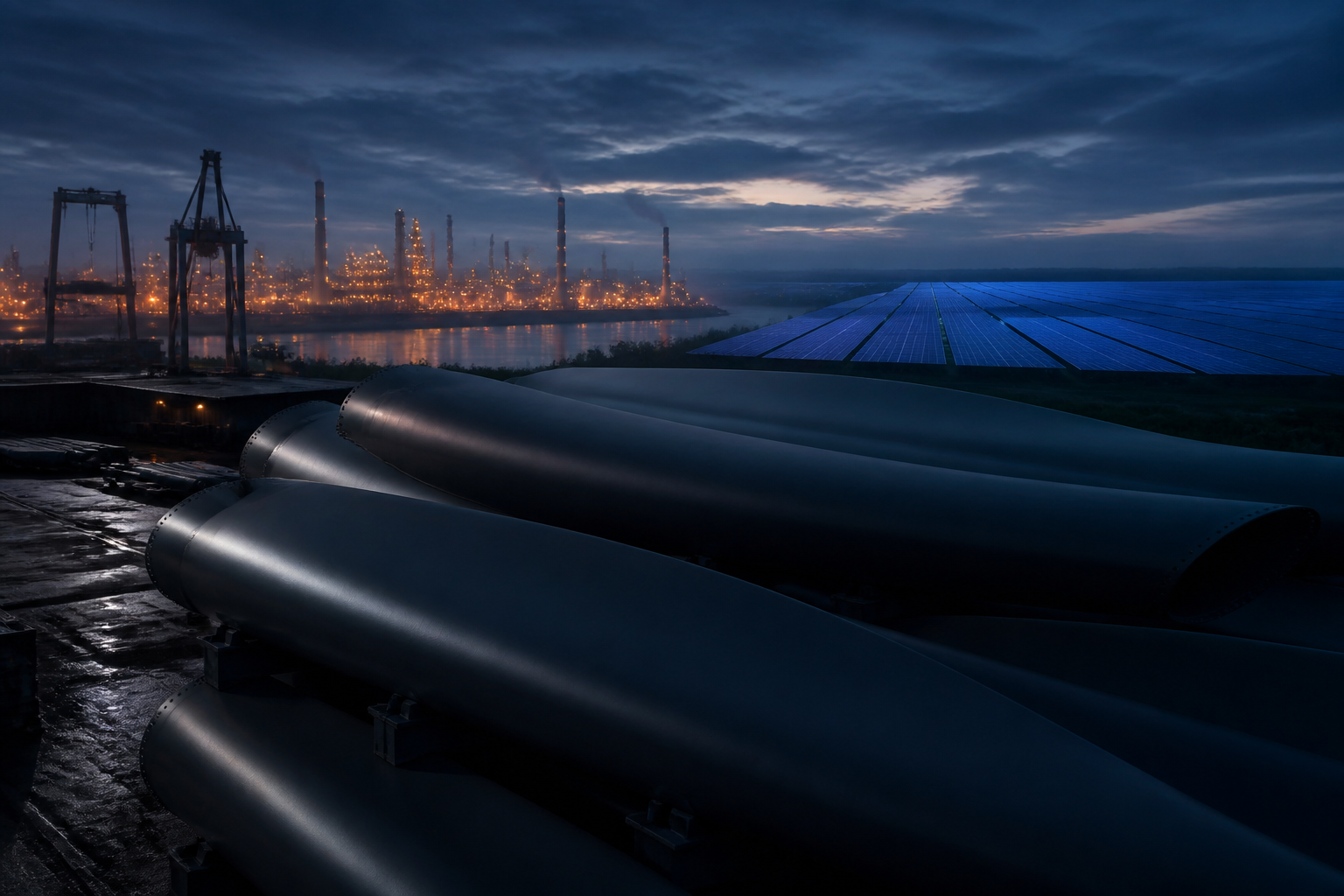
China remains the most striking example of this paradoxical development. While the nation continues to commission coal-fired power plants at a rate that alarms international observers, it simultaneously leads the world in renewable deployment. Current data suggests China is approximately five years ahead of its original wind and solar installation targets, effectively domesticating the entire supply chain for green technologies. This dual-track approach, securing the present through traditional thermal power while colonising the future of renewable manufacturing, places Beijing in a position of idiosyncratic strength. In contrast, Western economies find themselves grappling with the inflationary pressures of transitioning whilst their industrial bases remain vulnerable to the price shocks of imported natural gas. The fragmentation of the transition is, therefore, not merely a matter of pace, but of fundamental strategy: one side is building an integrated green industrial complex, while the other struggles with the fiscal burden of retrofitting legacy infrastructure.
The Monetary Weight on Green Capital
Central bank policies continue to cast a long shadow over the capital-intensive requirements of the transition. The Federal Reserve's recent decisions regarding interest rates have created a complex environment for renewable energy developers, for whom the cost of capital is a primary determinant of project viability. As the Deloitte Insights team has noted in recent economic updates, the persistence of elevated borrowing costs has tempered the enthusiasm of private equity and institutional investors who were previously eager to finance large-scale offshore wind and hydrogen projects. When interest rates remain high, the long-dated returns of green infrastructure become less attractive relative to the immediate dividends of traditional energy assets. This monetary friction is particularly visible in the North Sea and across the United States' Atlantic coast, where several high-profile wind projects have faced cancellations or renegotiations due to unworkable margins.
Furthermore, the stock market’s recent volatility, driven by uncertainty surrounding the Fed’s next moves, has led to a cautious posture among energy majors. While companies like BP and Shell have reported robust profits from their core hydrocarbon divisions, their appetite for aggressive diversification into low-carbon sectors appears to have reached a plateau. These firms are under immense pressure from institutional shareholders to prioritise share buybacks and dividends over the speculative, lower-margin returns often associated with early-stage renewable technologies. This tension between short-term shareholder value and long-term environmental sustainability is exacerbating the transition’s fragmentation, as capital flows back toward the perceived safety of established fossil fuel rents in a period of macroeconomic instability.
Geopolitics and the Swiss Diplomatic Corridor
Turning to the geopolitical arena, the energy sector remains tethered to the outcome of volatile diplomatic negotiations. The scheduled meetings in Switzerland between U.S. and Iranian officials represent a critical juncture for global oil markets. Although oil prices have remained somewhat muted in anticipation of these talks, the potential for a formalised peace deal or a renewed sanctions framework creates a climate of persistent uncertainty. A breakthrough in these discussions could see a significant influx of Iranian crude into the global market, providing a temporary reprieve from supply constraints but also potentially diminishing the economic urgency for alternative energy adoption. Conversely, a failure to reach an accord would likely reinforce the focus on energy security, prompting European and Asian importers to deepen their investments in diversified LNG supply chains and domestic nuclear capabilities.
This intersection of diplomacy and energy policy highlights the vulnerability of the transition to external shocks. The Mediterranean and the Middle East continue to be the fulcrums upon which global energy prices balance. Even as the European Union strives to meet its REPowerEU objectives, the reality of its dependence on global energy flows remains stark. The shift away from Russian gas has not resulted in a pure transition to renewables, but rather a strategic pivot Toward American and Qatari LNG. This reality underscores the fact that energy security, in the contemporary sense, often necessitates a renewed commitment to hydrocarbons, albeit from more politically aligned sources. The transition is thus being reinterpreted as a reshuffling of dependencies rather than a total abandonment of extractive resources.
The Industrial Realignment of the Global South
Amidst the shifts in the Global North, the collective of emerging economies is carving out its own path, often distinct from the prescriptions of the G7. In regions such as Southeast Asia and sub-Saharan Africa, the transition is being framed through the lens of developmental equity. These nations argue, quite forcefully, that their industrialisation cannot be sacrificed at the altar of a decarbonisation timeline they did not create. The fragmentation noted by the World Economic Forum is particularly evident here, as countries like India and Indonesia leverage their domestic coal reserves to fuel economic growth while simultaneously negotiating Just Energy Transition Partnerships (JETPs) with international financiers. These partnerships represent an attempt to bridge the gap between development and sustainability, yet they are frequently hindered by bureaucratic delays and insufficient capital transfer.
This divergence is creating a new hierarchy in the global energy order. Countries that can secure the minerals necessary for the green economy, lithium, cobalt, and rare earth elements, are emerging as the new energy powerhouses. The Democratic Republic of Congo, Chile, and Australia are finding themselves at the centre of a new 'Great Game' as Western and Chinese entities vie for control over these critical supply chains. The transition is therefore not merely a shift in technology but a profound realignment of global trade flows. The fragmentation of the transition is being mirrored by the fragmentation of the supply chain, as 'friend-shoring' and protectionist trade policies become the tools of choice for governments seeking to secure their place in the post-carbon world.
Technological Innovation and the Scale Challenge
Despite the hurdles of policy and finance, the pace of technological innovation remains a rare constant. Substantial advancements in long-duration energy storage and the nascent green hydrogen economy provide a glimpse of a potential resolution to the intermittent nature of wind and solar power. However, the translation of these technologies from pilot phases to industrial scale is being hampered by the very fragmentation that defines the current era. Disparate regulatory standards and competing subsidy regimes, such as the U.S. Inflation Reduction Act and the EU’s Green Deal Industrial Plan, have triggered a subsidy race that threatens to distort global markets and introduce inefficiencies into the deployment of new technologies.
Moreover, the digital transformation of the grid, utilising artificial intelligence to optimise demand-side management, is becoming a critical component of the energy security apparatus. As highlighted by recent reports on CNN Business, the integration of tech giants into the energy sector is accelerating. Companies like Google and Microsoft are not only major consumers of renewable energy for their data centres but are also providing the computational power necessary to manage increasingly complex and decentralised energy networks. Yet, this reliance on digital infrastructure introduces new vulnerabilities, particularly regarding cyber-security and the resilience of the physical grid against extreme weather events. The transition, in this sense, is expanding the definition of energy security to include both the molecular security of fuel and the digital security of the distribution network.
Forward-Looking Outlook
The remainder of the decade will likely be defined by a movement towards 'energy realism.' The idealistic notion of a smooth, globally coordinated transition has given way to a more fractured reality where energy security and economic competitiveness take precedence. We should expect to see a deepening of the regionalised approach to energy policy, with the Atlantic and Pacific basins developing increasingly distinct technological and regulatory ecosystems. The role of the central banks will remain pivotal; a sustained return to lower interest rates would provide the much-needed oxygen for green capital, while a 'higher-for-longer' environment will inevitably favour the cash-rich incumbents of the oil and gas sector.
Ultimately, the success of the global energy transition will depend on the ability of international institutions to mitigate the effects of this fragmentation. Without a renewed commitment to multilateral cooperation and the harmonisation of green trade standards, the world risks a disorderly transition that fails to meet climate targets while simultaneously increasing energy costs for the most vulnerable populations. The path forward is one of navigating these contradictions, balancing the need for immediate security with the imperative of long-term sustainability. The transition is not failing, but it is certainly maturing, shedding its early simplicity for the complex, contested, and multi-polar reality of the mid-21st century.