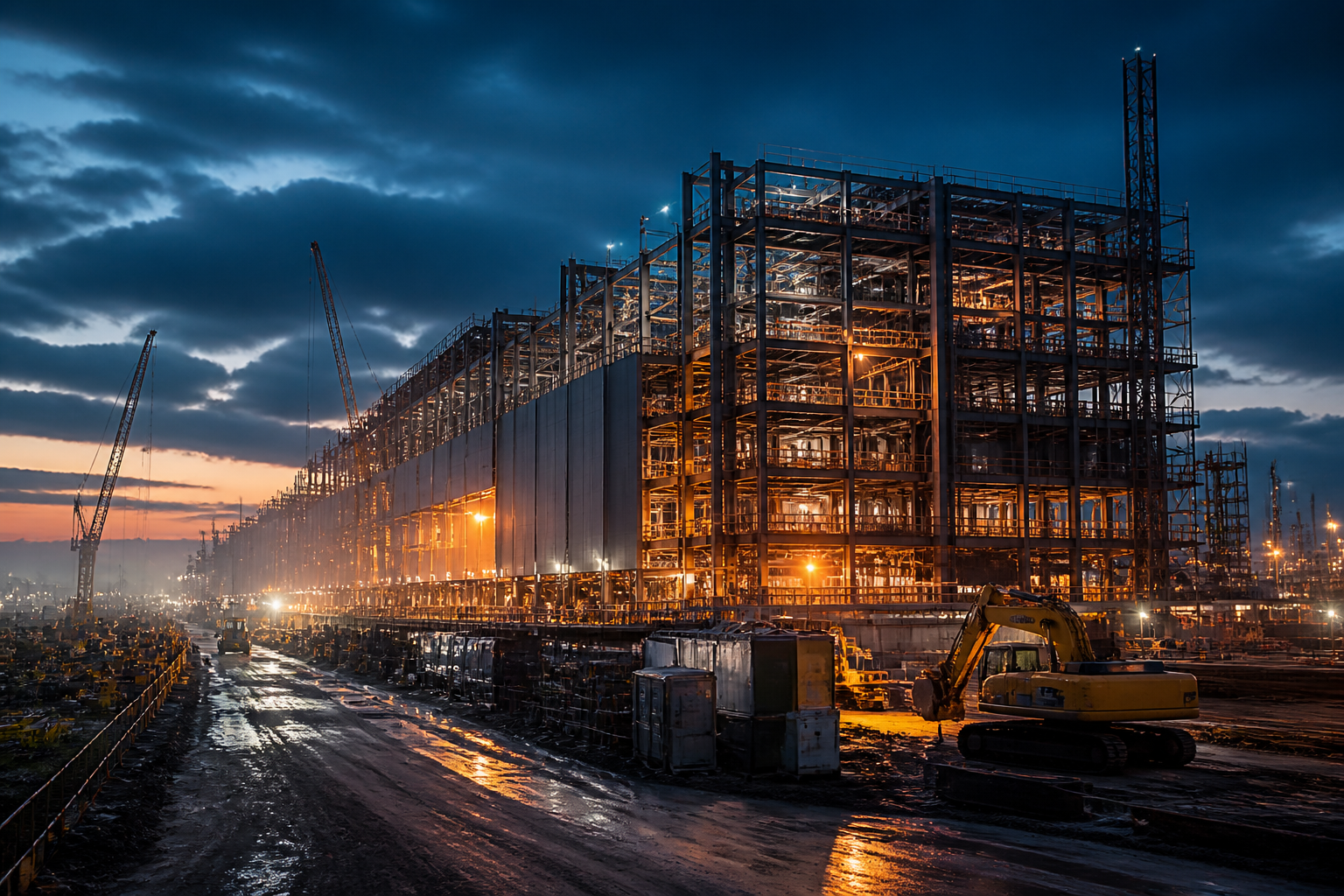
The Scarcity Frontier: Debt Financing And The Looming Bottlenecks Of Global Artificial Intelligence
A deep analysis of the shifting fiscal landscape for AI, examining the transition to debt-led growth, the rising costs of physical hardware, and the geopolitical tensions surrounding resource sovereignty in 2026.
The global infrastructure landscape is currently undergoing a fundamental transformation that is as much defined by fiscal exhaustion as it is by technological ambition. For much of the past two years, the narrative surrounding artificial intelligence has been dominated by the boundless potential of large language models and the breakneck speed of silicon innovation. However, as the third quarter of 2026 unfolds, a more sobering reality is crystallising within the balance sheets of the worlds largest technology firms. The transition from experimental capital expenditure to the wholesale reconstruction of the global data processing fabric is requiring a volume of liquidity that even the most cash-rich hyperscalers cannot sustain internally. This shift represents a critical inflection point where the digital economy must now grapple with the physical limitations of the power grid, the rising cost of debt, and a geopolitical environment where basic resources like water and energy are becoming contested instruments of statecraft.
The Fiscal Migration To Credit Markets
The most significant trend defining the current period is the exhaustion of the vast cash reserves that once insulated the technology sector from broader market volatility. In a striking departure from the historical norm, United States hyperscalers have increasingly turned to the investment-grade bond market to finance their gargantuan infrastructure requirements. Data suggests that bond issuance in this sector has surpassed one hundred billion dollars this year alone, a figure that more than doubles the requirements seen in 2025. This pivot to credit markets indicates that the internal rate of return on artificial intelligence investments is being tested by the sheer scale of the necessary outlays. As these corporations move from self-funding to external financing, they become increasingly sensitive to interest rate fluctuations and the prevailing appetite of institutional investors. The BlackRock Investment Institute has noted that this heightened reliance on debt coincides with a period where central bank policies remain restrictive, thereby increasing the cost of capital at the exact moment when the physical build-out of data centres requires maximum liquidity.
The Hardware Premium And Supply Chain Friction
Beyond the capital markets, the inflationary pressures within the semiconductor supply chain are introducing new layers of complexity to infrastructure planning. NVIDIA, the primary architect of the hardware powering this revolution, recently implemented a fifteen per cent increase in chip prices, a move necessitated by the escalating costs of high-bandwidth memory and advanced fabrication techniques. This price adjustment is not merely a corporate decision but a reflection of the scarcity of the high-grade components required for frontier models. The demand for specialised hardware continues to outpace the industry capacity to supply it, creating a seller market that places immense pressure on the margins of those attempting to build out national-scale computing clusters. While commercial and industrial loans have increased by nearly ten per cent year-on-year, much of this capital is being absorbed by the rising floor prices of basic hardware. Consequently, the threshold for a viable return on investment is rising, forcing a selection process where only the most efficient or most strategically vital projects receive continued funding.
Water Sovereignty And The Infrastructure Of Survival
While the focus remains on electricity and silicon, the most volatile bottleneck may prove to be the most ancient of resources. The cooling requirements of the next generation of data centres are placing unprecedented demands on local water tables, a reality that is now colliding with nationalist agendas and environmental exhaustion. The recent refusal by India to uphold a decades-old water-sharing treaty with Pakistan, following a controversial ruling in The Hague, serves as a stark reminder that resource management is becoming increasingly zero-sum. As regional powers prioritise their own agricultural and industrial needs over international agreements, the stability of the infrastructure required for the global digital economy is at risk. Data centre projects in water-stressed regions now face not only environmental scrutiny but the very real threat of becoming casualties in wider geopolitical disputes. The intersection of digital infrastructure and hydro-politics is no longer a peripheral concern but a central risk factor for long-term strategic planning.
The Open-Source Challenge To Frontier Economics
The economic viability of large-scale infrastructure is also being challenged by a shift in the software layer. For several years, the prevailing wisdom suggested that a few dominant frontier model makers would monopolise the industry, thereby justifying the immense capital expenditure required to build proprietary systems. However, the rise of sophisticated open-source models is beginning to erode the competitive moats of these incumbents. As cheaper and more accessible models become available to enterprises, the necessity of subscribing to expensive, proprietary ecosystems is being questioned. This development threatens the revenue projections that underpin the massive debt loads recently acquired by hyperscalers. If the commoditisation of artificial intelligence occurs faster than anticipated, the return on the hundreds of billions of dollars invested in bespoke infrastructure may fail to materialise. This creates a precarious situation where the physical assets, the data centres and the specialised power grids, must be repurposed or depreciated at a rate that could destabilise corporate balance sheets.
Labour Markets And The Resilience Of The Real Economy
Despite the concerns surrounding the technology sector, the broader economic momentum, particularly in the United States, remains surprisingly resilient. Business investment continues to be a primary driver of growth, supported by steady demand for credit and a robust labour market. Recent payroll data and unemployment figures suggest that while the technology sector is undergoing a painful transition, the wider economy is absorbing the inflationary pressures of the AI build-out without slipping into a deep recession. The U.S. Bank has observed that commercial loan availability remains high, providing a necessary buffer for firms navigating the transition to an AI-augmented workflow. However, this resilience is contingent upon the continued ability of the financial system to absorb the bond issuance of the hyperscalers. If investor appetite wanes, or if the cost of debt continues to climb, the current momentum could be interrupted, leading to a broader reassessment of the valuation of the digital economy.
A Forward Looking Perspective On Structural Adaptation
Looking ahead, the remainder of 2026 will likely be defined by a shift from unrestrained expansion to disciplined optimization. The era of cheap capital and abundant resources has passed, replaced by a new paradigm where efficiency is the primary metric of success. We expect to see a consolidation of infrastructure projects, with a focus on locations that offer not only power and connectivity but also legal and environmental stability. The geopolitical tensions surrounding water and energy will necessitate a more sophisticated approach to site selection, potentially leading to the emergence of new infrastructure hubs in regions that were previously considered peripheral. Furthermore, the reliance on debt will force a greater degree of transparency and accountability from the technology giants, as bondholders demand clearer evidence of the profitability of AI applications. The transition will be difficult, but it is a necessary evolution as the digital frontier matures into a foundational utility of the global economy. Those institutions that can successfully navigate the scarcity of capital, components, and natural resources will be the ones that define the next decade of industrial history.