The Resilience Of Carbon: Reassessing The Global Energy Matrix In An Era Of Volatility
A deep analysis of current energy market trends, exploring why traditional fossil fuel stocks continue to outperform expectations despite the global push for renewable energy and nuclear expansion in industrial hubs.
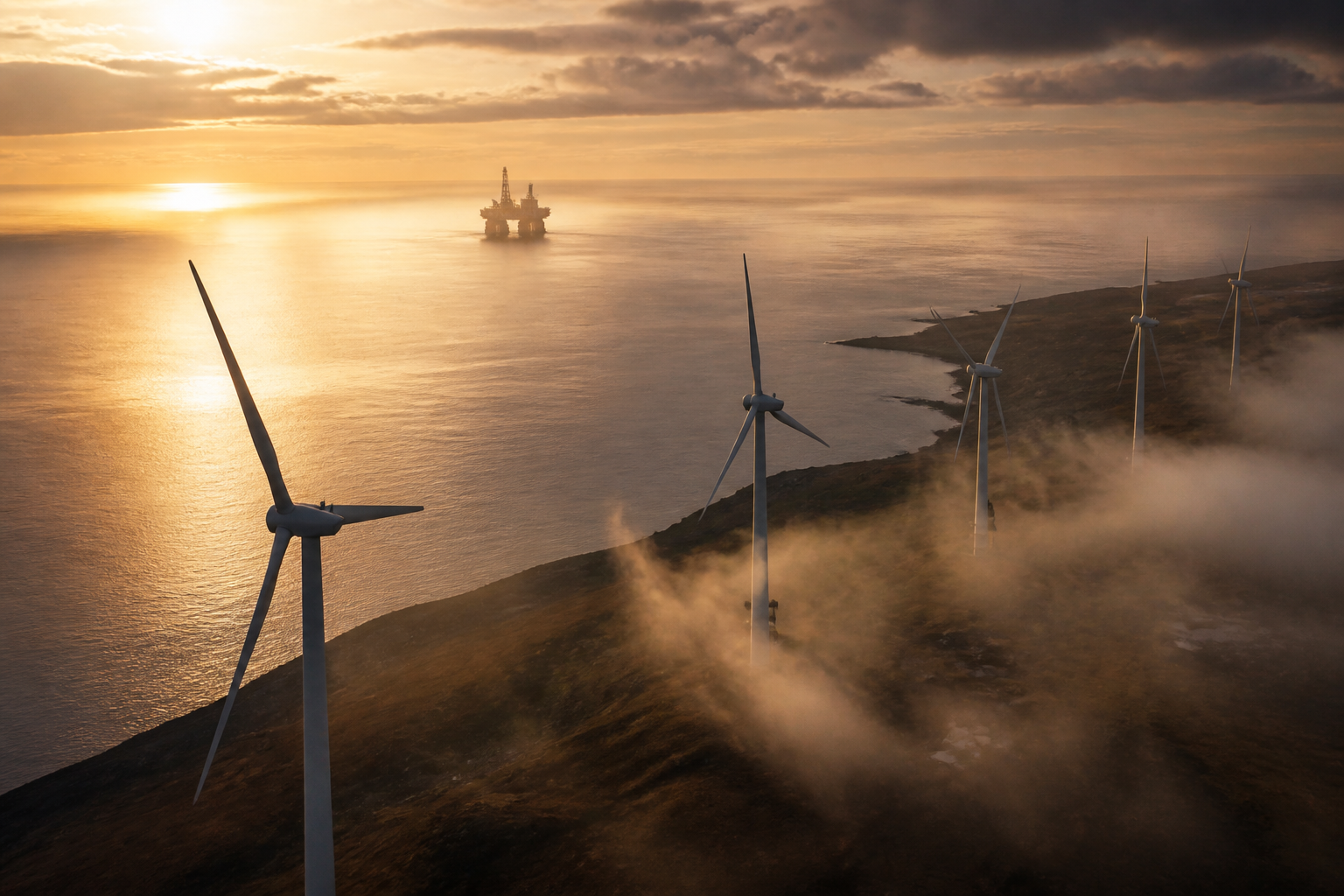
The global energy sector currently occupies a paradoxical position, characterized by a persistent reliance on traditional hydrocarbons even as the momentum for a low-carbon transition reaches its highest recorded velocity. Recent fiscal performance indicators from the NYSE Energy Sector Index, which recorded a notable three point four per cent appreciation in a single session, suggest that the appetite for oil and gas remains fundamentally undiminished among institutional investors. While international climate accords necessitate a rapid pivot away from fossil fuels, the immediate reality for major producers such as Exxon, Chevron, and Continental Resources is one of significant capital accumulation and strategic consolidation. This divergence between long-term environmental objectives and short-term market imperatives defines the current era of energy economics, where the security of supply has arguably superseded the pace of decarbonisation in the hierarchy of national priorities.
The Fiscal Fortitude Of Traditional Hydrocarbons
The recent surge in energy stocks, exemplified by the State Street Energy Select Sector SPDR ETF rising by four per cent, underscores a broader trend of resilience within the oil and gas patch. As a busy week of earnings reports unfolds, many energy names are closing in on critical buy points, reflecting a market sentiment that is increasingly comfortable with the sustained profitability of these entities. The narrative that fossil fuels are entering a sunset phase appears premature when one examines the capital expenditure programmes of firms like Halliburton and Schlumberger, which continue to see robust demand for upstream services. These companies are not merely managing decline but are instead optimising production through advanced digital twins and hydraulic fracturing enhancements to meet a global demand curve that shows little sign of an immediate plateau.
Furthermore, the financial stability of the sector is bolstered by strategic shifts in corporate governance, where discipline in capital allocation has replaced the aggressive production growth models of the previous decade. By prioritising shareholder returns through dividends and buybacks, energy firms have successfully re-engaged with a cautious investor base. This fiscal conservatism, paired with elevated commodity prices driven by geopolitical instability in Eastern Europe and the Middle East, has created a lucrative environment for integrated majors. The ability of these firms to generate record free cash flow facilitates not only the maintenance of existing infrastructure but also the research and development required for future diversification, creating a bridge between the carbon-intensive present and an uncertain green future.
Geopolitical Constraints And The Security Of Supply
National energy security has emerged as the primary driver of policy in the wake of recent global supply disruptions. Governments are increasingly pragmatic, as seen in India where the administration has fixed specific LPG production targets for refiners to ensure domestic stability. This return to state-directed energy planning reflects a broader international trend where the reliability of the grid is valued above all else. In the United States, the blocking of a deepwater port offshore Brazoria County illustrates the complex regulatory and environmental hurdles that continue to plague infrastructure development, even as the demand for export capacity grows. These bottlenecks create a constrained supply environment that inherently supports higher pricing and attracts speculative capital into established players who possess the scale to navigate such bureaucratic complexities.
Moreover, the settlement of long-standing power disputes in emerging markets indicates a move towards institutional stability, which is essential for attracting the trillions of dollars in investment needed for infrastructure modernisation. However, this stability often comes at the cost of slower transition timelines. When nations are forced to choose between the immediate electrification of their industries and the abstract goal of net-zero by mid-century, the former almost always prevails. This pragmatism is particularly evident in the resurgent interest in coal in certain jurisdictions where gas supplies have become prohibitively expensive or strategically vulnerable, further complicating the global emissions profile.
The Nuclear Renaissance In Industrial Hubs
As the limitations of intermittent renewable sources like wind and solar become more apparent in the context of heavy industrial demand, nuclear energy is undergoing a significant reappraisal. Houston, long considered the oil capital of the world, is now positioned to lead a potential nuclear expansion in Texas. This shift is driven by the need for baseload power that is both carbon-free and capable of supporting the massive energy requirements of data centres and advanced manufacturing facilities. The integration of small modular reactors into industrial parks represents a frontier of energy technology that could solve the reliability issues currently associated with pure-play renewable grids.
This nuclear pivot is not limited to the United States. Across Europe and Asia, the recognition that a stable grid requires a diverse mix of generation sources is leading to life extensions for existing reactors and the commissioning of new projects. The high initial capital cost of nuclear projects remains a significant barrier, but the long-term low marginal cost of generation and the absence of operational greenhouse gas emissions make it an increasingly attractive component of the energy mix. As institutional investors look for assets that offer both environmental compliance and long-term utility-like returns, the nuclear sector stands to benefit from a substantial influx of ESG-aligned capital that was previously reserved for solar and wind ventures.
Technological Innovation And Upstream Efficiency
The survival and continued relevance of the energy sector are deeply tethered to technological innovation. Oilfield service providers are no longer just providers of heavy machinery, they have evolved into technology firms that deploy artificial intelligence to predict well performance and reduce the carbon intensity of extraction processes. By increasing the efficiency of existing fields, companies can delay the need for new, environmentally sensitive exploration projects. This focus on brownfield optimisation allows for a more controlled transition, ensuring that the global economy remains adequately supplied while the infrastructure for alternative fuels is built out.
Additionally, the development of carbon capture, utilisation, and storage technology remains a critical pillar for the industry's future. While still in its relative infancy regarding commercial scale, the integration of CCUS into refining and petrochemical operations is essential for the sector to maintain its social licence to operate. Major energy hubs are seeing a surge in pilot projects aimed at sequestering carbon in depleted offshore reservoirs, turning old liabilities into new assets. The success of these initiatives will determine whether the current crop of energy giants can truly transform into broad-based energy providers or if they will remain vulnerable to the intensifying regulatory pressure to eliminate scope one and two emissions.
The Evolving Landscape Of Renewable Investment
While traditional energy stocks have seen a recent resurgence, the underlying growth in renewable capacity continues to set new records. The challenge for the renewable sector, however, has transitioned from technological viability to economic profitability. Rising interest rates and supply chain inflation have squeezed the margins of offshore wind developers and solar manufacturers, leading to a period of consolidation and project cancellations. Investors are now demanding the same level of fiscal rigour from green energy firms as they do from the oil and gas majors, leading to a more mature and perhaps slower-paced development environment.
This maturation is necessary for the long-term health of the green economy. The move away from a growth-at-all-costs mindset towards sustainable profitability will ensure that the transition is resilient to economic cycles. In regions like Birmingham and other emerging tech hubs, the focus is on creating integrated workspaces that utilise distributed energy resources, such as rooftop solar and battery storage, to reduce reliance on the centralised grid. This decentralisation of energy production represents a fundamental shift in how society interacts with power, moving from a passive consumer model to a more active, participatory system that rewards efficiency and flexibility.
Strategic Outlook For The Coming Decade
Looking ahead, the global energy matrix will likely be defined by a high degree of fragmentation and regional specialisation. The era of a single, globalised energy market is giving way to a more complex system where energy security, affordability, and sustainability are balanced differently depending on local resources and political priorities. For investors and policymakers, this requires a sophisticated understanding of the interplay between various energy sources rather than a binary choice between fossil fuels and renewables. The transition will not be a linear progression but a volatile and multi-faceted evolution that will take decades to fully manifest.
In the near term, the oil and gas sector will continue to benefit from its role as the primary provider of high-density energy, especially as emerging markets continue their process of industrialisation. However, the long-term trend towards electrification and decarbonisation remains irreversible. The firms that will thrive in this environment are those that can successfully manage their core hydrocarbon assets to generate the capital necessary for a transition into new technologies. As the global population nears its peak and energy efficiency continues to improve, the total demand for raw energy may eventually stabilise, but the competition for market share within a cleaner and more efficient energy system will only intensify. The coming years will be a period of intense transformation, where the ability to adapt to changing regulatory and environmental realities will be the ultimate determinant of success in the most vital sector of the global economy.