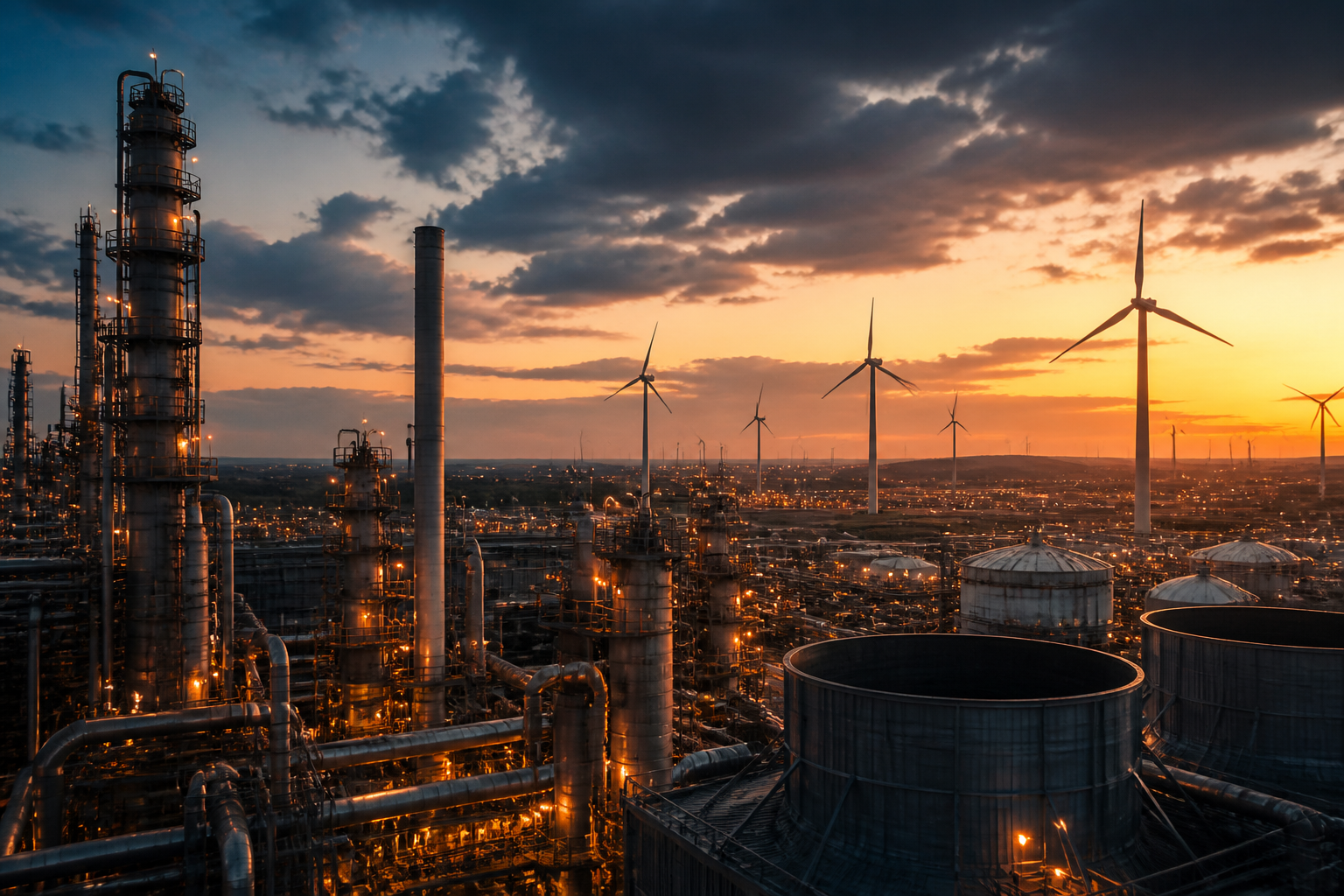
The Paradox of Prosperity: Hydrocarbon Resilience in the Age of Transition
This comprehensive editorial examines the tension between renewable energy milestones and the surging demand for traditional fuels. From record profits at Marathon Petroleum to the impact of cooling CPI data on energy equities, we analyse the shifting landscape of global power.
The global energy complex finds itself at a singular crossroads, where the ideological momentum of the green transition meets the unyielding reality of industrial demand and geopolitical volatility. While international bodies such as the World Economic Forum celebrate record milestones in renewable adoption, the equity markets tell a more nuanced story of fossil fuel resilience. Recent performance data from firms like Marathon Petroleum, which has reached record highs, suggests that the appetite for refined products and traditional hydrocarbons remains not only stable but central to the global economic recovery. This divergence between long-term environmental objectives and immediate market requirements is being sharpened by cooling inflationary pressures in the United States, where Consumer Price Index data has begun to alleviate some pressure on the Federal Reserve, potentially paving the way for a more stable investment climate in capital-intensive energy projects.
The Strategic Resilience of Downstream Majors
The financial performance of major downstream players provides a stark illustration of the current market cycle. Marathon Petroleum has recently emerged as a leader among a cohort of energy newcomers on elite stock lists, reflecting a broader trend where operational efficiency and high refining margins are rewarding shareholders. This is not an isolated phenomenon, as the sector has seen significant interest in companies ranging from ExxonMobil to Chevron, despite the overarching narrative of a shift toward low-carbon alternatives. The strength of these companies is rooted in their ability to maintain cash flows while simultaneously navigating the regulatory pressures of the energy transition. For institutional investors, the appeal lies in the defensive nature of these assets during periods of macroeconomic uncertainty, particularly when energy security has become a primary concern for sovereign states.
Inflation Dynamics and the Federal Reserve Pivot
Economic data released throughout August has provided a clearer picture of the monetary environment in which energy firms must operate. The latest Consumer Price Index and Producer Price Index readings suggest that the aggressive interest rate hikes of the past eighteen months may finally be tempering price growth. This cooling effect has significant implications for the energy sector, which is notoriously sensitive to borrowing costs. As the probability of further rate hikes wanes, the cost of capital for both traditional exploration and large-scale renewable projects is expected to stabilise. This shift has already supported a rally in bonds and provided a more hospitable environment for energy equities, which had previously been weighed down by the prospect of a prolonged contractionary policy. However, the risk of energy-driven shocks remains a persistent tail risk, especially as Middle East tensions continue to exert an unpredictable influence on global crude supply chains.
The Uneven Geography of the Energy Transition
Progress toward a decarbonised economy remains a study in geographic and economic contrast. The World Economic Forum has noted that while certain milestones are being surpassed annually, the distribution of this progress is deeply asymmetrical. Advanced economies in Northern Europe and parts of East Asia are making rapid strides in integrating solar and wind capacity into their national grids, yet the developing world remains heavily reliant on coal and natural gas to fuel basic industrialisation. This imbalance creates a dual-track global energy market where the demand for traditional thermal fuels persists in the global south even as the global north attempts to divest. Institutions such as the International Energy Agency continue to highlight the necessity of massive capital transfers to emerging markets to bridge this gap, yet private sector investment remains cautious due to the perceived risks of long-term projects in volatile jurisdictions.
Natural Gas and the AI Revolution
An unexpected driver of sustained demand for traditional energy has emerged from the technology sector, specifically the massive energy requirements of artificial intelligence and high-performance computing. Data centres are consuming electricity at a rate that is straining existing power grids, leading to a resurgence in orders for gas turbines. Manufacturers such as GE Vernova and Siemens Energy are seeing a significant uptick in demand for high-efficiency gas-fired power generation, which is viewed as a necessary bridge to maintain grid stability when intermittent renewable sources fall short. This intersection of the digital and physical economies underscores the reality that the transition is not merely a replacement of one fuel for another, but an expansion of the total energy footprint. The reliability of natural gas as a firming capacity makes it an indispensable component of the modern energy mix, ensuring that even as solar and wind capacity grows, the underlying baseload remains anchored in hydrocarbons.
Geopolitical Volatility and Supply Chain Integrity
The ongoing instability in the Middle East and the protracted conflict in Ukraine continue to serve as reminders of the fragility of the global energy supply chain. These geopolitical factors provide a floor for oil prices and incentivise domestic production in regions such as the Permian Basin. For service companies like Halliburton and Schlumberger, the focus has shifted toward technological innovation that maximises yield from existing wells, reflecting a disciplined approach to capital expenditure that prioritises returns over raw volume expansion. This strategy has allowed the industry to remain profitable even amidst fluctuating crude prices. Furthermore, the strategic importance of energy independence has led to a re-evaluation of coal in certain markets, where security of supply has temporarily taken precedence over carbon reduction targets, illustrating the difficult trade-offs facing contemporary policymakers.
Market Outlook and the Path Forward
Looking ahead, the energy sector is likely to be defined by a sophisticated hybridity rather than a clean break from the past. The robust performance of companies like Marathon Petroleum and the strategic pivots of the oil majors indicate that the industry is preparing for a multi-decade transition period. As inflation moderates and interest rates potentially move toward a more neutral stance, we expect to see a surge in strategic mergers and acquisitions as firms seek to consolidate their market positions and diversify their portfolios. The primary challenge for the coming year will be balancing the immediate requirements of energy security and affordability with the long-term mandate of decarbonisation. Investors should anticipate continued volatility, yet the underlying strength of the energy complex suggests that it remains a cornerstone of the global industrial economy. The transition is indeed underway, but its trajectory will be governed as much by the cold logic of the balance sheet as by the aspirations of environmental policy.