The Orbital Arbitrage: Evaluating the Resilience of Next-Generation Strategic Infrastructure
A deep dive into the shifting paradigms of strategic assets, from the rise of orbital logistics to the capital-intensive demands of artificial intelligence and the sovereign debt pressures shaping 2026's economy.
The global infrastructure landscape is currently undergoing a structural transformation as profound as the nineteenth-century rail boom, though its modern iteration is defined by the ethereal realms of low-Earth orbit and high-performance computing clusters rather than traditional iron and coal. As the third quarter of 2026 unfolds, institutional investors are grappling with a dual-speed economy: one where a softening labour market fuels volatility in equities, yet the demand for capital to fund technological expansion remains insatiable. This paradox is most evident in the credit markets, where the rising cost of insuring tech-sector debt via credit default swaps signals a sobering reappraisal of risk, even as valuations for frontier infrastructure projects reach unprecedented heights. The intersection of persistent government borrowing, geopolitical instability in the Middle East, and the aggressive build-out of artificial intelligence facilities has created a fiercely competitive environment for liquidity, forcing a fundamental rethink of what constitutes a 'safe' long-term asset.
The Credibility of the Silicon Sovereign
The most pressing concern for the contemporary treasurer is the shifting risk profile of the technology behemoths that now function as the primary architects of global infrastructure. Recent movements in the credit default swap market indicate that the era of treating technology debt as a proxy for risk-free sovereign paper is nearing its conclusion. As Deloitte Insights has noted, the increasing cost of insuring this debt reflects growing anxieties regarding a potential bubble in artificial intelligence investment and the immense capital expenditure required to sustain it. For years, the market assumed that the cash flows of major Silicon Valley entities were impervious to macroeconomic cycles, yet the sheer scale of investment required for next-generation data centres, such as the contentious North Loop facility and similar hyper-scale projects, has introduced a level of capital intensity that rivals traditional utility providers. This transition from asset-light software models to asset-heavy physical footprints necessitates a higher risk premium, particularly as the broader economic backdrop remains clouded by mixed signals from the labour market.
Orbital Assets and the Century-Bond Paradigm
Amidst this volatility, a new class of strategic infrastructure is emerging in the form of private aerospace networks. The recent comparisons between SpaceX and the hundred-year railroad bonds of the Victorian era are not merely hyperbole; they represent a significant shift in how institutional investors perceive long-term value. Unlike the cyclical nature of consumer electronics or retail, orbital logistics and satellite communications offer a utility-like durability that spans generations. SpaceX’s performance in the latest quarter suggests that the company is transitioning from a speculative venture into a backbone of global connectivity. By securing the routes to low-Earth orbit, these entities are effectively building the toll roads of the twenty-first century. For the multi-generational trust or the sovereign wealth fund, the appeal lies in the barriers to entry; the capital and technical expertise required to replicate this infrastructure are so vast that it creates a natural monopoly, shielded from the transient fluctuations of the tech-heavy Nasdaq index.
The Data Centre Dilemma and Urban Friction
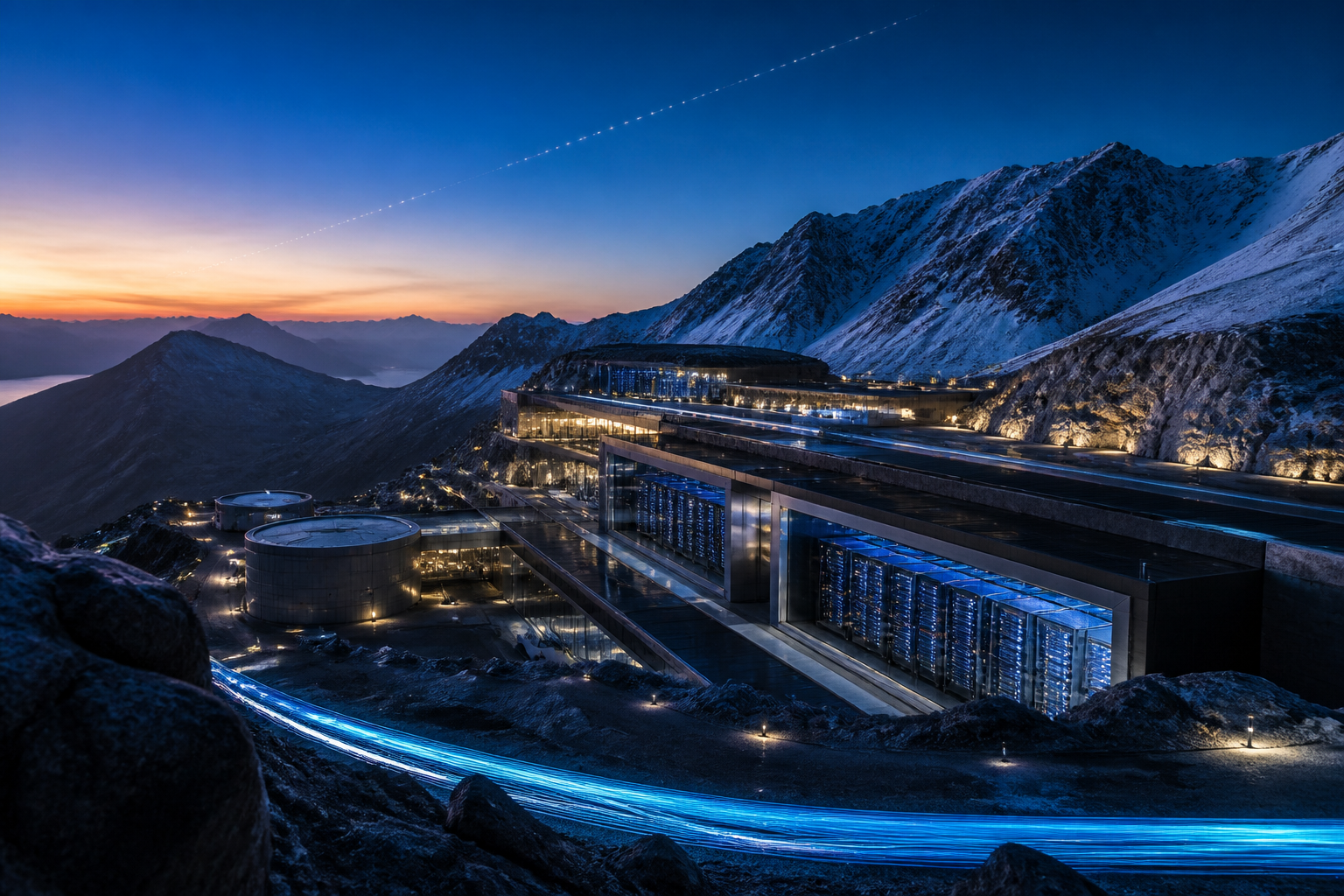
While the heavens offer a new frontier, the terrestrial reality of infrastructure expansion is fraught with political and social friction. The debate surrounding the North Loop data centre serves as a microcosm for a global trend where digital ambition meets local resistance. These facilities are the physical manifestations of the AI revolution, yet they place immense strain on regional power grids and water supplies. As BlackRock Investment Institute has observed, the competition for capital is intensifying just as companies are forced to invest at an unprecedented pace to avoid obsolescence. This 'arms race' in computing power requires a rethink of urban planning and energy policy. Governments are increasingly caught between the desire to host the infrastructure of the future and the necessity of protecting the utility costs of their constituents. The delay in federal funding bills and the looming threat of legislative shutdowns in the United States only exacerbate this uncertainty, leaving critical infrastructure projects in a state of regulatory limbo.
Financing the Transition in a High-Rate Environment
The macroeconomic environment of 2026 has fundamentally altered the calculus for infrastructure financing. Persistent government borrowing, driven by social commitments and the need to subsidise green transitions, has crowded out private investment to a degree not seen in decades. With borrowing costs remaining stubbornly high, the cost of capital has become the primary filter for project viability. This is particularly evident in the energy sector, where Middle East tensions continue to threaten supply chains and increase the volatility of fuel prices. Infrastructure projects that were conceived in an era of near-zero interest rates are now being stress-tested against a reality where capital is both scarce and expensive. The result is a flight to quality, where only the most strategically vital projects, those with clear, long-term contractual yields or sovereign-backed guarantees, can secure the necessary funding. The 'quiet August' anticipated by some market analysts has failed to materialise, replaced instead by a frantic repricing of risk across all asset classes.
Geopolitical Realignment and Supply Chain Sovereignty
Infrastructure is no longer merely an economic concern; it has become a central pillar of national security. The 'AI brain drain' and the collapse of former tech darlings like Airtable, which has reportedly seen a ninety per cent decline in value, highlight the fragility of the current ecosystem. In response, nations are prioritising 'sovereign AI' and domestic semiconductor supply chains. The use of US data to fuel Chinese artificial intelligence developments has sparked a regulatory backlash that will likely lead to the balkanisation of digital infrastructure. This means that future infrastructure investments will be increasingly evaluated through a geopolitical lens. A subsea cable or a data centre is no longer just a node in a global network; it is a strategic asset that must be protected from foreign interference. For investors, this adds a layer of complexity, as the profitability of an asset may be secondary to its alignment with the host nation's strategic interests.
The Forward Outlook: A New Hierarchy of Assets
Looking toward the end of the decade, we anticipate a divergence in the infrastructure market. The distinction between 'commodity' infrastructure and 'strategic' infrastructure will become more pronounced. Traditional assets, such as roads and bridges, will continue to struggle for funding as municipal budgets are squeezed by rising debt service costs. Conversely, infrastructure that enables the digital and orbital economies will command a premium. We expect to see the emergence of new financial instruments, perhaps modelled on the 'century bonds' of the past, specifically designed to fund the multi-decade build-out of lunar logistics and fusion energy grids. However, the path forward is not without peril. The rising cost of credit default swaps for tech firms serves as a reminder that even the most innovative companies are not immune to the laws of finance. The winners in this new era will be those who can navigate the tension between the infinite promise of technology and the finite reality of global capital. Investors must look beyond the immediate volatility of the jobs report and the stock market, focusing instead on the underlying physical networks that will sustain global commerce for the next hundred years.