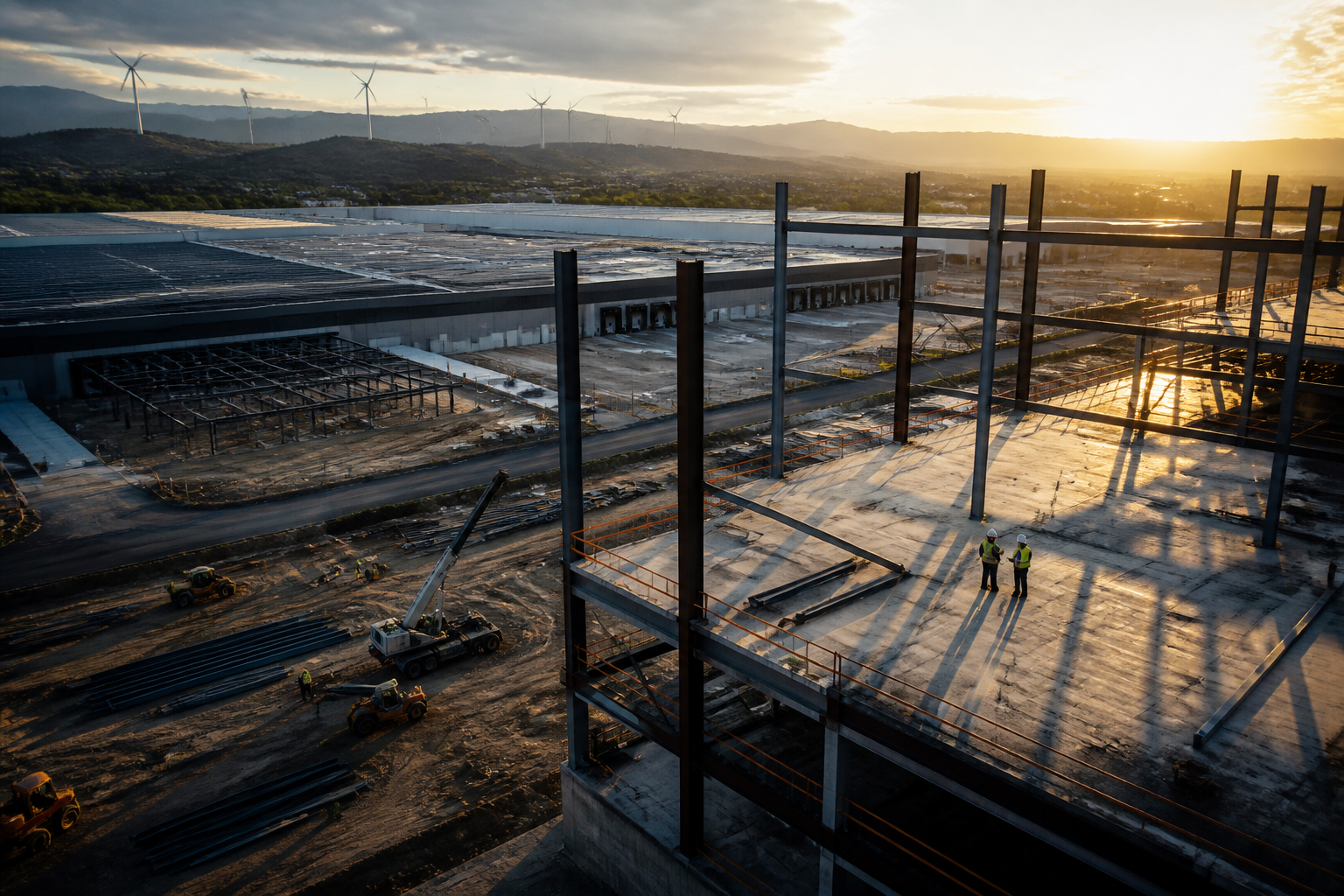
The New Architecture of Capital: Assessing the Global Infrastructure Supercycle
This analytical long-form editorial explores the pivot toward critical infrastructure financing, examining record fund closures by KKR and Bank of America alongside the geopolitical shifts defining the next decade.
The global economic landscape is currently witnessing a profound recalibration of investment priorities, characterized by a transition from speculative digital assets toward the tangible foundations of industrial productivity. In a week marked by extraordinary financial commitments, the sheer scale of capital being marshalled for physical systems suggests that infrastructure is no longer a peripheral asset class but rather the primary engine of macroeconomic stability. With Bank of America unveiling a two hundred and fifty billion dollar Critical Infrastructure Finance Initiative and KKR closing a nineteen point two billion dollar fund specifically for North American projects, the institutional appetite for long-term, yield-bearing physical assets has reached a historic zenith. This surge is not merely a reaction to short-term inflationary pressures but a foundational shift in how the largest financial institutions perceive risk, resilience, and the role of the state in facilitating private expansion.
The Commercial Banking Pivot toward Physical Resilience
The announcement from Bank of America represents a significant departure from traditional commercial lending patterns, signaling a belief that the next decade of growth will be defined by the renewal of aging systems and the creation of new energy networks. By earmarking a quarter of a trillion dollars for critical projects, the institution is positioning itself at the nexus of public policy and private profit. This initiative targets the essential arteries of the modern economy, including power grids, water treatment facilities, and transport hubs that have suffered from decades of under-investment. The strategic logic is clear, as these assets provide predictable cash flows and a hedge against the volatility seen in equity markets, particularly as global trade remains sensitive to supply chain disruptions. Furthermore, the commitment underscores a growing recognition that the transition to a low-carbon economy requires a massive infusion of liquidity that sovereign budgets alone cannot provide.
Private Equity and the Consolidation of Essential Assets
While commercial banks are expanding their lending facilities, private equity giants are raising record-breaking pools of capital to acquire and manage infrastructure directly. The recent closure of KKR’s nineteen point two billion dollar fund for North American infrastructure illustrates the intense competition for brownfield and greenfield sites across the continent. This fund is part of a broader trend where institutional investors, including pension funds and sovereign wealth funds, seek exposure to assets that are inherently monopolistic or heavily regulated, thus offering protection against the cyclical nature of the broader market. The entry of such massive private volumes into the infrastructure space is fundamentally changing the ownership structure of essential services, moving them away from public oversight and into the hands of sophisticated asset managers who prioritise operational efficiency and technological integration.
The Geopolitical Context of Industrial Renewal
The current infrastructure boom cannot be divorced from the shifting geopolitical climate, particularly the cooling of relations between the West and China. As reports indicate a slump in Chinese consumer giants like JD.com, which recently saw its first decline in over a decade, and as investors remain wary of the regulatory environment in Beijing, capital is being redirected toward domestic resilience in Europe and North America. The narrative of economic isolation, particularly regarding strategic competitors and sanctioned states, has forced a rethink of global supply chains. Consequently, infrastructure investment is now viewed through the lens of national security, with a focus on securing energy independence and domestic manufacturing capabilities. The result is a competitive race to build out the necessary hardware to support a more fragmented, yet more self-reliant, international order.
Technological Integration and the Data Infrastructure Nexus
Modern infrastructure is increasingly inseparable from the digital architecture required to support artificial intelligence and high-frequency data processing. The massive buildout of data centres and the upgrading of electrical grids to support them represent a significant portion of the current investment wave. Companies like NVIDIA, which remain at the heart of the AI trade, are driving a demand for physical space and power that was unimaginable a decade ago. This intersection of heavy industry and high technology is creating a new category of infrastructure that combines traditional civil engineering with advanced semiconductors and renewable energy sources. The financial sector is responding by creating bespoke funding vehicles that account for the unique depreciation schedules and high energy requirements of these technological hubs, ensuring that the digital revolution is anchored by robust physical support systems.
Risk Mitigation and the Inflationary Environment
As markets remain focused on consumer price index data and the potential for prolonged interest rate volatility, the defensive qualities of infrastructure have become its most attractive feature. Unlike traditional corporate debt or consumer-facing equities, infrastructure projects often include inflation-linked revenue streams, either through regulatory frameworks or long-term contracts. This inherent protection makes the current two hundred and fifty billion dollar push a rational response to an era of fiscal uncertainty. Investors are effectively buying into the continuity of social and economic life, betting that regardless of the broader market performance, the demand for electricity, clean water, and efficient logistics will remain constant. This shift represents a maturation of the asset class, as it moves from the periphery of institutional portfolios to a central role in wealth preservation strategies.
A Forward Looking Outlook on Global Structural Development
The trajectory of global capital indicates that we are in the early stages of a multi-decade infrastructure supercycle that will fundamentally reshape the urban and industrial landscape. The convergence of private equity dominance, commercial bank liquidity, and state-driven security concerns is creating a formidable pipeline of projects that will define economic competitiveness in the mid-twenty-first century. As the focus shifts from purely digital innovation back to the physical foundations of society, the primary challenge for policymakers will be ensuring that this private-led buildout serves the public interest while maintaining the returns necessary to sustain such vast investment. The coming years will likely see a proliferation of public-private partnerships that attempt to balance these competing demands, as the world races to build the resilient, high-tech, and sustainable systems required for the next era of global commerce. Those institutions that successfully navigate this complex regulatory and financial terrain will not only secure their own financial futures but will also hold the keys to the essential machinery of the modern world.