The New Agrarian Realpolitik: Resilience Amidst Global Trade Volatility
This editorial examines the intersection of food security and international trade, detailing how institutional investment and diplomatic missions are attempting to stabilise a sector fraught by geopolitical tension.
The global agrifood landscape is currently undergoing a structural transformation that matches the gravity of the post-war industrial shifts. For decades, the movement of calories and agricultural commodities was governed by a relative consensus on trade liberalisation, but that era has been superseded by what might be termed the age of agrarian realpolitik. Today, the sector finds itself caught between the competing pressures of escalating geopolitical tensions, the physical imperatives of climate adaptation, and a renewed state-led drive for food sovereignty. While the recent 2026 ifac Food and Agri-business Report indicates that nearly eighty per cent of industry participants maintain an ambition for growth, this optimism is tempered by a profound awareness of the systemic risks inherent in modern supply chains. The current environment is one where the quiet strengths of traditional agricultural powerhouses, such as Canada with its vast production of beef, barley, and pulses, are being tested by the volatility of international relations and the rising costs of logistical resilience.
The Resurgence of State-Led Investment Frameworks
Central to this shift is the emergence of sophisticated, government-led investment platforms designed to insulate domestic production from global shocks. The ANORA Platform in Uzbekistan serves as a primary example of this institutional pivot. By establishing a centralised mechanism to mobilise and coordinate climate-smart agrifood investments, Uzbekistan is attempting to transition from traditional subsistence models to a high-value, resilient export economy. This is not merely an exercise in regional development, it is a strategic attempt to de-risk the agricultural sector for international private capital. By providing a clear framework for climate-smart technologies, such platforms address the fundamental anxiety of the modern investor, which is how to maintain productivity in a warming world. The ANORA model suggests that the future of agricultural development will be dictated by the ability of the state to act as a primary facilitator, bridging the gap between smallholder needs and the demands of global institutional investors.
Diplomatic Initiatives and Market Expansion
As domestic frameworks strengthen, the pursuit of new markets remains a critical pillar of Western agricultural policy. The upcoming mission by the European Commissioner for Agriculture and Food, Christophe Hansen, to Mexico in November 2026 highlights the ongoing importance of high-value trade corridors. Accompanied by a substantial business delegation, the mission represents a concerted effort to expand the footprint of European agrifood and beverage exports in Latin America. Mexico represents a strategic pivot for the European Union, offering a gateway to a growing middle class and a Diversified consumer base that is increasingly receptive to European standards of quality and provenance. This diplomatic push is not merely about sales, it is about creating a stable counterweight to the uncertainties found in more traditional trade relationships. In an era where trade barriers can be erected overnight, the diversification of export markets is no longer a luxury but a fundamental requirement for the survival of the European agrifood sector.
Addressing the Crisis of Food Insecurity
The humanitarian dimension of this transformation is equally urgent, as the gap between food abundance and food scarcity continues to widen. The Global Agriculture and Food Security Program, known as GAFSP, has recently opened a one hundred and sixty-three million dollar grants program specifically targeted at bolstering food security. This initiative is focused on smallholder farmers, who remain the most vulnerable yet essential component of the global food system. The funding is intended to provide the necessary resources to ensure that these farmers can adapt to changing weather patterns and maintain their livelihoods amidst rising input costs. The focus on smallholders reflects a growing consensus that global food security cannot be achieved through large-scale industrial farming alone, it requires the preservation of the millions of small plots that provide the bulk of nutrition in the developing world. The GAFSP initiative underscores the reality that without targeted financial intervention, the structural weaknesses in the global food system will continue to generate political and social instability.
The Canadian Paradigm and Pulse Market Dynamics
Canada provides a compelling case study in the challenges of balancing export-oriented production with the realities of modern trade friction. As a leading producer of pulses, barley, and beef, the Canadian agricultural economy has long been a bedrock of the nation's wealth. However, the ongoing trade tensions that have characterised the middle of this decade have forced a re-evaluation of its market reliance. The Canadian experience illustrates how even the most efficient producers are susceptible to the whims of geopolitical posturing. Pulses, which are increasingly seen as a vital protein source for a sustainable future, have become a focal point in these trade disputes. The ability of Canadian producers to pivot toward new markets while maintaining the rigorous standards required for international trade is a testament to the resilience of their sectoral infrastructure, yet it also highlights the constant pressure to innovate in the face of protectionist headwinds.
Technological Integration and Climate Adaptation
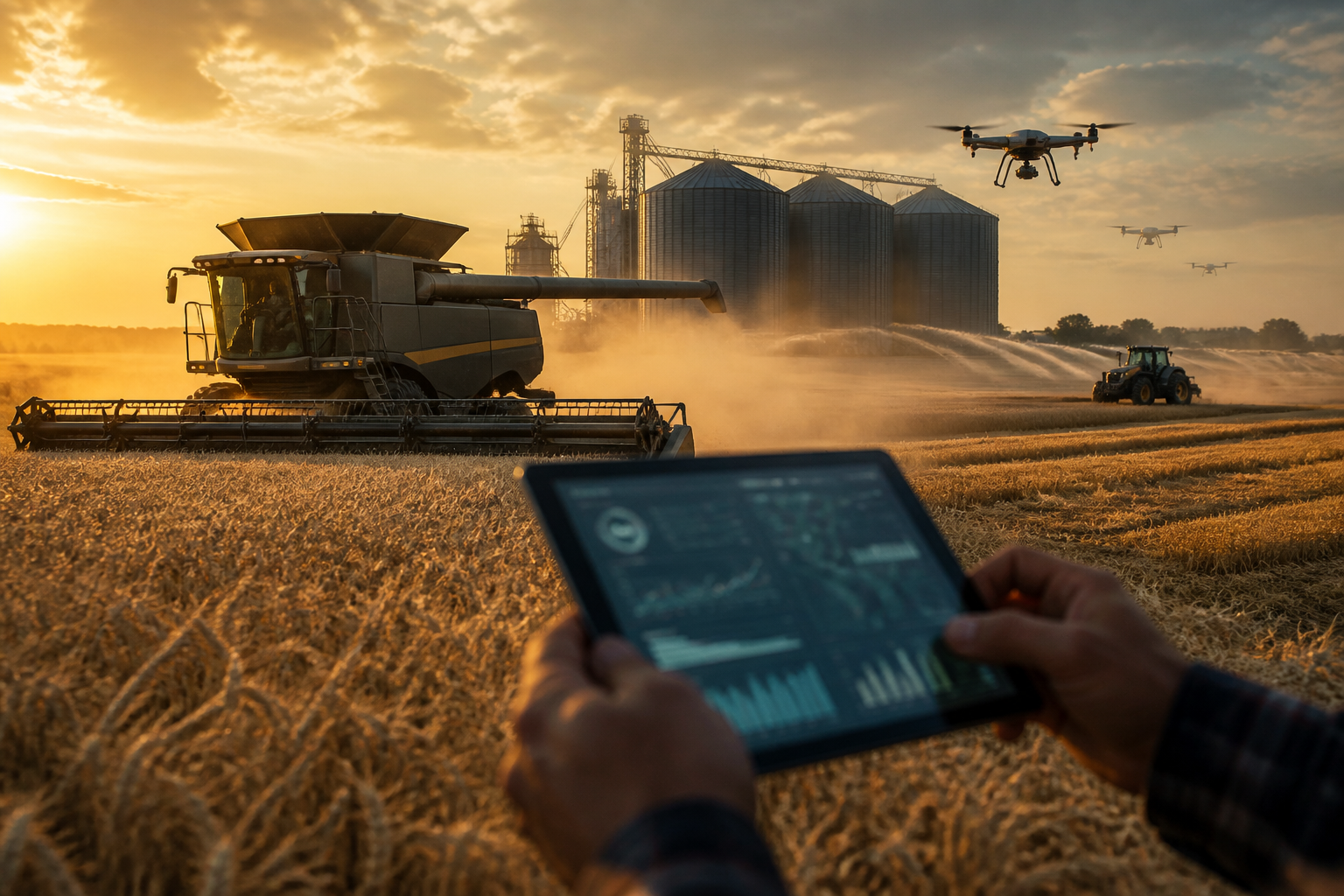
Underpinning all these strategic shifts is the unavoidable necessity of technological integration. Climate-smart agriculture is no longer a niche preference, it is the new baseline for any business seeking long-term viability. The integration of precision farming, satellite monitoring, and drought-resistant crop varieties is essential for maintaining yields in increasingly erratic climates. For many firms, this technological transition requires significant capital expenditure at a time when margins are being squeezed by higher energy prices and labour shortages. The ifac report suggests that while the intent to grow is present, the path to that growth is through the adoption of data-driven management and sustainable practices. The businesses that will thrive are those that can successfully marry traditional agrarian knowledge with the efficiencies of digital infrastructure, ensuring that every drop of water and every gram of fertiliser is utilised to its maximum potential.
A Forecast for Sustained Volatility
Looking toward the end of the decade, the agrifood sector will likely remain in a state of flux as it reconciles its historical structures with the demands of a new global order. The shift toward state-led platforms and diversified trade missions indicates a move away from the laissez-faire attitudes of the past towards a more managed and strategic approach to primary production. The success of initiatives such as the ANORA Platform and the GAFSP grants will determine whether the world can successfully navigate the looming food security crises that are predicted for the 2030s. The sector is moving toward a more fragmented but perhaps more resilient future, where regional self-sufficiency and high-value international trade coexist. For the institutional investor and the policy maker, the priority must be the creation of stable frameworks that can withstand both the physical volatility of the climate and the political volatility of the global stage. The age of easy abundance is over, the age of strategic resilience has begun.