The Malthusian Pivot: Geopolitics And The New Global Architecture Of Agrifood Security
An in-depth analysis of the evolving global agricultural landscape, examining how biofuel demand, price floors in Southeast Asia, and the decline of traditional farming unions are reshaping the international order.
The global agricultural landscape is currently undergoing a structural transformation that transcends mere cyclical price fluctuations, moving instead toward a period of systemic realignment. For decades, the primary concern of international agrifood policy was the management of surplus and the liberalisation of trade barriers to facilitate the movement of calories from high-production regions to net importers. However, the recent convergence of geopolitical instability, the aggressive expansion of the biofuels sector, and a fundamental shift in the relationship between state regulators and traditional agrarian lobbies has birthed a new era of resource nationalism and industrial protectionism. From the boardrooms of Archer-Daniels-Midland in Chicago to the rice paddies of the Mekong Delta, the prevailing sentiment is one of cautious repositioning. This is not merely a reaction to transitory supply shocks but a calculated response to a world where food security is increasingly viewed through the lens of national defence and renewable energy mandates. The days of predictable commodity flows, governed by the invisible hand of the market and the visible hand of powerful farmers' unions, appear to be receding, replaced by a more fragmented and politically charged ecosystem.
The Biofuel Imperative and Processing Realignments
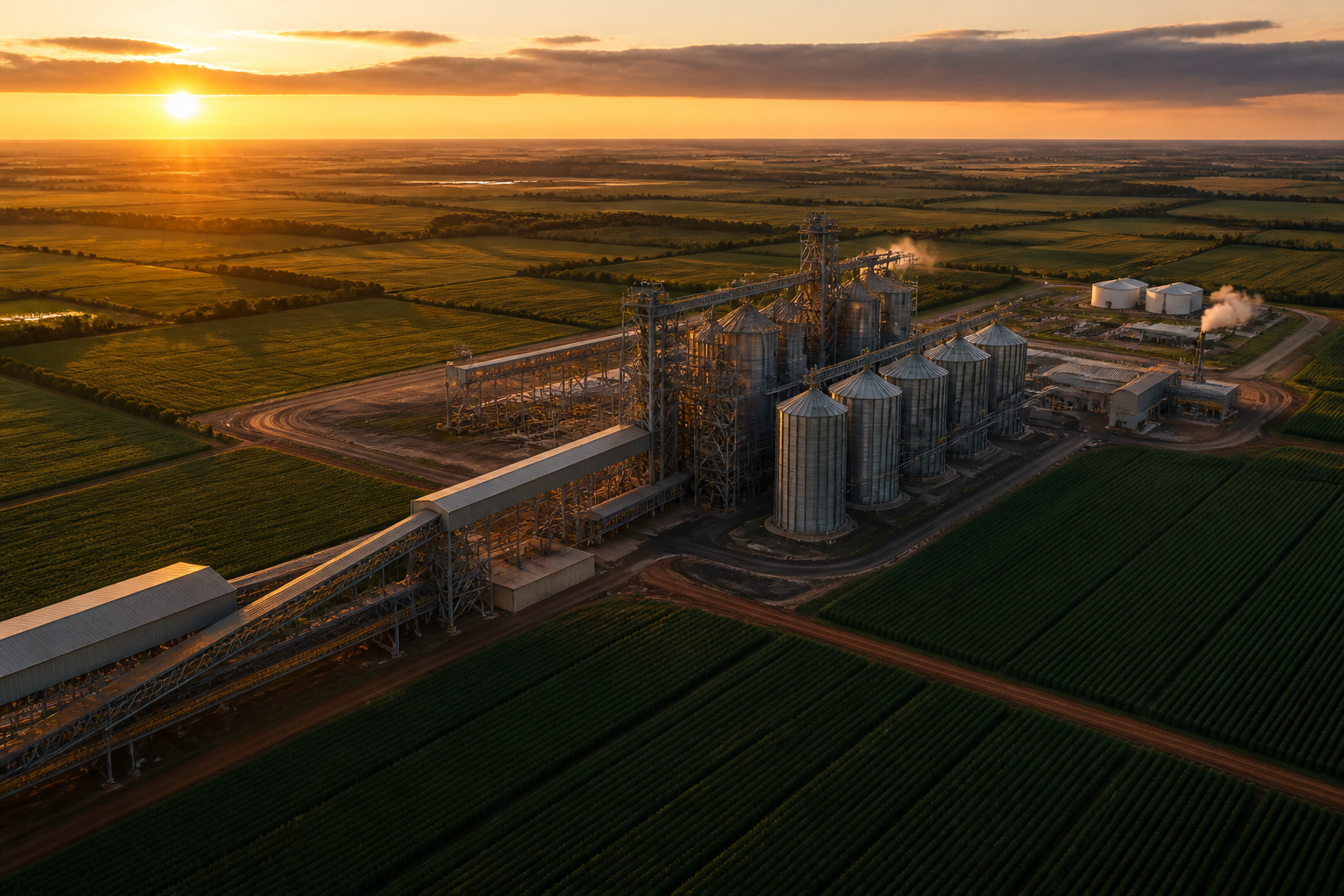
The financial performance and strategic guidance recently issued by Archer-Daniels-Midland, commonly known as ADM, serves as a significant bellwether for the broader agrifood industry. By lifting its 2026 profit forecast, the American multinational has signalled a profound confidence in the longevity of high margins within the soybean processing sector. This optimism is not rooted in traditional animal feed demand alone but is increasingly tethered to the burgeoning biofuels market. The global transition toward renewable diesel and sustainable aviation fuel has created a voracious appetite for vegetable oils, effectively decoupling soybean prices from their historical relationship with livestock cycles. This shift has profound implications for global trade flows, as domestic processing capacity in the United States and Brazil expands to meet energy mandates, potentially reducing the volume of raw beans available for export to traditional buyers like China. The institutionalisation of biofuels as a cornerstone of energy policy ensures that agricultural commodities are no longer just food or feed, they are strategic energy reserves. This transition necessitates a massive capital expenditure in crushing facilities, altering the industrial topography of the American Midwest and the Brazilian Cerrado, while simultaneously raising questions about the long-term affordability of food oils for developing nations.
Rice Nationalism and the Return of Price Floors
In Southeast Asia, the decision by Vietnam's primary rice industry body to propose a formal export price floor represents a significant departure from the market-oriented reforms of the past three decades. This move is designed to shield domestic producers and exporters from the volatility of international markets, yet it also serves as a defensive mechanism against the aggressive procurement strategies of neighbouring importers. Vietnam, as the world's third-largest rice exporter, wields substantial influence over global food stability. By suggesting a minimum price, the Vietnam Food Association is attempting to internalise the costs of climate adaptation and rising input prices, effectively passing these costs onto the global consumer. This trend toward price setting is reflective of a broader movement within the Global South to reclaim agency over commodity pricing. It mirrors the actions of India, which has previously implemented export bans and restrictions to ensure domestic availability. Such protectionist measures, while understandable from a national security perspective, threaten to exacerbate global food inflation and undermine the reliability of the international trading system. The emergence of a fragmented rice market, where prices are dictated by state-led cartels rather than global demand, suggests a return to the mercantilist policies of the twentieth century.
The Erosion of Traditional Agrarian Influence
One of the most striking sociological shifts in the agricultural sector is the visible decline in the political hegemony of traditional farmers' unions. In the United Kingdom, specifically within Northern Ireland, the recent assertions by Agriculture Minister Andrew Muir that the days of the farmers' union dictating policy are over mark a watershed moment in rural governance. For a century, organizations like the Ulster Farmers' Union have enjoyed an almost symbiotic relationship with the state, ensuring that policy was largely tailored to the interests of primary producers. However, the modern administrative state is increasingly prioritising environmental targets, biodiversity mandates, and consumer protection over the narrow economic interests of the farming lobby. This tension is not unique to the British Isles, it is visible across the European Union, where the Common Agricultural Policy is being recalibrated to align with the Green Deal. The marginalisation of traditional lobbying groups suggests that future agricultural policy will be driven by technocratic environmental goals rather than the protection of rural livelihoods. This creates a volatile political environment, as disenfranchised farming communities may turn toward populist movements, further complicating the task of long-term strategic planning in the agrifood sector.
Supply Chain Resilience and the Logistics of Scarcity
The logistical infrastructure that supports global agrifood trade is under unprecedented strain, necessitating a rethink of just-in-time delivery models. The combination of climate-induced disruptions to major waterways, such as the Panama Canal and the Rhine, and the persistent threat of maritime conflict in the Black Sea and the Red Sea, has exposed the fragility of the global grain trade. Institutions and multinational corporations are now investing heavily in redundant supply chains and localized processing hubs to mitigate these risks. The focus has shifted from cost-optimisation to resilience, with a growing emphasis on the securitisation of shipping lanes and the development of rail-based corridors that are less susceptible to geopolitical interference. Furthermore, the digitalization of the supply chain, utilizing blockchain and real-time data analytics, is no longer a luxury but a requirement for managing the complexities of modern trade. Companies that fail to adapt to this new reality of frequent and severe logistical disruptions will find themselves at a severe competitive disadvantage, particularly as the cost of insurance and freight remains elevated in a volatile global environment.
Technological Disruption and the Productivity Gap
To meet the demands of a growing global population while adhering to stricter environmental regulations, the agricultural sector must undergo a technological revolution. The productivity gap between advanced economies and the developing world remains a critical hurdle for global food security. Precision agriculture, which utilizes satellite imagery, autonomous machinery, and soil sensors, offers a potential solution by maximizing yields while minimizing input costs and environmental impact. However, the high capital requirements for these technologies risk creating a two-tier global agricultural system, where wealthy nations achieve high-efficiency sustainability while poorer nations struggle with traditional, low-yield methods. The role of multinational agrifood giants in transferring this technology will be crucial. Furthermore, the development of climate-resilient crop varieties through gene-editing technologies like CRISPR represents a frontier of scientific innovation that could decouple agricultural output from the whims of an increasingly erratic climate. The challenge for policymakers will be to create a regulatory framework that encourages such innovation without compromising safety or public trust.
The Geopolitics of Fertiliser and Input Independence
The war in Ukraine and the subsequent sanctions regime against Russia and Belarus have highlighted the extreme vulnerability of the global food system to disruptions in the fertiliser market. As major exporters of potash, phosphate, and nitrogen-based fertilisers, these nations hold a significant lever over global agricultural productivity. This dependency has prompted a scramble for input independence, with countries in Africa, South America, and North America seeking to develop domestic fertiliser production capabilities. The geopolitical significance of these chemical inputs cannot be overstated, they are the foundation of modern caloric production. The movement toward green ammonia, produced using renewable energy, offers a dual benefit of reducing carbon emissions and decreasing reliance on natural gas imports from volatile regions. However, the transition to a more self-sufficient and sustainable fertiliser industry will take years, if not decades, leaving the global agrifood sector exposed to high input costs and potential shortages in the interim. This situation underscores the need for a more diversified and less concentrated global market for agricultural inputs.
Future Outlook and Strategic Conclusions
Looking ahead, the agrifood sector will continue to be defined by the intersection of energy policy, environmental regulation, and national security. The era of cheap, abundant food and unencumbered trade is likely coming to an end, replaced by a more expensive and complex reality. Investors and policymakers must prepare for a world where agricultural commodities are increasingly politicised and where the influence of traditional rural interests is balanced against broader societal goals such as carbon neutrality and energy independence. The success of major players like ADM in pivoting toward biofuels, and the efforts of nations like Vietnam to protect their producers through price floors, are early indicators of this new order. To navigate this landscape, stakeholders must prioritize agility, investing in both technological innovation and diversified supply chains. The ultimate challenge will be to ensure that this transition toward a more secure and sustainable food system does not come at the expense of the world's most vulnerable populations. The coming decade will test the resilience of the global agrifood architecture, demanding a level of international cooperation that is currently in short supply, yet more necessary than ever before.