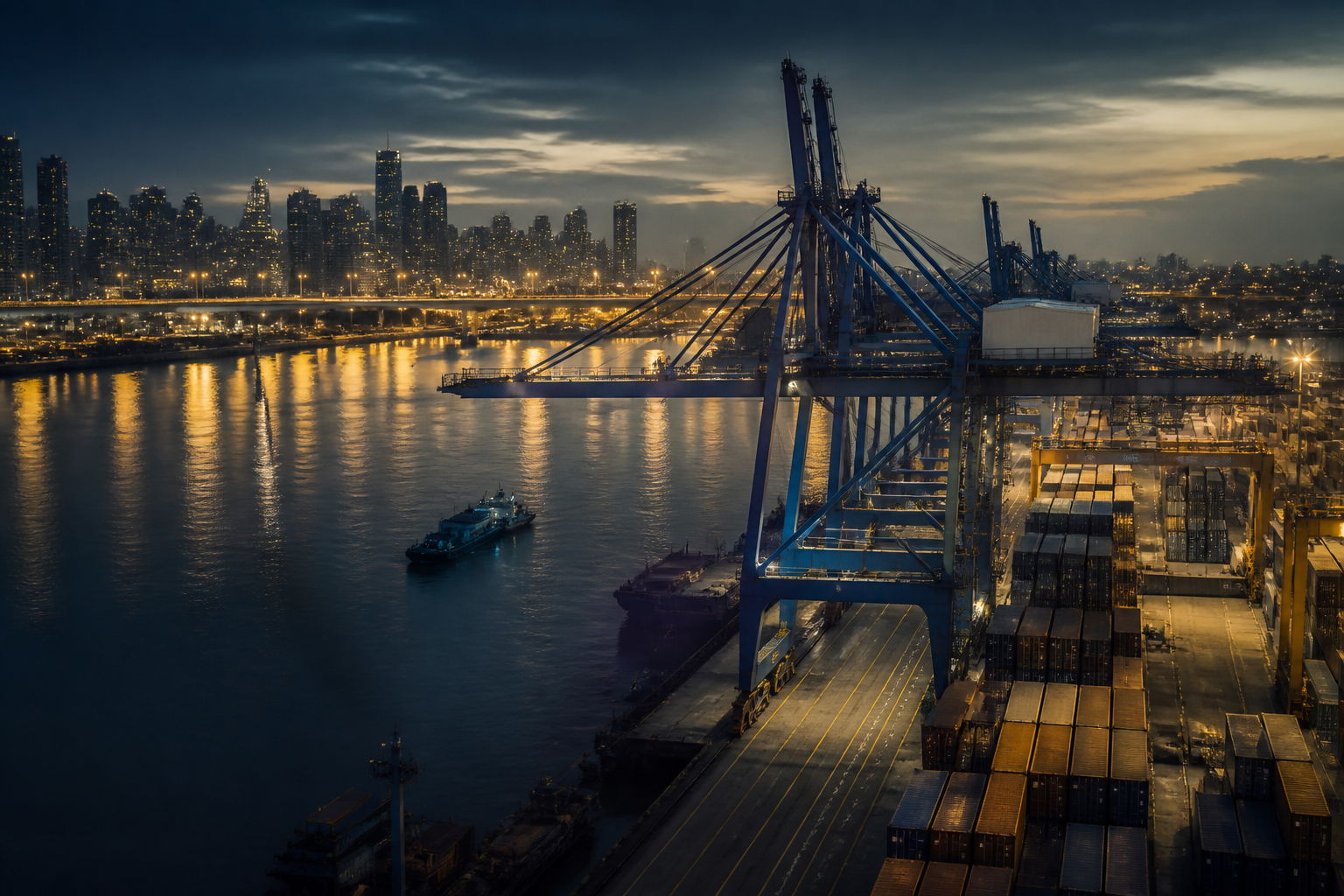
The Logistics Archipelago: Navigating The New Era Of High Bond Yields And Port Industrialisation
A deep dive into how current fiscal volatility, exemplified by 2007-era bond yields, is reshaping the maritime and logistics landscape, from the Helena Harbor expansion to the broader squeeze on industrial margins.
The global logistics apparatus is currently undergoing a painful yet necessary recalibration as the cost of capital returns to levels not witnessed since the pre-financial crisis era of 2007. For much of the past two decades, the expansion of maritime and industrial infrastructure was lubricated by the historical anomaly of near-zero interest rates, yet that period of fiscal grace has definitively concluded. As bond yields surge and the United States Treasury moves aggressively to manage market volatility through expanded buyback programmes, the physical reality of infrastructure development is being tested by a new regime of high-cost debt. This shift is not merely a concern for the financial desks of London or New York, rather, it is a structural transformation affecting every node of the global supply chain. From the inland waterways of Arkansas to the deep-water hubs of the European coast, the necessity of efficiency has replaced the luxury of expansion, creating a bifurcated landscape where only the most strategically positioned assets can attract the capital required for survival. The recent volatility in the bond market, coupled with persistent producer price inflation in industrial heartlands like Germany, suggests that the infrastructure sector is entering a period of Darwinian selection where operational margins are squeezed between falling demand and sticky, intractable costs.
The Fiscal Anchor and the Bond Vigilantes
The return of the so-called bond vigilantes marks a significant turning point for large-scale infrastructure projects that rely on long-term debt financing. As yields on sovereign debt reach heights comparable to the 2007 peak, the discount rates applied to infrastructure valuations have undergone a severe upward revision. This fiscal tightening is particularly acute in the United States, where the Treasury has been forced into emergency manoeuvres, including the doubling of bond buybacks, to maintain liquidity in the market. For the infrastructure desk, this signifies a period of profound uncertainty for projects currently in the pre-construction phase. Institutional investors, who once viewed infrastructure as a reliable proxy for fixed-income returns, are now demanding higher risk premiums to compensate for the volatility in the underlying rates. The consequence is a slowing of the project pipeline as developers reassess the feasibility of ventures that were conceived in a lower-rate environment. The market is now witnessing a rigorous audit of capital expenditure, where only those projects with guaranteed throughput and political backing, such as the strategic expansion of inland ports, are receiving the green light from lenders who have grown increasingly wary of duration risk.
Inland Hubs and the Helena Harbor Renaissance
Despite the broader macroeconomic headwinds, specific regional developments provide a blueprint for how infrastructure can adapt to the current climate. Helena Harbor in Arkansas serves as a pertinent example of this trend, where a surge in business interest has prompted a significant reassessment of its industrial potential. The Port of Helena, strategically located on the Mississippi River, represents the growing importance of inland logistics in an era where coastal congestion and high operational costs are driving businesses toward more efficient alternatives. By integrating new business prospects with targeted infrastructure projects, Helena is positioning itself as a vital node for the movement of goods, particularly for sectors that are sensitive to the rising costs of fuel and road transport. The State of the Port reports indicate that the development of new berths and storage facilities is not merely an exercise in expansion, but a strategic response to a changing logistics map. These inland hubs offer a lower-cost environment for manufacturers who are being squeezed by the twin pressures of flattening demand and persistent operational overheads, providing a necessary relief valve for the domestic supply chain.
The Margin Squeeze and Operational Realities
The industrial and goods-moving sectors are currently facing a dangerous combination of flattening demand growth and operational costs that refuse to subside. While the immediate post-pandemic period was characterised by a surge in activity, the current cycle is one of consolidation and cost-cutting. Logistics firms and industrial manufacturers are finding that prices for essential inputs, such as electricity, labour, and specialised machinery, remain elevated even as the broader economic engine begins to cool. This phenomenon, often referred to as sticky inflation, is particularly visible in the European market, where German producer price indices continue to reflect the high costs of energy and raw materials. For infrastructure operators, this means that the cost of maintaining existing assets is rising just as the revenue from throughput begins to stabilise or decline. The result is a thinning of profit margins that necessitates a radical shift toward automation and digital integration. Investments in smart port technologies and autonomous terminal tractors are no longer viewed as futuristic luxuries, but as essential tools for preserving the viability of the logistics sector in a high-cost environment.
Geopolitical Tensions and the Energy Nexus
The stability of the global infrastructure network is inextricably linked to the geopolitical tensions that continue to simmer in key maritime corridors. The ongoing pressure on the Iranian economy and the strategic importance of the Strait of Hormuz highlight the fragility of energy supplies that power the global transport fleet. Any disruption in these vital arteries has an immediate and compounding effect on the cost of logistics, further exacerbating the inflationary pressures felt by businesses worldwide. The intersection of energy security and infrastructure investment is becoming increasingly complex as nations seek to diversify their energy sources while maintaining their commitment to carbon reduction. The transition to greener fuels in the maritime sector requires massive investment in new bunkering infrastructure, yet the high cost of capital is making these long-term transitions more difficult to finance. This creates a paradox where the need for structural change is greater than ever, but the fiscal environment is at its most restrictive. Leaders in the sector must now navigate a landscape where geopolitical risk is a permanent fixture in the balance sheet, requiring sophisticated hedging strategies and a more resilient approach to asset management.
The Treasury Intervention and Market Liquidity
The recent decision by the United States Treasury to double its bond buyback programme is a clear signal that the authorities are concerned about the potential for a systemic breakdown in the credit markets. This intervention was designed to rein in yields and provide a degree of stability to a market that had become increasingly erratic. For infrastructure developers, this move provides a temporary reprieve, but it does not address the underlying structural issues of high debt and rising operational costs. The rebound in the markets following this announcement suggests that there is still a significant appetite for risk-bearing assets, provided that the fiscal authorities are perceived to be standing behind the market. However, the long-term implications of such interventions are yet to be fully understood. If the Treasury is forced to continue these emergency measures, it could lead to further distortions in the pricing of risk, making it even more difficult for investors to accurately value infrastructure assets over a twenty-year or thirty-year horizon. The reliance on central bank and treasury intervention has become a crutch for the market, one that may eventually fail if the fundamental economic data does not begin to show a more sustainable path toward growth.
Forward Outlook for Global Logistics
Looking toward the final quarter of the decade, the infrastructure sector must prepare for a period of protracted consolidation. The era of cheap money is over, and the focus has shifted from grand, speculative projects to the optimisation of existing networks and the development of strategic regional hubs. The success of locations like Helena Harbor suggests that there is a path forward for those who can offer genuine efficiency and cost savings to an embattled industrial sector. However, the broader macroeconomic environment remains fraught with risk, as the interplay between bond yields, sticky inflation, and geopolitical instability continues to challenge the traditional models of infrastructure investment. The most resilient operators will be those who can leverage technology to reduce their operational footprint while maintaining the flexibility to respond to sudden shifts in the global trade map. While the challenges are significant, the necessity of a robust and efficient logistics network ensures that infrastructure will remain a critical asset class for the global economy. The coming years will demand a more disciplined approach to capital allocation, where the focus is firmly placed on sustainability, both in fiscal and environmental terms, as the world navigates the complexities of a new economic era.