The New Architectural Standard: Geopolitics and the Artificial Intelligence Grid
This editorial examines the intersection of digital infrastructure and national security, exploring how AI job growth, strategic space assets, and industrial park expansions are reshaping the global economic landscape.
The global economy is currently undergoing a profound structural realignment, as the physical requirements of the digital age collide with the increasingly fragmented realities of modern geopolitics. While financial markets remain preoccupied with the ebb and flow of treasury yields and oil prices, a more permanent and consequential transformation is taking place within the bedrock of the built environment. The rapid proliferation of artificial intelligence, the militarisation of orbital assets, and the urgent necessity for resilient logistical networks have elevated infrastructure from a secondary concern of civil engineering to the primary theatre of competition between great powers. This shift is not merely technological, it is fundamentally territorial, as evidenced by the recent relocation of the Space Force infrastructure portfolio, valued at four billion dollars, to Colorado. This move represents a strategic consolidation of command and control assets, signalling that the physical location of technological hubs is now inextricably linked to national survival and economic dominance.
The Geographic Imperative of Computational Power
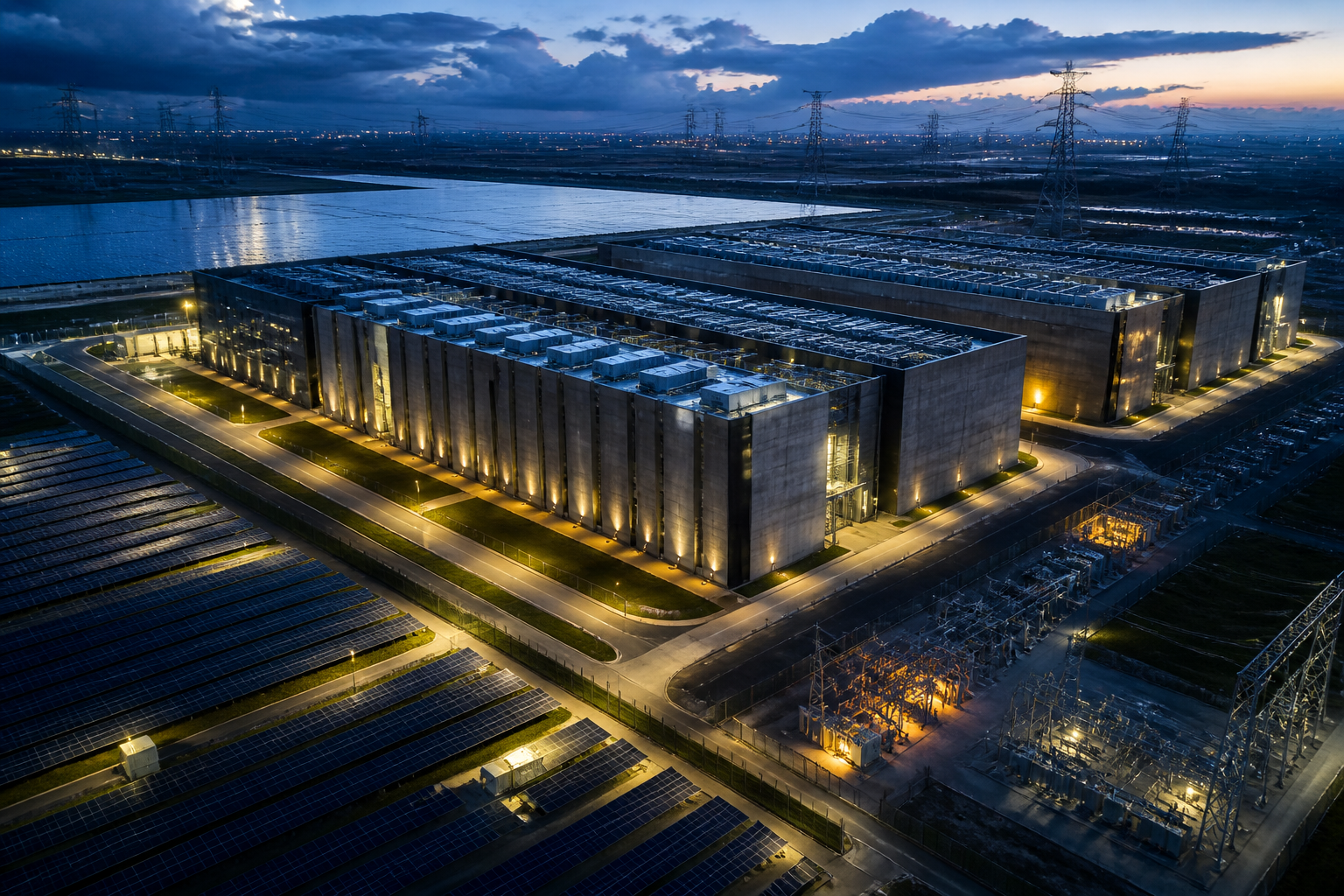
The expansion of artificial intelligence is frequently described in ephemeral terms, yet its reality is grounded in massive, energy intensive physical structures. A recent report by CBRE highlights a significant shift in the geography of labour, as AI job growth concentrates around specific urban and industrial hubs across North America. This concentration creates a self reinforcing cycle where infrastructure investment follows talent, and talent follows the build out of high density data centres and fibre optic networks. The United States Chamber of Commerce has correctly identified that securing the future of the American economy depends entirely on the ability to keep the country moving through sustained infrastructure investment. This is not a matter of mere maintenance, it is an existential race to establish the computational grid that will support the next century of innovation. As China accelerates its own sovereign AI infrastructure through state directed investment, the West faces a critical imperative to match this pace or risk a permanent loss of technological leadership. The resulting demand for land, water for cooling, and reliable electricity is placing unprecedented pressure on regional planning authorities and utility providers.
Industrial Parks and the New Logistics of Scale
The traditional industrial park is being reimagined as a comprehensive ecosystem designed to support high technology manufacturing and data processing. Projects like the MidAmerica Industrial Park illustrate this evolution, where world class infrastructure is paired with strategic transportation access to create an environment conducive to global competition. These sites are no longer just warehouses or assembly lines, they are the nodes of a sophisticated global supply chain that must operate with frictionless efficiency. The integration of advanced logistics with digital capabilities allows these hubs to serve as the backbone for both domestic consumption and international trade. By providing the necessary scale and connectivity, these industrial zones enable firms to navigate the complexities of a volatile global market. The strategic importance of these parks is further amplified by the shift toward near shoring and friend shoring, as companies seek to insulate their operations from the disruptions of maritime trade and geopolitical friction in distant waters.
The Space Domain and Orbital Infrastructure
Infrastructure is no longer confined to the terrestrial plane, as the growing importance of space assets demonstrates. The decision to shift a four billion dollar portfolio to Colorado underscores the vital role that ground based infrastructure plays in supporting orbital operations. The Space Force requires a robust physical foundation to manage the constellations of satellites that provide the global positioning, communication, and reconnaissance services essential for both modern warfare and civilian commerce. This investment represents a significant commitment to the long term stability of the space economy, which is projected to grow exponentially in the coming decades. The facilities in Colorado will serve as the nerve centre for these operations, ensuring that the critical links between the ground and the heavens remain secure and resilient. This militarisation of infrastructure highlights the degree to which national security is now dependent on the seamless integration of digital and physical assets across multiple domains.
The Soft Infrastructure of European Trade and Diplomacy
While the focus often falls on hard infrastructure such as bridges and data centres, the soft infrastructure of the trade fair industry remains a vital component of the global economic architecture. In Europe, the spatial geography of the trade fair industry serves as a multidimensional framework for understanding how economic influence is distributed across the continent. These events provide the essential platform for the exchange of ideas, the showcasing of innovation, and the forging of international partnerships. The trade fair industry acts as a catalyst for local and regional development, drawing in investment and promoting the visibility of European firms on the global stage. By facilitating face to face interaction in an increasingly digital world, these institutions maintain the social and professional networks that underpin the global trade system. The enduring relevance of these fairs proves that physical proximity and the infrastructure of congregation remain indispensable to the functioning of high value markets.
Energy Transition and the Resilience of Heavy Industry
The transition to a more sustainable energy model presents both a challenge and an opportunity for the infrastructure sector. Firms such as Caterpillar are actively investing in new technologies to support this shift, as seen in their recent launch of a three million dollar initiative aimed at enhancing industrial efficiency. The requirement for resilient energy systems is paramount, particularly for the heavy industries that form the core of the global economy. As oil prices fluctuate and the world moves toward electrification, the infrastructure that supports energy production and distribution must undergo a radical overhaul. This requires not only the development of renewable energy sources but also the modernisation of the grid to handle the intermittent nature of green power. The ability of a nation to manage this transition while maintaining industrial productivity will be a key determinant of its future economic standing. The intersection of energy policy and infrastructure investment is therefore a central pillar of national strategy in the twenty-first century.
A Forecast for the Integrated Global Grid
Looking ahead, the distinction between digital and physical infrastructure will continue to blur until they become a single, integrated system. The coming decade will be defined by the construction of the global grid, a network of data centres, energy pipelines, transportation corridors, and orbital assets that are constantly communicating and optimising. This new architecture will be characterised by its resilience and its ability to adapt to rapid technological shifts. However, this progress will be shadowed by the ongoing competition between geopolitical blocs, each seeking to establish their own standards and spheres of influence within this network. Investors and policymakers must recognise that the most successful regions will be those that can offer a combination of world class digital connectivity, stable energy supplies, and secure physical logistics. The race to build the foundation of the future is already underway, and the winners will be determined by the speed and scale of their commitment to this new structural reality. Infrastructure has returned to its rightful place at the heart of the global agenda, no longer a forgotten utility but the ultimate instrument of economic and strategic power.