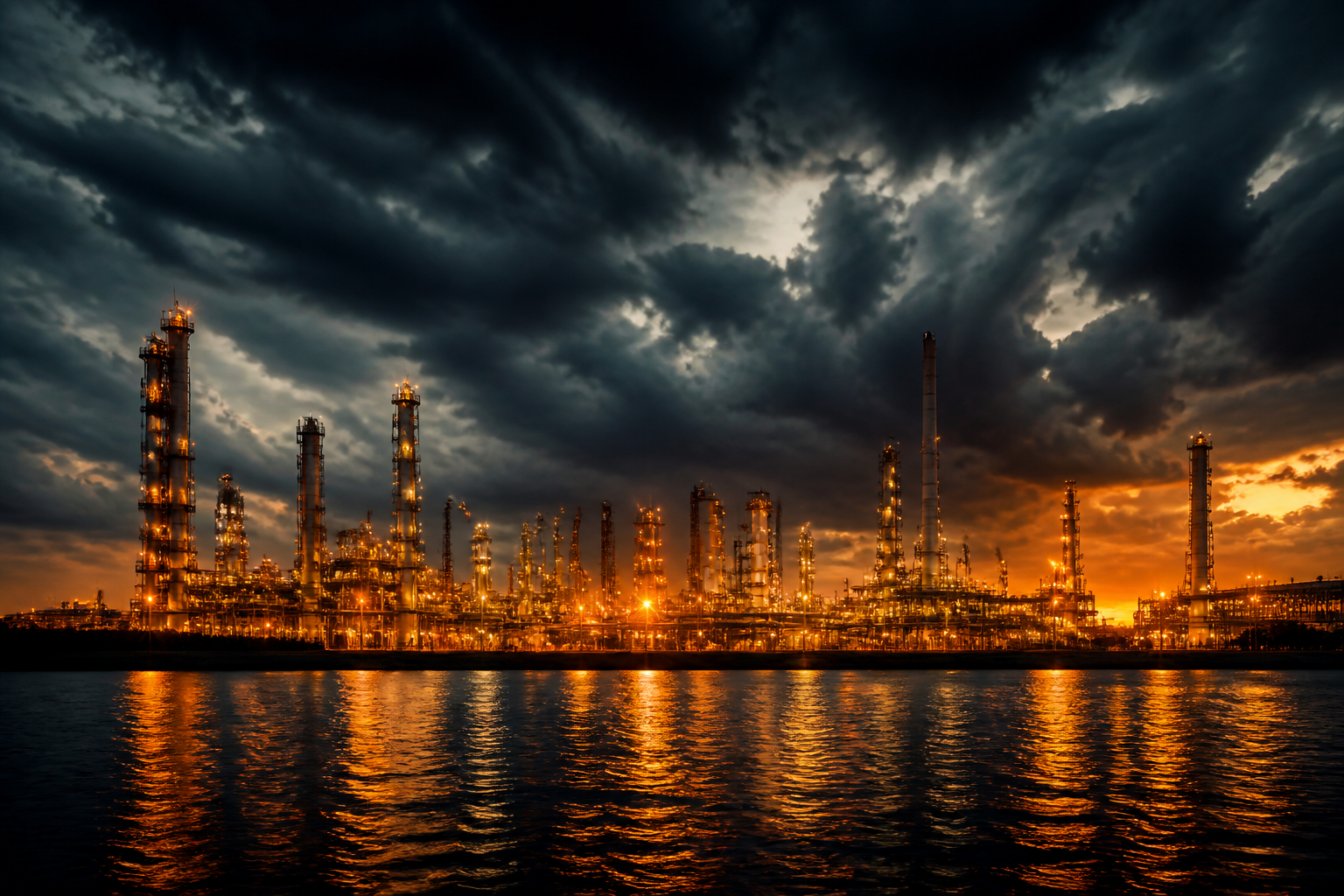
The Geopolitical Crucible: Energy Markets Confront A New Era Of Middle Eastern Volatility
Global energy markets face a critical juncture as U.S. and Iranian tensions escalate, driving oil prices higher and forcing a rethink of supply chain resilience amidst new Venezuelan agreements and OPEC shifts.
The global energy landscape is currently navigating a period of profound structural tension, where the fragile equilibrium of supply and demand is increasingly dictated by the volatile currents of international diplomacy and regional conflict. Recent escalations in the Middle East, specifically involving direct military exchanges between the United States and Iran, have injected a premium of uncertainty into the crude markets that few analysts had fully priced in at the turn of the year. As Brent crude prices climb towards new psychological thresholds, the institutional investment community is witnessing a sharp divergence between the long-term aspirations of the energy transition and the immediate, visceral realities of fossil fuel dependency. This resurgence of geopolitical risk has revitalised energy sector indices, with the NYSE Energy Sector Index and the State Street Energy Select Sector SPDR ETF showing robust gains as capital rotates back into traditional majors. The narrative of the global economy is once again being written in the Strait of Hormuz, where the physical flow of oil serves as both a strategic weapon and a fundamental economic barometer.
The Iranian Conundrum And The Strait Of Hormuz
The central pillar of contemporary market anxiety remains the deteriorating security situation surrounding Iranian territorial waters and the broader Persian Gulf. Market participants have reacted with characteristic sensitivity to recent reports of hostilities, causing a notable spike in Brent and West Texas Intermediate futures. The prospect of a prolonged conflict involving the United States and Iran poses a direct threat to the approximately twenty per cent of the world's daily petroleum consumption that traverses the Strait of Hormuz. Unlike previous episodes of regional friction, the current impasse is defined by a sophisticated array of asymmetrical threats, ranging from drone incursions to the seizure of commercial tankers, which challenge the traditional maritime security paradigms that have governed the region since the late twentieth century. As uncertainty grows regarding the longevity of the Iranian military posture, the risk premium embedded in every barrel of crude is being recalibrated to reflect a world where sea lanes are no longer guaranteed to remain open.
Strategic Realignments In Caracas And Washington
While the Middle East occupies the foreground of the current crisis, a significant shift in the Western Hemisphere is providing a necessary, albeit complex, counterbalance. The recent deal between the United States and Venezuela represents a pragmatic pivot in American foreign policy, aimed at alleviating global supply constraints while simultaneously seeking to manage domestic inflationary pressures. Chevron, a pivotal player in this diplomatic thaw, stands to benefit immensely from the easing of restrictions, allowing for a gradual resumption of output from the vast Orinoco Belt. This rapprochement suggests that the White House is increasingly willing to prioritise energy security over long-standing sanctions regimes, particularly as the electoral cycle in the United States demands a stabilisation of retail fuel prices. However, the integration of Venezuelan heavy crude back into the global market is not an instantaneous solution, as years of underinvestment and infrastructure decay within the state-owned PDVSA require significant capital expenditure and technical expertise to rectify.
The Resilience Of Traditional Energy Majors
Despite the overarching narrative of a transition towards renewable sources, the financial performance of integrated oil and gas companies like ExxonMobil and Chevron remains a cornerstone of institutional portfolios. These corporations have demonstrated a remarkable ability to generate significant free cash flow in an environment of elevated prices, using their robust balance sheets to reward shareholders through dividends and aggressive buyback programmes. The sector's recent outperformance on the NYSE reflects a growing realisation among investors that the peak demand for hydrocarbons may be further in the future than previously estimated. Service providers, including the likes of Halliburton and Schlumberger, are also seeing a resurgence in demand for their technical capabilities as exploration and production budgets are revised upwards to meet the new reality of supply scarcity. This capital discipline, combined with a renewed focus on operational efficiency, has transformed the large-cap energy space into a defensive bastion against broader market volatility.
OPEC And The Management Of Global Supply
The role of the OPEC+ alliance remains a critical variable in the pricing equation, as the group continues to navigate the fine line between defending price floors and maintaining market share. The recent price action suggests that the market believes the alliance will maintain its current posture of production restraint, even as individual members face internal pressures to capitalise on higher prices. The coordination between Riyadh and Moscow is particularly noteworthy, as both nations seek to maximise revenue to fund ambitious domestic agendas and, in the case of Russia, to sustain its ongoing military efforts. The collective ability of OPEC to influence the marginal barrel of oil remains the single most important factor in preventing a total collapse of prices during periods of economic slowdown, yet this influence is being tested by the rapid growth of non-OPEC production, particularly from the Permian Basin in the United States and the emerging offshore fields in Guyana.
Transition Risks And The Carbon Paradox
Even as the immediate focus remains on crude prices and geopolitical flashpoints, the underlying currents of the energy transition continue to reshape the industry's long-term strategic outlook. There is an inherent paradox at the heart of the current market, where the very high prices that are enriching oil companies today are also accelerating the economic case for electrification and alternative energy sources. The volatility in fossil fuel markets serves as a potent reminder of the risks associated with carbon dependency, prompting governments in Europe and Asia to double down on their commitments to wind, solar, and nuclear power. However, the path to a low-carbon future is proving to be far more arduous and capital-intensive than many proponents initially suggested. The supply chains for critical minerals, which are essential for battery technology and renewable infrastructure, are themselves subject to the same geopolitical vulnerabilities that plague the oil market, creating a new set of risks for the energy security of the mid-twenty-first century.
Forward Outlook For Global Energy Security
Looking ahead, the energy sector is likely to remain in a state of heightened sensitivity to macroeconomic and geopolitical developments. The immediate trajectory of oil prices will depend heavily on whether the current tensions in the Middle East escalate into a broader regional conflict or settle into a low-intensity stalemate. Investors should prepare for a period of sustained volatility, as the world attempts to balance the immediate need for affordable energy with the long-term imperative of decarbonisation. The strategic value of diversified supply chains and the importance of energy independence have never been more apparent. While the transition to renewables is inevitable, the bridge to that future will be built on the continued relevance of hydrocarbons, the pragmatic management of state-level alliances, and the unwavering resilience of the global energy majors. The coming decade will be defined by this delicate transition, where the old world of petro-politics meets the new world of green technology, requiring a sophisticated and forward-looking approach from policymakers and investors alike.