The Fragile Equilibrium: Global Energy Markets Between Geopolitical Strife And Fiscal Realignment
This editorial examines the intersection of volatile oil markets in the Gulf, the structural shifts in the offshore wind sector led by Ørsted, and the cooling of US consumer demand as inflationary pressures persist.
The global energy landscape is currently defined by a precarious intersection of escalating geopolitical risks in the Middle East and a rigorous fiscal reappraisal within the renewable sector. As crude prices threaten to return to triple digit territory amidst heightening tensions in the Gulf, the institutional conviction regarding the speed of the green transition is being tested by high interest rates and capital constraints. The recent strategic pivot by Ørsted, the Danish offshore wind pioneer, to reinstate dividends only after a significant capital increase and a projected four-year delay, illustrates the new era of disciplined realism. Investors are no longer satisfied by the mere promise of capacity growth, they now demand resilient balance sheets and predictable returns in an environment where the cost of capital remains stubbornly high. This synchronised pressure from both fossil fuel volatility and renewable financing hurdles suggests that the next phase of the global energy transition will be dictated less by idealistic policy targets and more by the cold calculations of sovereign risk and corporate solvency.
The Return Of The Petroleum Risk Premium
Crude oil prices have once again become a flammable barometer of international stability. The persistent friction between Iran and regional actors, combined with the strategic unpredictability of OPEC+ output cuts, has re-introduced a significant risk premium into Brent and West Texas Intermediate benchmarks. Financial analysts at major institutions, including Goldman Sachs and JP Morgan, have noted that any direct disruption to maritime corridors in the Gulf could precipitate a rapid ascent to 100 dollars per barrel. This potentiality is not merely a concern for logistics firms but acts as a latent tax on the global economy, threatening to reignite inflationary pressures just as central banks consider a pivot toward monetary easing. The fragility of these supply chains is compounded by the fact that global spare capacity is concentrated in a handful of jurisdictions, making the energy market uniquely sensitive to idiosyncratic shocks in the Levant or the Strait of Hormuz.
Fiscal Discipline In The Offshore Frontier
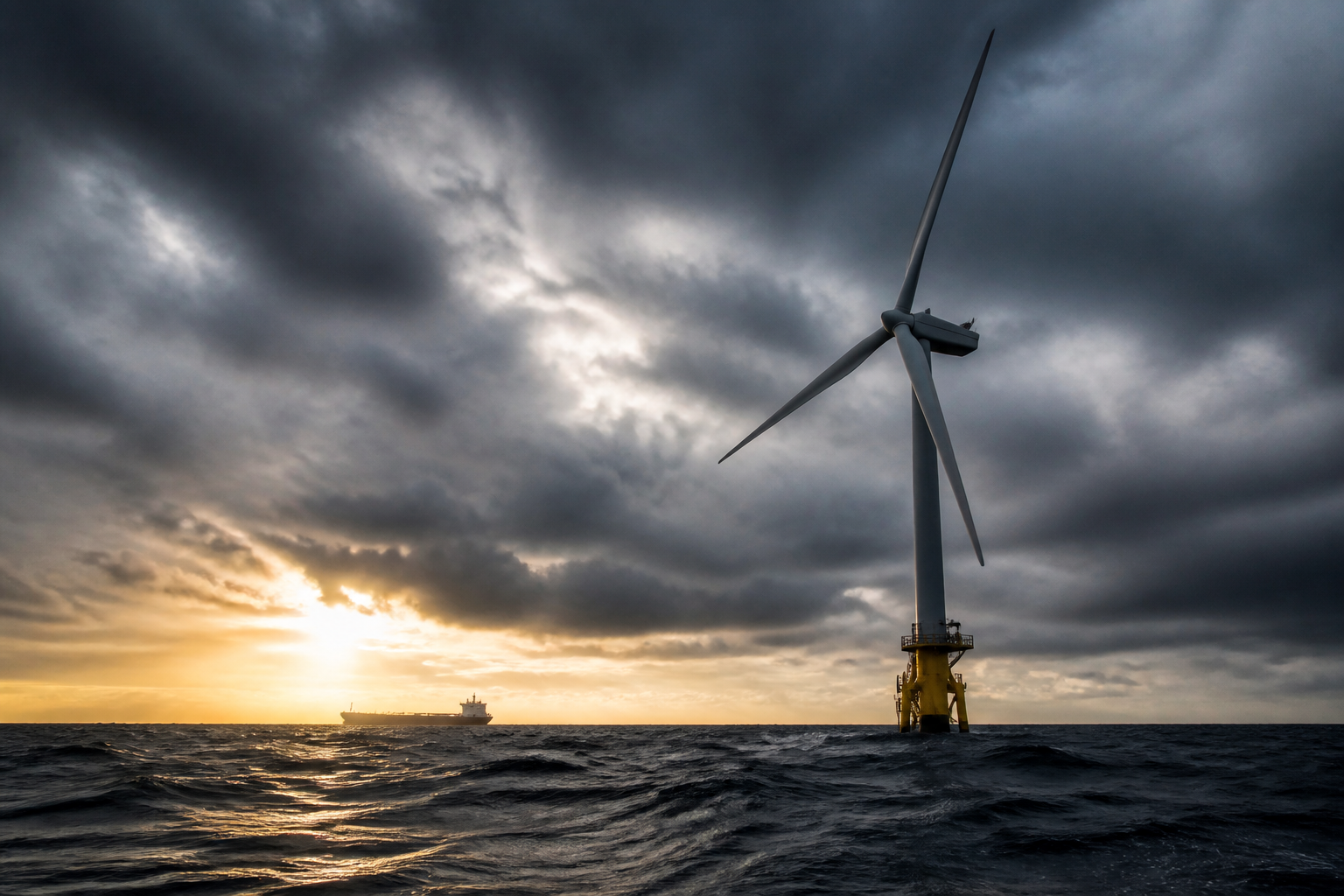
In the realm of renewables, the narrative has shifted from unbridled expansion to rigorous capital preservation. Ørsted, long considered the bellwether for the offshore wind industry, has provided a sobering update to its medium-term strategy. By delaying its dividend payout until 2027 and focusing on a capital increase to fortify its equity base, the Danish group is acknowledging the structural headwinds of inflation and supply chain bottlenecks that have plagued the sector since 2022. This retrenchment is emblematic of a broader trend where developers are abandoning unviable projects in the Atlantic and North Sea to focus on core profitability. The era of cheap debt that fuelled the initial offshore boom has ended, forcing a rationalisation of project pipelines. Institutional investors are now scrutinising the internal rate of return on wind farms with the same intensity applied to traditional upstream oil and gas assets, signalising that the green premium is no longer a substitute for fiscal health.
The American Consumer And The Demand Ceiling
Economic indicators from the United States suggest that the primary engine of global demand may be cooling. Recent data from the US Census Bureau indicates a perceptible decline in retail sales, following a summer of stagnating household expenditure. This slowdown is a direct consequence of the sustained loss of purchasing power as cumulative inflation outpaces wage growth for large segments of the population. For the energy sector, this translates into a potential softening of gasoline and distillate demand. If the American consumer continues to retrench, the upward pressure on energy prices from geopolitical events may be partially offset by a domestic economic slowdown. However, this creates a double-edged sword for policymakers in Washington, where the Treasury Department, under the watchful eye of figures like Scott Bessent, must balance the need for domestic energy affordability with the necessity of maintaining investment flows into new energy infrastructure.
Capital Markets And The High Stakes Of Interest Rates
The broader financial markets, particularly the S&P 500 and the Nasdaq, have shown increased sensitivity to energy fluctuations during high-stakes trading weeks. The cost of financing large-scale energy projects, whether they involve liquid natural gas terminals or hydrogen electrolysers, is inextricably linked to the yield curve. As long as inflation remains sticky and the Federal Reserve maintains a restrictive stance, the hurdle rate for energy transitions remains elevated. This has led to a divergence in the energy sector where state-backed entities in the Gulf and East Asia, which possess significant sovereign wealth, are able to maintain long-term investment horizons, while publicly traded Western firms are forced into defensive postures. The result is a shifting of the gravitational centre of energy investment toward regions with greater fiscal insulation from Western interest rate cycles.
Strategic Autonomy And The Security Of Supply
European nations continue to grapple with the long-term implications of their decoupling from Russian hydrocarbons. While gas storage levels have reached satisfactory benchmarks for the current season, the structural deficit in affordable, base-load power remains a critical vulnerability. The push for strategic autonomy has accelerated the deployment of solar and wind, yet the intermittency of these sources requires a massive, concurrent investment in grid stability and storage technology. The Danish shift in offshore strategy is particularly ill-timed for European regulators who were counting on a rapid surge in North Sea capacity to lower industrial electricity prices. Without a stable and affordable energy mix, the risk of de-industrialisation in core European markets, such as Germany and northern Italy, becomes a tangible threat to the continent's long-term economic competitiveness.
The Outlook For Energy Sovereignty
Looking ahead, the energy market is entering a phase of bifurcated development. We expect to see a reinforcement of the fossil fuel floor as long as geopolitical volatility persists in the Middle East, ensuring that oil and gas remain lucrative, albeit volatile, components of the global energy mix. Simultaneously, the renewable sector will undergo a period of intense consolidation. Only those firms with the scale to negotiate supply chain efficiencies and the balance sheets to weather high interest rates will survive this transition. The focus will move away from headline capacity targets toward the integration of digital technologies and AI to optimise existing assets. Ultimately, the winners of the next decade will be the nations and corporations that successfully bridge the gap between the carbon-heavy realities of the present and the capital-intensive requirements of a sustainable future. Energy security is no longer just about the volume of molecules or electrons, it is fundamentally about the resilience of the financial structures that underpin their production.