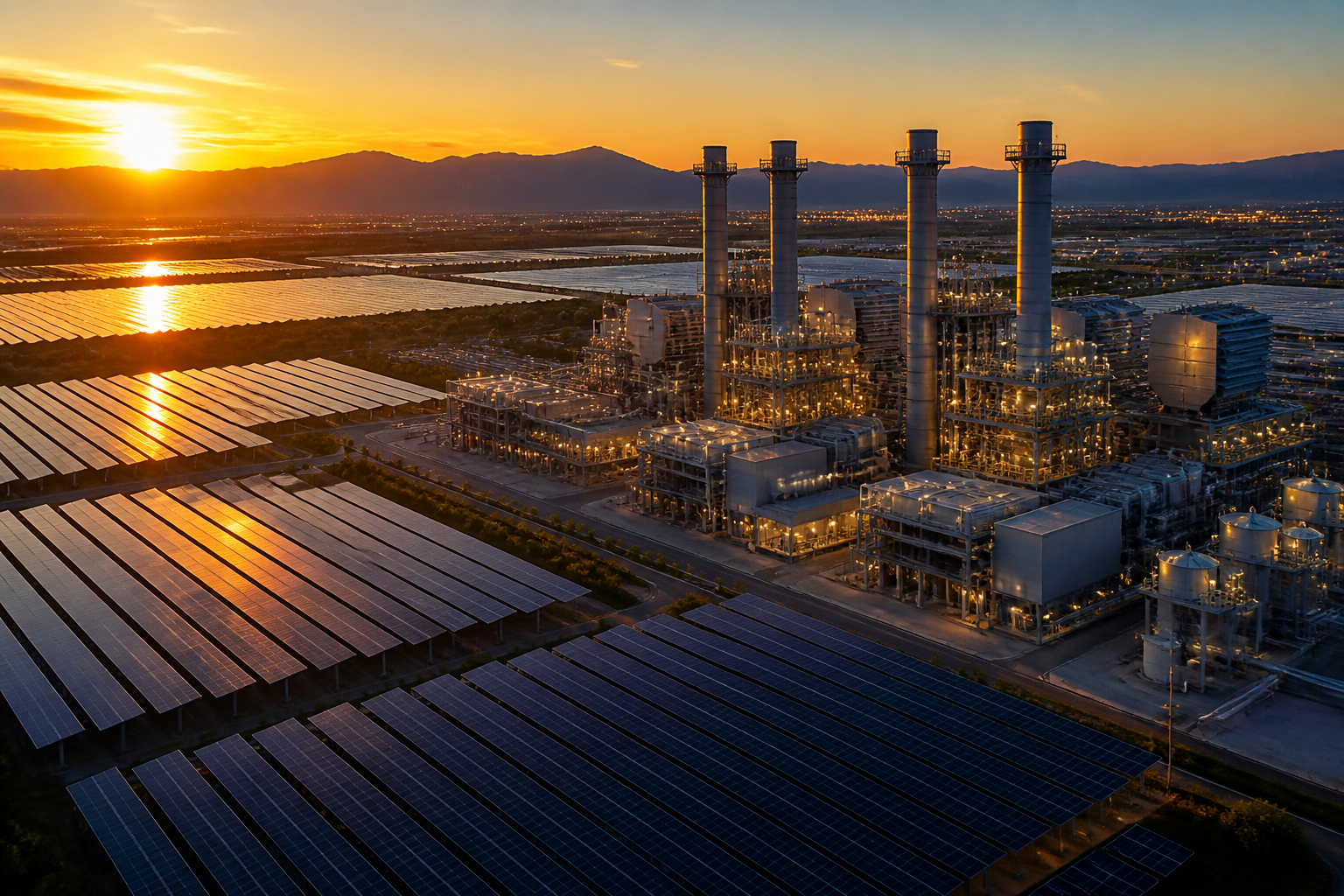
The Fossil Fuel Renaissance Amidst The Green Transition Paradox
This comprehensive editorial examines the resilient dominance of oil and gas markets, the burgeoning demand for gas turbine technology driven by data centres, and the legislative potential of energy efficiency initiatives.
The contemporary energy landscape is currently defined by a profound and seemingly contradictory duality. While the overarching narrative of the twenty first century remains focused on the urgent necessity of a clean energy transition, the immediate reality of global markets reveals a sector where traditional hydrocarbons are not merely surviving but thriving in unprecedented ways. Investors are witnessing a remarkable resurgence in the valuations of fossil fuel entities, exemplified by Marathon Petroleum reaching record highs and leading a broader cohort of energy stocks to the top of institutional buy lists. This phenomenon is not an accidental fluctuation but rather a manifestation of a structural reality where the bridge to a renewable future remains heavily paved with oil and gas. The capital markets, often the most unsentimental barometers of future demand, are signalling that the global economy is still deeply tethered to traditional energy sources even as trillions of dollars are pledged toward net-zero targets. This dissonance creates a complex environment for policymakers and investors alike, as they must balance the long-term imperative of climate mitigation with the short-term necessity of energy security and industrial reliability.
The Resurgence Of Hydrocarbon Supremacy
The financial performance of the integrated oil and gas sector has remained remarkably robust despite the fluctuating geopolitical climate. Major players such as ExxonMobil, Chevron, and Marathon Petroleum have demonstrated a sophisticated ability to maintain high margins through disciplined capital expenditure and strategic operational efficiency. This financial strength is reflected in the broader market indices, where energy stocks have consistently outperformed more speculative technology ventures in recent quarters. The underlying drivers of this performance are multifaceted, involving a combination of tight supply dynamics and a global demand for refined products that shows no sign of meaningful abatement. Furthermore, the services sector, led by giants such as Schlumberger and Halliburton, is experiencing a renaissance as exploration and production activities intensify in both established and frontier basins. These companies are no longer just suppliers of labour and equipment, they are increasingly providers of high-technology solutions that allow for more efficient extraction, thereby prolonging the commercial viability of existing reserves. The market is increasingly recognising that the transition will be a multi-decade process, during which the cash flows generated by fossil fuels will be essential for funding the very innovations required to replace them.
Data Centres And The Gas Turbine Boom
One of the most unexpected catalysts for the continued relevance of natural gas is the exponential growth of the digital economy. The rapid expansion of data centres, driven by the global arms race in artificial intelligence and cloud computing, has led to a surge in energy consumption that existing renewable grids are often unable to meet. This has resulted in a significant uptick in orders for gas turbines, as utility companies and private enterprises seek reliable, base-load power that can be deployed rapidly. Natural gas is increasingly viewed as the essential partner to intermittent renewables, providing the necessary stability to prevent grid failures in an era of soaring demand. The industrial sector is also responding to this reality, with manufacturers of power generation equipment seeing their order books filled years in advance. This trend highlights a critical bottleneck in the energy transition, specifically that the physical infrastructure of the internet requires a level of power density and reliability that, at present, only hydrocarbon-based or nuclear solutions can provide at scale. As a result, the narrative of natural gas as a bridge fuel has been reinvigorated, transforming it from a temporary compromise into a cornerstone of the modern technological infrastructure.
The Economic Imperative Of Energy Efficiency
While the supply side of the energy equation often dominates headlines, the demand side offers perhaps the most significant opportunity for sustainable economic growth. Research from the American Council for an Energy-Efficient Economy, particularly focusing on regions like Pennsylvania, suggests that legislative reforms aimed at energy efficiency can be powerful engines for job creation. In Pennsylvania alone, it is estimated that updated efficiency standards could deliver more than 30,000 jobs to the local economy. These roles are often in high-value sectors such as construction, engineering, and advanced manufacturing, providing a tangible economic dividend that complements environmental goals. Energy efficiency represents the most cost-effective way to reduce emissions while simultaneously lowering costs for consumers and businesses. However, realizing these gains requires a stable regulatory framework and a commitment to long-term investment in building retrofits and industrial process improvements. The economic impacts of such policies extend beyond job numbers, they enhance the competitiveness of local industries by reducing their overheads and insulating them from the volatility of global commodity markets.
Labour Market Volatility In The Energy Sector
Despite the profitability of the major oil and gas firms, the broader energy and logistics sectors are navigating a period of significant labour market adjustment. Recent announcements of job cuts at major international firms such as UPS and FedEx, which are inextricably linked to energy costs and trade volumes, suggest a cooling in certain segments of the global economy. Within the energy sector itself, the transition is proving uneven. For instance, the United States miner Piedmont Lithium recently announced a reduction of 27 percent of its workforce, a move that highlights the volatility even in sectors critical to the green transition, such as battery mineral supply chains. Similarly, Enbridge has undertaken workforce reductions as part of a broader push for operational efficiency. These contractions are often the result of companies attempting to lean their operations in anticipation of a high-interest-rate environment and shifting regulatory requirements. It underscores a painful reality of the energy evolution, while new opportunities are being created in renewables and efficiency, the traditional and intermediary sectors are undergoing rigorous rationalisation that can lead to significant local economic disruption.
International Trade Dynamics And Energy Flow
The global trade balance remains highly sensitive to energy prices and the movement of commodities across borders. Recent data from Malaysia, for example, illustrates the complexities of international trade in a period of shifting demand. While the country saw a healthy trade balance surplus, the fluctuations in export and import volumes reflect a broader regional trend of cautious industrial activity. For energy-exporting and energy-importing nations alike, the cost of fuel remains the single most important variable in their economic forecasts. The trade routes between the Middle East, South East Asia, and Europe are being redrawn as geopolitical tensions force a re-evaluation of supply chain security. This has led to a premium on energy independence, with nations increasingly looking to domestic sources or diversified partnerships to mitigate the risk of disruption. The ongoing role of OPEC in managing global supply cannot be overstated, as the organisation continues to exercise significant influence over the price floors that determine the feasibility of high-cost extraction projects in North America and elsewhere. This geopolitical chess game ensures that energy remains at the heart of international diplomacy and economic strategy.
Forward Looking Outlook For The Global Energy Mix
As we look toward the remainder of the decade, the energy sector is poised for a period of intense capital reallocation. The Biden-Harris administration in the United States has pioneered a model of massive federal investment through the Clean Energy Future initiative, seeking to catalyse private capital into domestic manufacturing and renewable infrastructure. This model is being watched closely by other advanced economies as a potential blueprint for state-led industrial policy. However, the success of these initiatives will depend on their ability to integrate with the existing energy complex rather than attempting to displace it overnight. We expect to see a continued trend of consolidation among mid-sized oil and gas firms, as larger entities seek to acquire the most efficient assets to bolster their portfolios during this period of high profitability. Simultaneously, the integration of digital technologies and artificial intelligence into energy management will become a critical differentiator for firms seeking to optimize their carbon footprints while maintaining output. The path forward is not a simple linear progression from old to new, but a sophisticated blending of technologies where efficiency, natural gas, and renewables form a tripartite foundation for the global economy. Investors who recognize this hybrid reality, rather than betting on a rapid and total displacement of fossil fuels, will likely find the most stable returns in an era of profound structural change. The coming years will be defined by how effectively we can manage the transition without sacrificing the industrial stability that has been the bedrock of global prosperity.