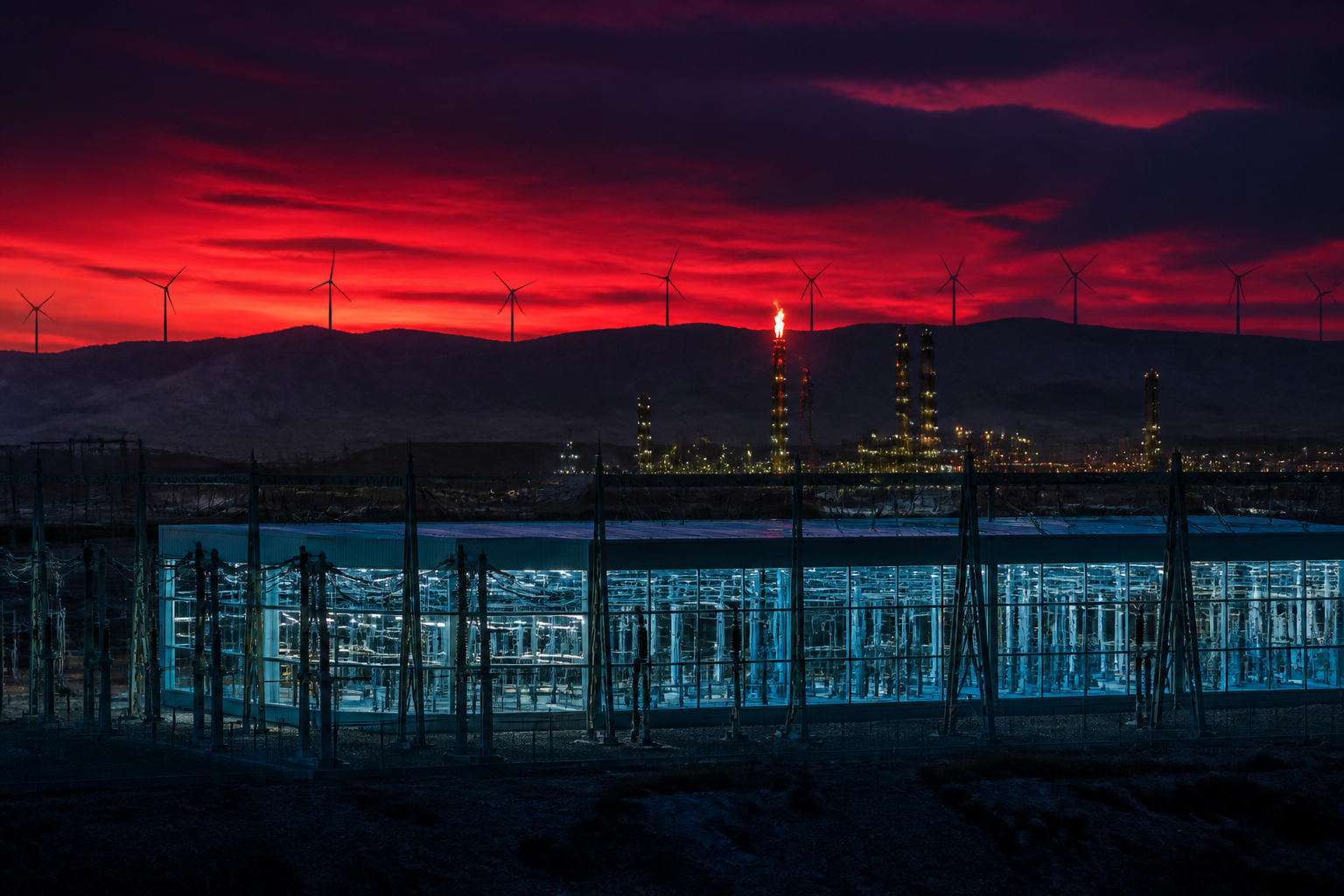
The Fossil Fuel Paradox: Navigating Market Volatility Amidst An Accelerating Energy Transition
An analytical exploration into the current state of global energy markets, examining the impact of inflation data on oil futures, the resilience of traditional energy stocks, and the growing capital shift toward low-carbon technology.
The global energy landscape is currently defined by a profound and arguably contradictory set of imperatives, as the immediate demands of energy security and price stability clash with the long-term necessity of decarbonisation. Recent market activity suggests a decoupling of traditional price drivers from historical norms, as investors weigh the implications of cooling inflation data against the persistent geopolitical risks that continue to haunt the supply side of the equation. As the United States and Europe await pivotal consumer and producer price index data, the energy sector has found itself at a crossroads. Whilst crude prices have recently softened in response to broader economic cooling, the underlying financial health of major energy conglomerates remains remarkably robust. This resilience is not merely a product of current pricing but rather the result of a disciplined capital allocation strategy that has prioritised shareholder returns and debt reduction over the unbridled expansion of production capacity. The result is a market that is fundamentally more efficient yet significantly more sensitive to the shifting winds of central bank policy and macroeconomic indicators.
The Macroeconomic Crucible and Inflationary Pressures
The immediate trajectory of energy markets is currently tethered to the broader macroeconomic environment, particularly the imminent release of inflation data from major Western economies. For instance, the recent focus on consumer price indices in the United States has introduced a period of speculative caution, as the Federal Reserve weighs the potential for interest rate adjustments. Energy, often viewed as the primary engine of inflation, has paradoxically become a beneficiary of this uncertainty. As central banks attempt to engineer a soft landing, the demand for oil and gas remains a critical variable. Should inflation data prove more persistent than anticipated, the likelihood of prolonged high interest rates could dampen industrial demand, thereby putting downward pressure on crude futures. Conversely, a swifter than expected cooling of prices could signal a more aggressive rate cutting cycle, potentially stimulating economic activity and bolstering energy consumption across the manufacturing and transport sectors. This delicate balance is reflected in the recent performance of energy stocks, which have exhibited a degree of volatility as traders recalibrate their expectations for the final quarters of the fiscal year.
Resilience in the Fossil Fuel Hegemony
Despite the overarching narrative of a transition toward a post-carbon economy, the traditional oil and gas sector continues to demonstrate significant financial strength. Major entities such as ExxonMobil, Chevron, and Shell have reported earnings that, while perhaps not reaching the record heights seen in previous years, nonetheless underscore a period of sustained profitability. This performance is largely attributed to a refined operational focus, where companies have shifted away from the pursuit of volume at any cost toward a model of value maximisation. The recent breakout of certain energy technology stocks following better than expected quarterly earnings further highlights this trend, as the industry increasingly relies on sophisticated software and automated drilling techniques to lower the break-even cost of extraction. This technological evolution has allowed these firms to maintain healthy margins even as Brent crude and West Texas Intermediate experience intermittent fluctuations. Furthermore, the strategic consolidation seen within the Permian Basin and other shale plays indicates that the industry is preparing for a future where efficiency is the primary differentiator between success and obsolescence.
The European Dilemma and Structural Shifts
Europe remains the primary theatre for the structural tensions inherent in the modern energy market. The continent is still grappling with the long-term consequences of its pivot away from Russian gas, a transition that has necessitated a rapid and costly build-out of liquefied natural gas infrastructure. Companies such as Contact Energy and other European utilities are navigating a landscape where the cost of capital is higher and the regulatory environment is increasingly stringent. The performance of European energy stocks has been somewhat more idiosyncratic than their American counterparts, reflecting the varying degrees of success in diversifying energy portfolios. While some firms have successfully integrated renewable assets into their core operations, others remain heavily reliant on legacy infrastructure that faces an uncertain future. The volatility in European gas prices, although moderated since the height of the energy crisis, continues to act as a significant headwind for industrial consumers in Germany and northern Europe, complicating the broader economic recovery and influencing the continent-wide discourse on energy independence.
Renewables and the Challenge of Scalability
The transition to renewable energy sources, whilst accelerating in terms of installed capacity, faces its own set of formidable challenges. Solar and wind projects are increasingly sensitive to the same inflationary pressures and interest rate environments that affect the wider economy. The cost of raw materials, including copper, lithium, and rare earth elements, remains subject to supply chain constraints that can delay project timelines and erode expected returns on investment. However, the momentum behind energy technologies remains undeniable. The recent surge in interest for solar stocks, particularly those involved in high-efficiency photovoltaic manufacturing, suggests that investors are looking beyond short-term volatility toward the long-term growth potential of the green economy. Governments in the United States and the European Union have reinforced this trend through substantial subsidies and tax incentives, which aim to de-risk these capital-intensive projects. Yet, the challenge remains one of scalability and reliability, as the integration of intermittent renewable sources into aging national grids requires significant investment in battery storage and smart grid technologies.
Geopolitical Risk and the Supply Side Equation
No analysis of the energy sector would be complete without a thorough examination of the geopolitical factors that continue to underpin market dynamics. The ongoing influence of the OPEC+ alliance, led by Saudi Arabia and Russia, remains the most significant external force on oil prices. By maintaining a policy of production cuts, the group has sought to provide a floor for prices, countering the impact of rising non-OPEC production, particularly from the United States, Brazil, and Guyana. This tug-of-war between managed supply and organic production growth has created a market that is highly reactive to any signals of discord within the alliance or any shifts in production targets. Simultaneously, the potential for escalation in the Middle East continues to provide a risk premium to crude prices, as any disruption to the transit of oil through the Strait of Hormuz would have immediate and severe consequences for global energy security. These geopolitical tensions serve as a constant reminder that the energy transition is not merely a technical or economic challenge, but a deeply political one that involves the realignment of global power structures.
Financial Markets and the New Energy Order
The financial sector is also undergoing a quiet revolution in how it evaluates energy assets. The rise of environmental, social, and governance criteria has fundamentally altered the flow of capital, forcing traditional energy companies to provide more transparent disclosures regarding their carbon footprints and transition plans. However, there is also evidence of a pragmatic correction in this space, as some institutional investors have expressed concern over the potential for stranded assets and the necessity of maintaining reliable energy supplies during the transition period. This has led to a more nuanced investment approach, where capital is increasingly directed toward companies that can demonstrate both a commitment to decarbonisation and a clear path to profitability. The divergence in performance between high-growth renewable firms and cash-generative legacy producers suggests that the market is still searching for a new equilibrium. As the economic calendar continues to unfold, the data on inflation and growth will be the primary metrics by which the health and future prospects of the entire energy spectrum are judged.
Future Outlook: A Synthesis of Old and New
Looking ahead, the energy sector is likely to be defined by a synthesis of traditional and innovative technologies rather than the wholesale replacement of one by the other. In the short term, the focus will remain on the management of inflationary pressures and the stabilisation of global supply chains. However, as we move into the middle of the decade, the emphasis will increasingly shift toward the integration of carbon capture and storage, the development of green hydrogen, and the next generation of nuclear technology. These innovations will be essential for decarbonising heavy industries that are currently difficult to electrify. For investors and policymakers alike, the challenge will be to navigate a landscape that is both more interconnected and more fragmented than ever before. The ability to manage the volatility of today while investing in the infrastructure of tomorrow will be the hallmark of the successful energy transition. Ultimately, the future of the energy market lies in its ability to reconcile the immediate demands of the global economy with the long-term health of the planet, a task that requires both financial discipline and visionary leadership.