The Fossil Fuel Inertia: Navigating Energy Security Amidst A Decelerating Global Economy
A deep analysis of the energy sector's resilience against a backdrop of decelerating US growth and rising credit costs. We examine how the delicate balance between natural gas dependencies and decarbonisation persists.
The global energy landscape is currently navigating a period of profound structural tension, as the impetus for decarbonisation clashes with the harsh realities of macroeconomic instability and geopolitical fragility. In the second week of August 2026, the international economic environment presents a paradox that complicates the strategic calculations of both sovereign states and multinational energy conglomerates. While the United States observes a marked deceleration in its overall economic expansion, domestic consumer and business spending remain unexpectedly robust, creating a complex demand profile for energy products. Simultaneously, the rising cost of insuring debt for technology-intensive enterprises, as highlighted by recent Deloitte analysis, serves as a harbinger of tightening credit conditions that could stifle capital-intensive renewable projects. Consequently, the global energy transition is not merely a matter of technological adoption but is increasingly becoming a struggle for capital efficiency in a high-interest, high-volatility environment.
The Paradox of Declining Growth and Resilient Demand
Recent data from the US Department of Energy and private sector analysts suggest that while the broader American economy is cooling, the fundamental appetite for energy has not yet followed the traditional downward trajectory associated with a slowdown. This disconnect is particularly evident in the resilience of business investment, which continues to drive demand for industrial electricity and natural gas. The Federal Reserve's ongoing battle with persistent inflation, reflected in the keenly anticipated consumer and producer price indices, further complicates the energy sector's outlook. For energy producers, this environment creates a dual challenge: they must navigate the rising costs of raw materials and labour while facing a potential cyclical downturn in global commodity prices if the deceleration intensifies. The result is a cautious approach to new drilling and exploration, even as existing production remains at near-record levels to satisfy the lingering strength of the consumer market.
Credit Risk and the Cost of Transition
The rising cost of credit default swaps for technology companies provides a sobering lesson for the energy sector. As interest rates remain elevated to combat inflationary pressures, the 'green premium', the additional cost of choosing clean technology over fossil fuels, is being exacerbated by the rising cost of capital. For major utilities and independent power producers, the financing of large-scale solar, wind, and battery storage projects depends heavily on cheap, long-term debt. When the cost of insuring that debt rises, the internal rate of return on these projects diminishes, often below the threshold required by institutional investors. This shift in the financial architecture of the energy market threatens to slow the pace of the transition, forcing a renewed reliance on existing natural gas infrastructure, which offers lower upfront capital expenditure and more predictable revenue streams in the short term.
The British Growth Conundrum and Continental Energy Security
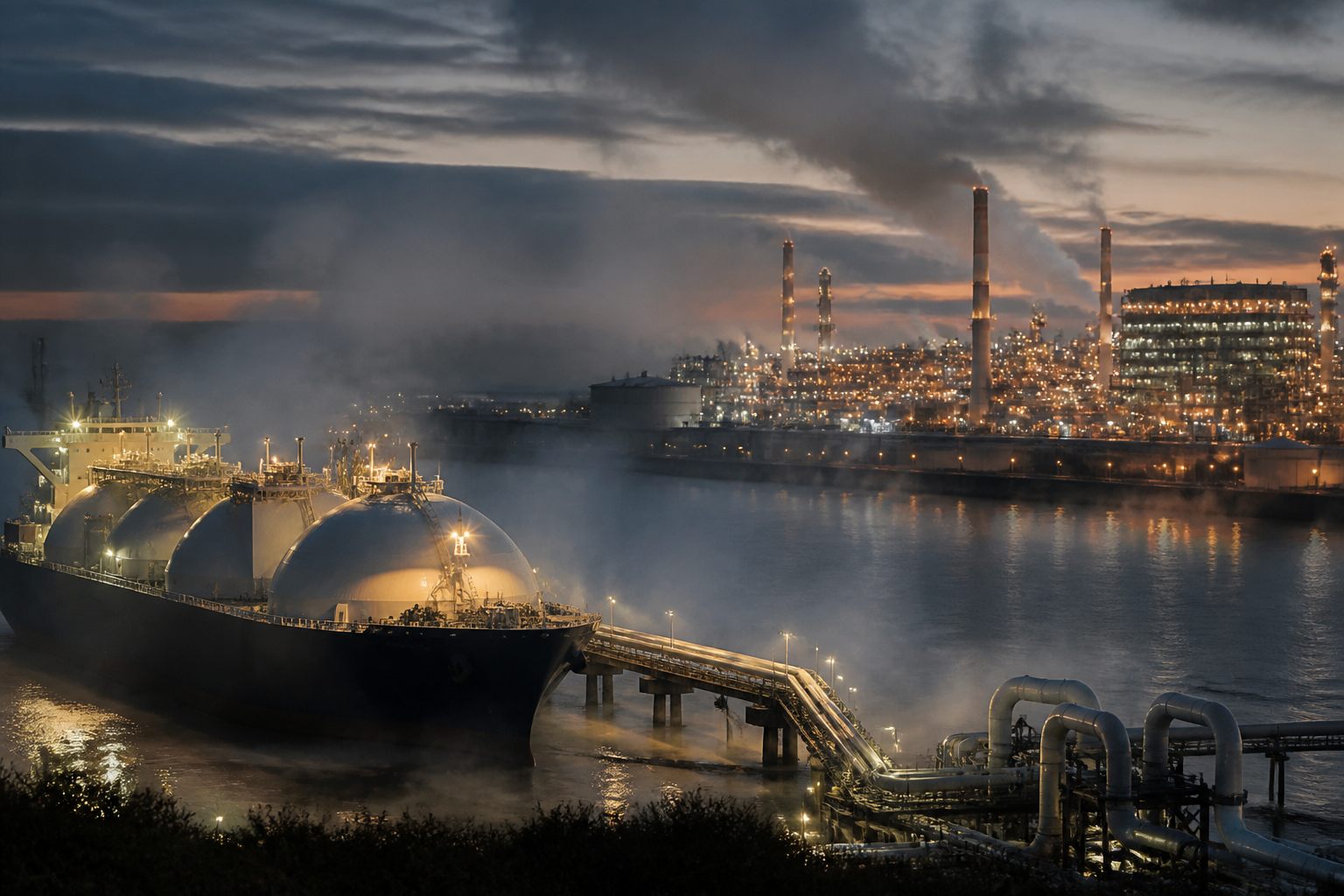
Across the Atlantic, the United Kingdom presents a unique microcosm of the energy-economy nexus. Although recent figures indicate a period of strong UK growth, Bloomberg reports suggest this will bring little cheer to policymakers or households. Much of this growth is offset by the underlying cost-of-living crisis, driven significantly by the volatility of the wholesale energy market. The British government’s commitment to 'Net Zero' remains a pillar of national policy, yet the practical implementation is hampered by the same inflationary headwinds affecting the United States. In Continental Europe, the situation is even more precarious as the region continues to wean itself off Russian pipeline gas. The reliance on Liquified Natural Gas (LNG) from the United States and Qatar has introduced a new level of price sensitivity to the European market, where economic stagnation is becoming a persistent threat. The ability of the European Central Bank to balance inflation control with the need to fund a massive energy overhaul will be the defining economic challenge of the decade.
Hydrocarbons as the Reluctant Stabiliser
Despite the global rhetoric surrounding the demise of fossil fuels, recent weekly updates from the petroleum and natural gas sectors indicate that hydrocarbons remain the indispensable stabiliser of the global economy. The Energy Information Administration (EIA) notes that natural gas storage levels and production rates are being monitored with unprecedented intensity, as they serve as the ultimate hedge against renewable intermittency. For companies like BP, Shell, and ExxonMobil, the current environment has necessitated a 'pragmatic' pivot, reinvesting in core oil and gas assets to ensure energy security while maintaining a long-term, albeit more cautious, commitment to low-carbon technologies. This strategic shift is a direct response to the market's demand for reliable dividends and energy security over speculative future growth in the green sector. The reality is that the global economy is not yet ready to decouple from fossil fuels, particularly when the alternatives are subject to the vagaries of supply chain disruptions and rising interest rates.
Inflationary Pressures and the Commodity Cycle
The upcoming release of inflation data will be a critical determinant for energy prices in the final quarter of the year. If consumer prices remain stubbornly high, the likelihood of further monetary tightening increases, which would typically exert downward pressure on oil prices due to a stronger dollar. However, the energy sector is currently experiencing its own idiosyncratic inflationary cycle. The cost of specialised equipment, from turbines to drilling rigs, has risen significantly, squeezing the margins of service providers and operators alike. This 'cost-push' inflation within the energy supply chain means that even if global demand softens, the floor for energy prices may remain higher than in previous cycles. Investors are now looking at producer price indices not just as a measure of consumer inflation, but as a direct indicator of the operational health of the energy sector.
Strategic Outlook: The Age of Energy Realism
Looking ahead, the remainder of 2026 is set to be defined by what we term 'Energy Realism.' The idealistic projections of the early 2020s are being replaced by a more nuanced understanding of the complexities involved in shifting the global energy mix. The deceleration of the US economy, while managed, suggests that the period of easy growth is over, and with it, the era of cheap capital for the energy transition. We expect to see a consolidation within the renewable sector, as smaller players with high leverage are absorbed by well-capitalised incumbents. Furthermore, the role of natural gas as a 'bridge fuel' will likely be extended by another decade, as it remains the only viable scaleable solution to provide the baseload power required by an increasingly digitised global economy. The focus will shift from purely capacity-based targets to a more sophisticated metric of energy resilience, where the security of supply is weighted as heavily as the reduction of carbon intensity. In this climate, the winners will be those who can maintain fiscal discipline while navigating the increasingly blurred lines between traditional and renewable energy portfolios.