The Capital Reallocation: Energy Security and the Green Financing Paradigm
Global energy markets face a critical juncture as green financing exceeds historical benchmarks. With over $5 trillion mobilised, the interplay between energy security and capital reallocation is shaping new geopolitics.
The global energy landscape is currently navigating a period of profound structural realignment, dictated not merely by the urgent imperatives of decarbonisation but by a fundamental reassessment of what constitutes economic security in an era of fiscal volatility. While recent data from Deloitte Insights indicates a measured deceleration in the United States economy during the second quarter, the resilience of underlying consumer spending and business investment suggests that the appetite for large-scale infrastructure projects remains undiminished. This economic backdrop serves as the theatre for a historic pivot in capital allocation. For the first time, renewable power has emerged as the primary destination for energy industry expenditure, surpassing traditional fossil fuels in a trend that signifies more than a temporary market fluctuation. As global spending in this sector ascends beyond the five-trillion-dollar threshold, the narrative of energy is no longer confined to the extraction of resources but has evolved into a complex discipline of financial engineering and technological sovereignty.
The Strategic Imperative of Energy Reliability
Recent high-level discussions, such as those at the NOG Energy Week, underscore a burgeoning consensus that energy security is the foundational bedrock of national economic stability. The discourse has shifted from a binary choice between hydrocarbons and renewables to a more nuanced strategy involving production optimisation and the strategic development of natural gas. In jurisdictions where industrial growth is paramount, the integration of offshore investment with gas infrastructure is seen as a vital bridge toward a lower-carbon future. This pragmatic approach recognises that reliability is the prerequisite for economic confidence. Without a stable baseload, the ambitious green financing initiatives currently sweeping the globe risk being undermined by the very volatility they seek to mitigate. Consequently, institutional investors are increasingly looking towards integrated energy systems that combine the agility of renewables with the steadfastness of optimised gas production.
Green Financing as the New Global Standard
Statistics from 2025 studies indicate that green financing has ceased to be a niche concern of ESG-focused portfolios and has instead become the dominant force in global capital markets. The surge in investment, which has already seen the sector transcend the five-trillion-dollar mark, is projected to grow by a further 24 per cent as the decade progresses. This influx of capital is not merely a response to regulatory pressure but a recognition of the long-term value inherent in energy independence. Major financial institutions, including those tracked by Yahoo Finance and other market observers, are pivoting their lending structures to favour projects that demonstrate both environmental sustainability and rigorous financial viability. This transition is facilitating a new era of job creation and technological innovation, as the U.S. Department of Energy notes that investments in these emerging technologies are now the primary drivers of national economic expansion and small business integration.
Decoupling Growth from Carbon Intensity
One of the most significant developments in the current fiscal year is the apparent decoupling of economic growth from carbon intensity in several advanced economies. Even as the American economy experienced a cooling phase, the momentum behind energy technology investment remained robust. This suggests that the energy transition has reached a level of maturity where it is no longer dependent on the peak cycles of the broader economy. Instead, the pursuit of energy efficiency and renewable integration is being viewed as a counter-cyclical hedge. By reducing the reliance on imported fuels and volatile global commodity prices, nations are insulating themselves from the inflationary pressures that have traditionally followed energy shocks. The editorial stance of many international business publications reflects this shift, viewing the green transition not as a cost to be borne, but as a strategic asset to be leveraged for long-term competitiveness.
The Geopolitics of Offshore Investment
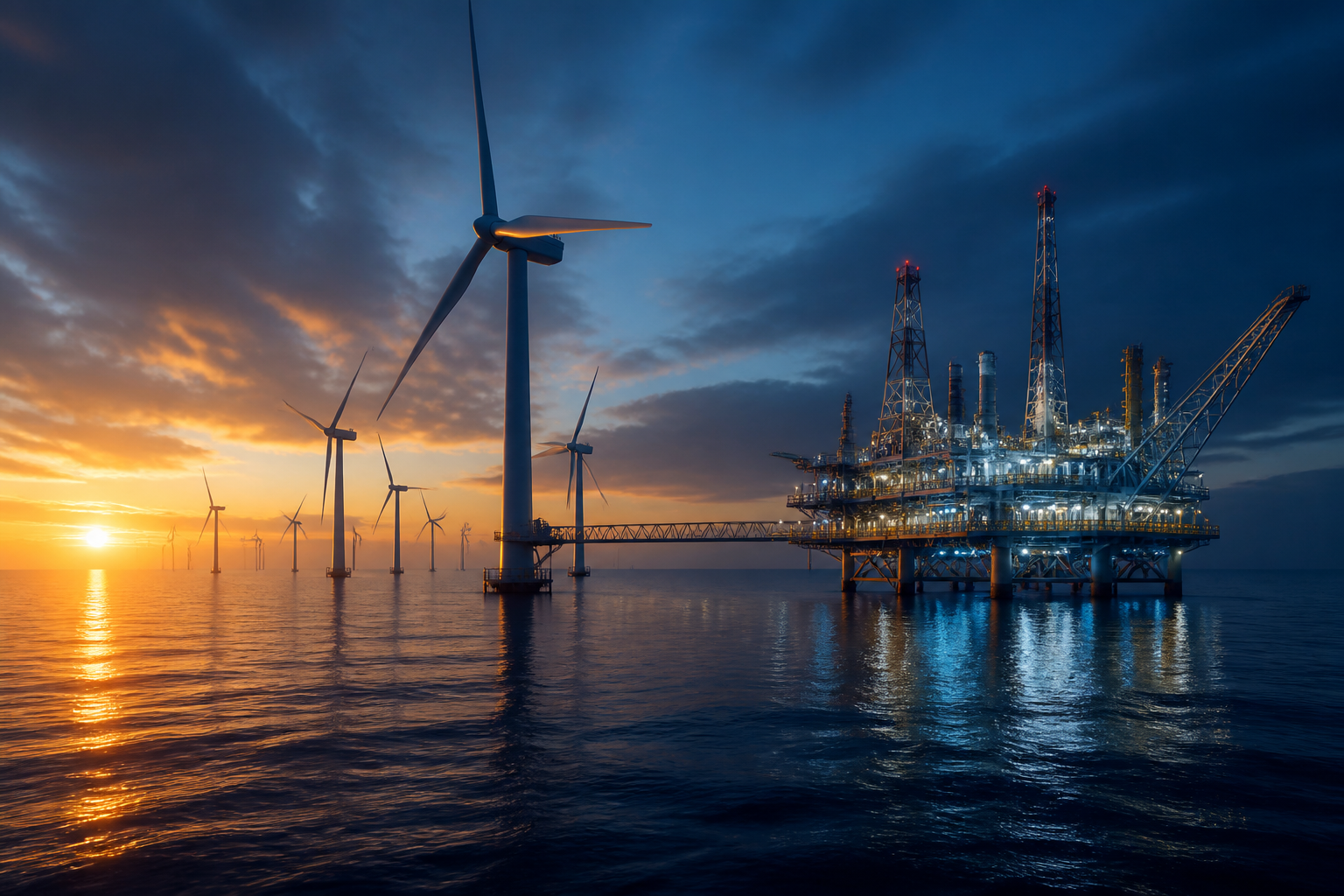
As the focus intensifies on offshore investment and production optimisation, the geopolitical map of energy is being redrawn. The development of deep-water gas reserves and the expansion of offshore wind farms are creating new centres of power in the North Sea, the Gulf of Guinea, and the South China Sea. These projects require immense capital outlays and long-term political stability, necessitating a collaborative approach between sovereign states and multi-national corporations. The conversations at international energy forums suggest that the future of energy security will be defined by the ability of nations to secure these offshore assets and integrate them into a regional grid. The technical complexity of these operations, involving everything from subsea robotics to advanced seismic imaging, further reinforces the role of high-tech investment as the primary engine of the modern energy economy.
Financing the Transition for Small Enterprises
The impact of this massive capital reallocation is also being felt at the microeconomic level. Government initiatives, such as those spearheaded by the U.S. Department of Energy, are increasingly focused on ensuring that the benefits of energy investment trickle down to small businesses and local contractors. By providing funding and financing opportunities for innovative start-ups, the public sector is fostering a diverse ecosystem of energy providers. This democratisation of energy production is essential for ensuring that the transition is politically sustainable. When local economies see tangible benefits in the form of high-skilled jobs and improved infrastructure, the social license for large-scale energy projects is significantly strengthened. This ground-up approach complements the multi-trillion-dollar investments from institutional players, creating a more resilient and inclusive energy market.
Future Outlook: The Path to 2030
Looking ahead, the trajectory for the global energy sector is one of accelerated transformation. The convergence of green financing, offshore optimisation, and technological innovation is creating a momentum that is likely to be irreversible. However, the path forward is not without significant challenges. The need for rare earth minerals, the requirement for massive grid modernisation, and the ongoing necessity of balancing intermittent renewable sources with reliable baseload power will test the ingenuity of engineers and financiers alike. The coming years will likely see a further consolidation of the energy industry, as traditional oil and gas giants continue to reinvent themselves as broad-based energy technology firms. For the global economy, the success of this transition will be the determining factor in achieving sustainable growth and geopolitical stability. As we move closer to the end of the decade, the ability to synthesise economic ambition with environmental stewardship will define the next era of human prosperity.