The Data Foundry: Computing Power as the Sovereign Infrastructure of the Late Decade
A profound shift in global capital expenditure is currently underway as artificial intelligence giants like OpenAI and Anthropic pivot from software development to massive infrastructure investments worth tens of billions.
The global infrastructure landscape is undergoing a tectonic shift that rivals the railway booms of the nineteenth century or the electrification of the twentieth. For decades, the term infrastructure conjured images of concrete, steel, and bitumen, the physical arteries of commerce represented by ports, motorways, and power grids. However, as we approach the final years of the current decade, the definition has narrowed and intensified around the concept of the data foundry. The recent announcement that OpenAI has achieved an annualised revenue run rate exceeding forty billion dollars, effectively doubling its performance from the end of 2025, serves as a financial catalyst for an unprecedented expansion in physical capacity. This is no longer a matter of ethereal code or speculative silicon, rather, it is a monumental industrial undertaking that requires the mobilization of sovereign levels of capital. The pivot from software optimization to the construction of massive computing clusters signifies that the next era of geopolitical and economic dominance will be determined by those who control the physical layer of artificial intelligence.
The Industrialization of Artificial Intelligence
The scale of investment currently being directed toward artificial intelligence infrastructure suggests a departure from the traditional venture capital model. Anthropic, a primary competitor in the frontier model space, is reportedly in negotiations for a six billion dollar infrastructure package, a figure that reflects the ballooning costs of maintaining a competitive technological edge. This capital is not being deployed for marketing or headcount, instead, it is being funnelled into the procurement of advanced semiconductors and the construction of specialized data centres that require bespoke energy solutions. The sheer magnitude of these requirements is beginning to stress traditional infrastructure sectors. In several jurisdictions, core infrastructure growth has shown signs of deceleration, with production in critical sectors such as oil and gas slowing to roughly two point three per cent. This divergence highlights a fundamental reallocation of resources, as the digital economy begins to outpace the traditional industrial base in its appetite for raw power and cooling capacity. The transition is transforming technology companies into major infrastructure operators, necessitating a level of physical asset management previously reserved for state-owned utilities or global energy majors.
Energy Constraints and the Nuclear Pivot
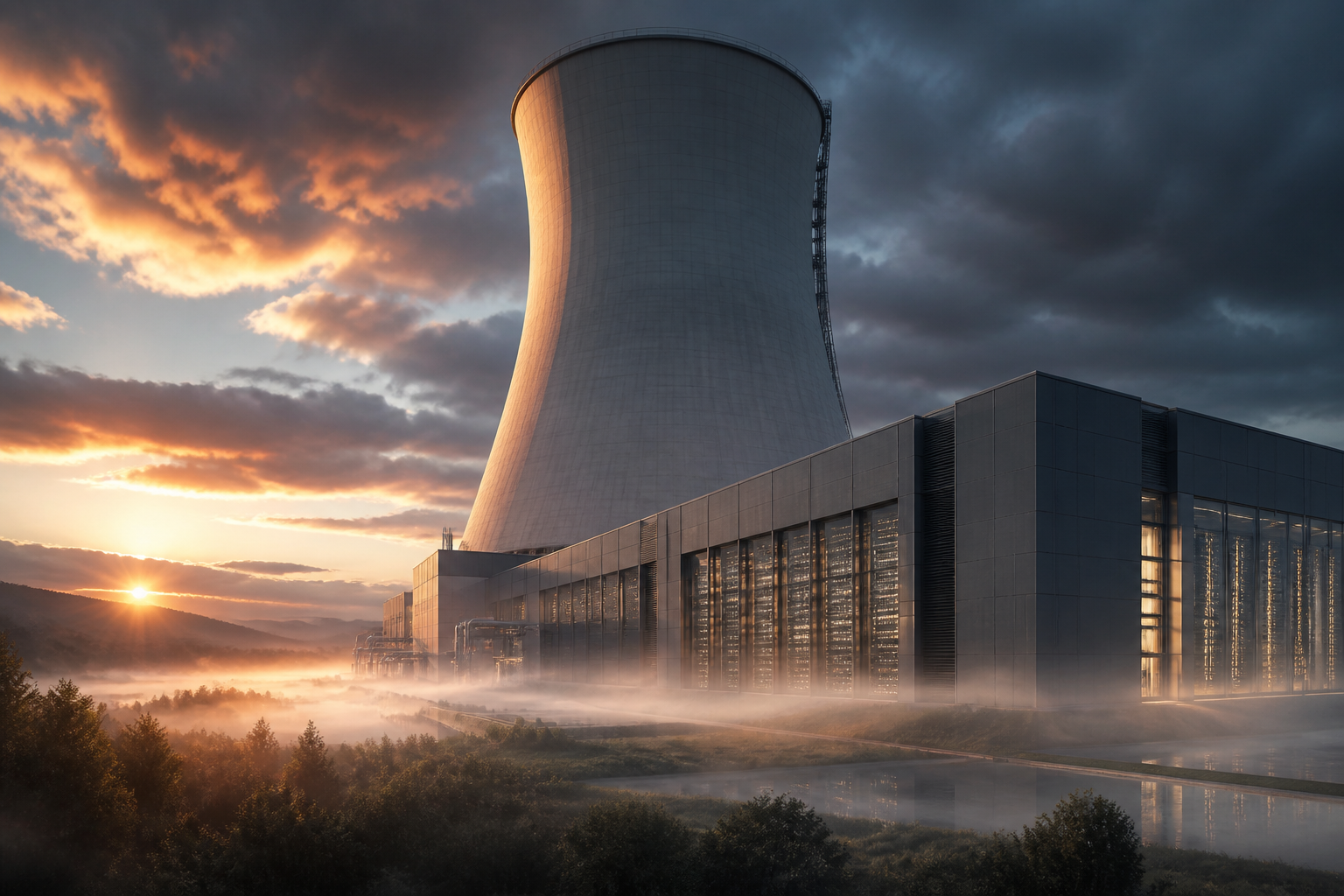
Perhaps the most significant bottleneck in this infrastructure race is the provision of reliable, high-density power. The traditional electrical grid, designed for residential use and light industry, is increasingly inadequate for the demands of large-scale computing clusters. As companies like OpenAI scale their operations toward the fifty billion dollar revenue mark, their energy requirements are evolving from megawatt to gigawatt scales. This has led to a remarkable resurgence of interest in nuclear power and small modular reactors as the only viable means of providing carbon-neutral, baseload electricity. The infrastructure of the future is thus becoming an integrated stack, where the data centre and the power plant are no longer separate entities but a single, unified industrial complex. We are witnessing the emergence of private energy ecosystems where technology firms negotiate directly with utility providers or invest in their own generation capacity to bypass the limitations of aging public grids. This trend is particularly evident in the United States and parts of Europe, where regulatory hurdles and underinvestment have left public infrastructure ill-equipped to handle the sudden surge in demand from the technology sector.
Geopolitical Shifts and the China Factor
While the West focuses on the rapid expansion of private-sector computing power, the picture in the East remains complex and fraught with volatility. The recent performance of JD.com, which experienced its first decline in over a decade, serves as a cautionary tale for the broader Asian infrastructure and e-commerce landscape. The slowdown in Chinese domestic consumption and the ongoing challenges in its property sector have created a vacuum that the state is attempting to fill with strategic investments in high-tech manufacturing and digital infrastructure. However, the divergence between the robust growth of American AI firms and the stagnation of Chinese consumer giants suggests a widening gap in the digital divide. The infrastructure of trade is being remapped, as supply chains for critical components like high-bandwidth memory and advanced lithography equipment become the new battlegrounds for sovereign control. The ability to build and maintain the physical infrastructure of AI is now a matter of national security, leading to a fragmented global market where technology blocks are increasingly defined by their access to proprietary hardware and energy-secure data zones.
The Financialization of Computing Capacity
The impending initial public offering of OpenAI, which is taking shape against the backdrop of its forty billion dollar revenue milestone, represents a landmark moment for the financialization of digital infrastructure. Investors are no longer merely betting on the intellectual property of algorithms, they are valuing the physical moat created by massive capital expenditure. This shift has profound implications for the bond markets and long-term institutional investment. As these firms seek to finance their multi-billion dollar infrastructure projects, they are increasingly tapping into debt markets, competing with traditional infrastructure projects for capital. The cost of US bond sales and the volatility of the sovereign debt market are now directly linked to the expansion plans of Silicon Valley. This creates a feedback loop where the health of the technology sector is inextricably tied to the broader macroeconomic environment. The saas-pocalypse, a term used to describe the plateauing of software-as-a-service growth, has forced a pivot toward these more tangible, asset-heavy business models which offer more stability but require significantly more upfront investment.
Supply Chain Resilience and Rare Earth Dependencies
No discussion of modern infrastructure is complete without addressing the raw materials that underpin the digital age. The construction of computing clusters on the scale envisioned by Anthropic and OpenAI requires a steady supply of rare earth elements and specialized metals. The vulnerability of these supply chains remains a primary concern for policymakers in Washington and Brussels. As the infrastructure for AI expands, the demand for copper, lithium, and cobalt is projected to reach unprecedented levels, putting further pressure on a global mining sector that is already struggling to meet the needs of the green energy transition. This competition for resources is creating new alliances and rivalries, as technology firms seek to secure their supply lines through long-term off-take agreements and direct investments in mining projects. The result is a blurring of the lines between the technology, energy, and extractive industries, creating a new form of vertical integration that defines the modern infrastructure landscape. The stability of this system is contingent upon a delicate balance of trade relations, which are currently being tested by increasing protectionism and the rise of populist movements in key Western economies.
Forward Outlook: The Sovereign Cloud
Looking ahead toward the end of the decade, the integration of energy, hardware, and data will likely culminate in the rise of the sovereign cloud. Nations that fail to invest in the physical infrastructure of artificial intelligence risk becoming digital vassals to those that do. We should expect to see a surge in state-backed infrastructure funds designed specifically to build domestic computing capacity, often in partnership with the private sector giants that currently lead the field. The focus will shift from purely economic considerations to those of resilience and autonomy. The infrastructure of the future will not be measured by the kilometres of road or the number of shipping containers, but by the flops of computing power and the terawatts of dedicated energy capacity. As OpenAI and its peers continue their transition into industrial titans, the global economy will have to adapt to a new reality where the foundry is the ultimate source of power. Those who control the physical sites where data is processed will hold the keys to the next century of economic growth, making the current infrastructure build-out the most consequential investment of our lifetimes.