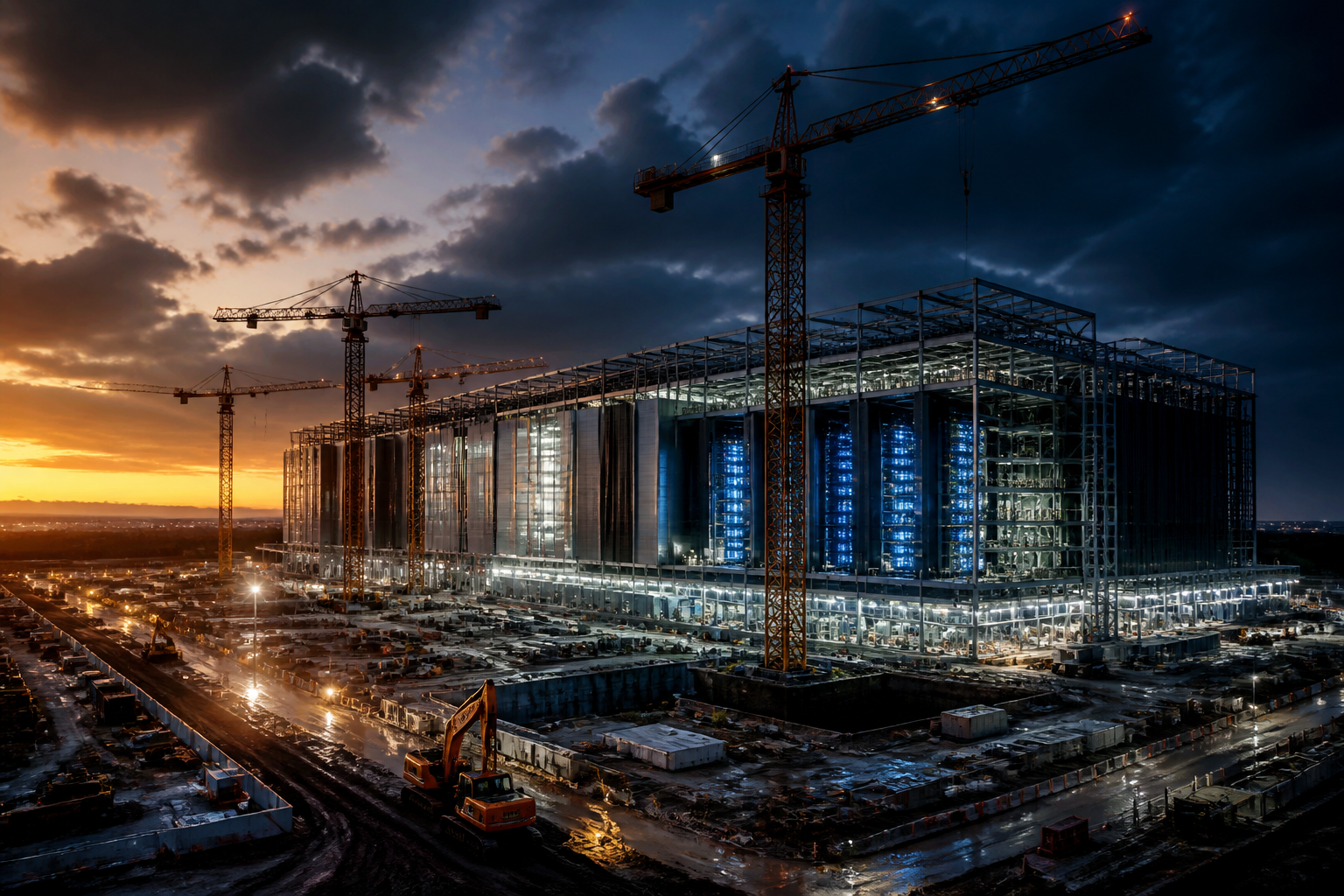
The Data Fortress: Assessing The Fiscal Fragility Of The Artificial Intelligence Buildout
A deep exploration into the burgeoning AI infrastructure boom, examining how rising credit default swap costs and international trade hostilities threaten the sustainable development of global computing power.
The global economy stands at a precarious juncture where the physical requirements of the digital age have begun to collide with the sobering realities of fiscal gravity. While the narrative of the past two years has been dominated by the ethereal promises of generative artificial intelligence, the underlying industrial reality is one of concrete, copper, and colossal capital expenditure. The current expansion of data centres and energy networks has provided a significant tailwind to gross domestic product in the United States, yet this momentum is increasingly shadowed by a resurgence of financial anxiety. As recent data from Accel and various financial monitoring bodies suggest, the sheer scale of investment required to sustain the artificial intelligence revolution is exposing structural vulnerabilities in corporate balance sheets. This is no longer merely a speculative exercise in software valuation, but a systemic industrial shift that demands a rigorous interrogation of debt sustainability and geopolitical stability.
The Resurgence of Credit Anxiety
For those with long memories of the 2008 financial crisis, the recent uptick in the cost of insuring technology company debt against default serves as a chilling reminder of how quickly sentiment can turn. Credit default swaps, the instruments that once signalled the rot within the subprime mortgage market, are again featuring in analysts' briefings. This time, however, the focus is not on residential property but on the high-stakes world of silicon and servers. The rising price of these swaps for major technology firms indicates a growing unease among investors regarding the sustainability of the current spending spree. As these corporations commit hundreds of billions of dollars to build out the physical infrastructure necessary for advanced computation, the market is beginning to price in the risk that the returns on these investments may not materialise as swiftly as the debt matures. This shift in the credit markets suggests that the era of unquestioned faith in the tech sector's invincibility is drawing to a close, replaced by a more traditional, and perhaps more cynical, evaluation of creditworthiness.
The Infrastructure Paradox
There is a profound irony in the fact that the most advanced software in human history is entirely dependent on the most basic of industrial inputs. The boom in artificial intelligence infrastructure has become a primary driver of economic growth, yet it reveals a startling degree of financial stress within the broader ecosystem. According to recent reports from the United States Chamber of Commerce and various venture capital trackers, the demand for new housing, power plants, and specialised facilities is outstripping the capacity of the construction sector to deliver them at a controlled cost. In Baltimore and other industrial hubs, the push to build forward is meeting the resistance of rising material costs and a shortage of skilled labour. This creates an infrastructure paradox where the very activity that boosts gross domestic product also contributes to inflationary pressures that may eventually force central banks to maintain higher interest rates for longer periods. The sheer volume of capital being diverted into these projects is also crowding out investment in other critical sectors, creating a lopsided economic recovery that is heavily dependent on the continued appetite for high-performance computing.
Trade Hostilities and Supply Chain Fragmentation
The geopolitical landscape provides a secondary, and perhaps more volatile, layer of risk to the infrastructure narrative. The recent escalation of trade tensions, exemplified by Canada's decision to impose fifty percent retaliatory tariffs on a wide array of United States imports, signals a breakdown in the cooperative international order that once facilitated global supply chains. For the infrastructure sector, this fragmentation is particularly damaging. The construction of modern data centres relies on a complex web of international suppliers for everything from cooling systems to advanced semiconductors. As trade wars escalate and protectionist policies become the new norm, the cost of these essential components is likely to skyrocket. Furthermore, the threat of further tariffs between the United States and its closest allies introduces a level of uncertainty that makes long-term capital planning nearly impossible. The possibility of a broader trade conflict between major economies could transform the current infrastructure boom into a series of stranded assets, half-finished monuments to a digital future that the world can no longer afford to build.
The Spectre of Sovereign and Household Debt
While corporate balance sheets are under scrutiny, the broader macroeconomic environment is being squeezed by the twin pressures of sovereign and household indebtedness. In Australia, higher than expected inflation has fuelled fears of further interest rate hikes, a situation mirrored in many Western economies where the cost of living remains stubbornly high. The First Trust Economics Blog recently highlighted the precarious state of household financial health, noting that the cushion of savings accumulated during the pandemic has largely evaporated. This matters for infrastructure because a consumer slowdown eventually translates into reduced demand for the digital services that justify the massive investment in data centres. Simultaneously, the level of national debt in the United States and other major economies is reaching levels that some analysts describe as a state of panic for treasury officials. If governments are forced to curtail infrastructure spending or increase taxes to service their own debt, the public-private partnerships that underpin many large-scale energy and telecommunications projects could collapse, leaving the private sector to shoulder the entire burden of the transition.
Energy Constraints and the Green Mandate
Perhaps the most significant physical bottleneck for the artificial intelligence expansion is the global energy grid. The power requirements of modern server farms are immense, often consuming as much electricity as small cities. This demand is hitting the market at a time when the world is also attempting a massive transition toward renewable energy. The conflict between the need for constant, reliable baseload power for tech infrastructure and the intermittent nature of wind and solar energy is creating a crisis of reliability. In many regions, the existing grid is simply not equipped to handle the load, necessitating a complete overhaul of transmission lines and substations. This required upgrade represents a secondary infrastructure challenge that is often overlooked in the excitement over software capabilities. Without a massive and coordinated investment in the energy sector, the ambitions of the technology industry will be limited not by their imagination, but by the physical capacity of the electrical wires that feed their machines.
A Cautious Outlook for the Digital Decade
Looking ahead, the trajectory of the infrastructure sector will be defined by its ability to navigate a world of higher costs and lower liquidity. The period of easy money and frictionless trade that birthed the modern internet is over, and the new era will be one of fiscal discipline and strategic resilience. We should expect to see a consolidation within the industry, as smaller players who cannot access affordable credit are forced to sell their assets to better-capitalised giants. The focus will likely shift from pure expansion to efficiency, with a greater emphasis on technologies that reduce the energy and cooling requirements of large-scale computing. Governments will also be forced to make difficult choices about which projects to prioritise, potentially leading to a two-tier infrastructure landscape where only the most strategically vital sectors receive state support. The coming years will test the resolve of investors and policymakers alike, as they attempt to build a twenty-first-century economy on a foundation of nineteenth-century industrial realities and twenty-first-century debt. The success of this endeavour is by no means guaranteed, and the risks of a significant market correction remain elevated as the cost of insurance continues to climb.