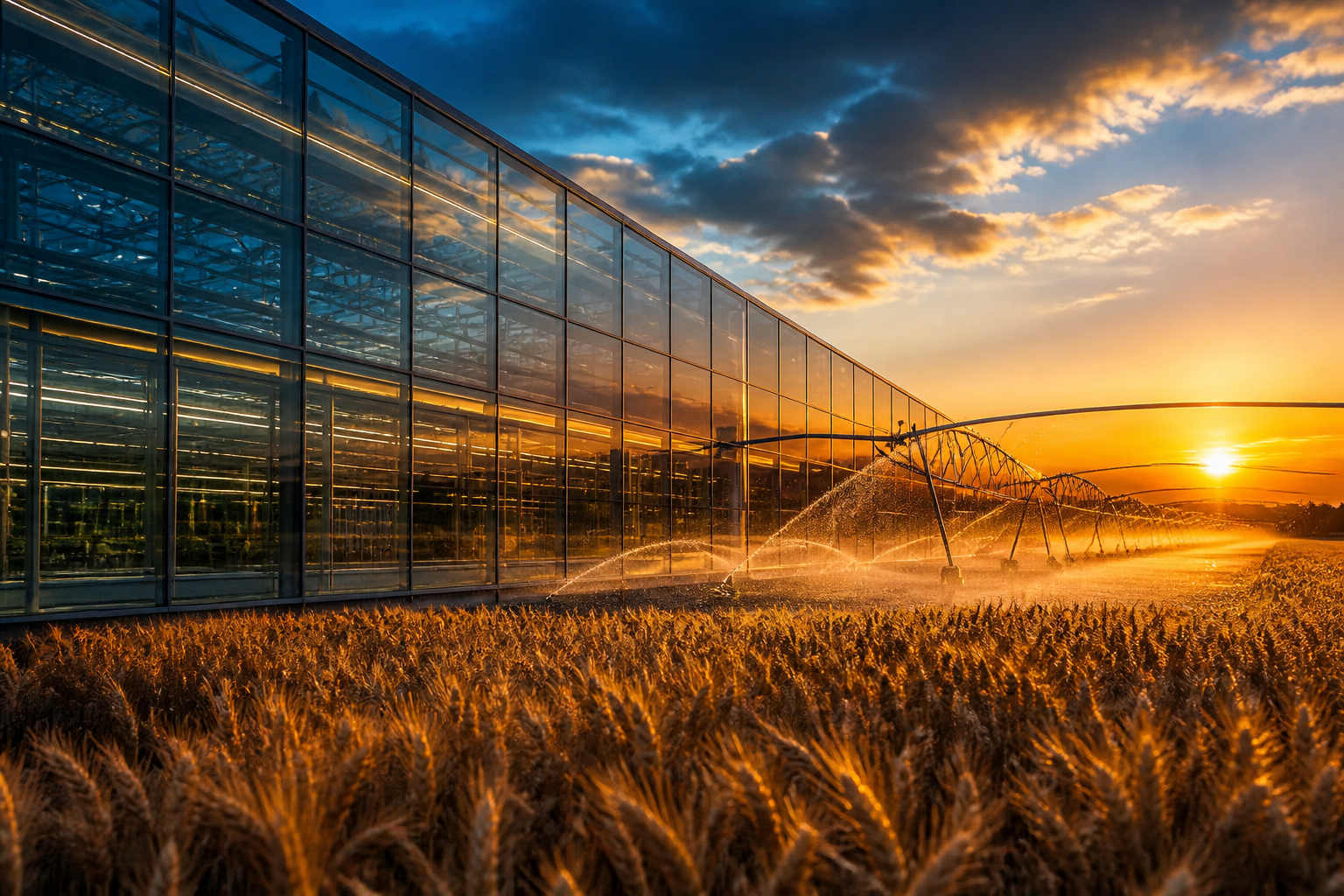
Capital Cultivation: Navigating The Structural Transformation Of Global Agrifood Systems
As Canada launches a multi-billion dollar financing initiative and New York invests in water security, the agrifood sector enters a new era of capital-intensive modernisation and strategic supply chain fortification.
The global agrifood landscape is currently undergoing a profound structural realignment, driven by the dual pressures of post-pandemic consumer volatility and an increasingly fractured international trade environment. For decades, the sector operated on the principles of just-in-time delivery and lean margins, yet the fragilities exposed by recent systemic shocks have necessitated a fundamental pivot toward resilience and long-term capital depth. In Canada, the federal government has responded to these imperatives with a substantial intervention, deploying billions through Farm Credit Canada to bridge the widening gap between traditional primary production and high-value processing. This institutional shift suggests that the future of agricultural profitability no longer resides solely in the volume of raw commodities, but rather in the sophistication of the infrastructure that transforms, preserves, and distributes them within a climate-uncertain world.
The Strategic Imperative Of Sovereign Agricultural Investment
Central to the current transformation is the unprecedented scale of sovereign and quasi-sovereign financial support. The recent announcement by the Government of Canada concerning the establishment of a one billion dollar Agri-food Project Finance Fund, managed by Farm Credit Canada, represents a significant escalation in industrial policy. By providing a dedicated pool of capital for large-scale projects, Ottawa is attempting to de-risk the transition from agrarian output to industrial processing. This initiative is complemented by an additional one hundred and fifty million dollars allocated to Velocity Agri-Capital Partners, a move designed to stimulate private equity participation in a sector that has historically suffered from chronic under-investment. The objective is clear, which is to ensure that the domestic supply chain can withstand the fluctuating demand patterns that have become the hallmark of the post-COVID-19 era.
Water Security And The Economics Of Conservation
While federal initiatives focus on industrial scale, sub-national investments are increasingly targeting the fundamental biological inputs of production. In New York, the state government has recently awarded nearly twenty-five million dollars to support agricultural water quality conservation projects. This fiscal commitment highlights a growing recognition among policymakers that the long-term viability of the Northeast agricultural corridor depends upon the meticulous management of natural capital. As climate patterns become more erratic, the cost of water mismanagement poses a systemic risk to farm solvency. These grants are not merely environmental subsidies, rather they are strategic investments in the stability of the regional food system, ensuring that primary producers can maintain productivity without degrading the ecological assets that underpin their creditworthiness.
Evolving Trade Dynamics And Domestic Resilience
International trade remains a double-edged sword for the modern agrifood executive. On one hand, evolving trade dynamics and shifting economic conditions continue to create a climate of uncertainty, as geopolitical tensions disrupt traditional export routes and import dependencies. The recent fluctuations in rice ending stocks, which saw significant upward revisions according to recent industry insights, illustrate the volatility inherent in global commodity markets. On the other hand, these uncertainties are forcing a healthy inward gaze. Institutional players such as Farm Credit Canada are observing that the disruption of global supply chains has created a unique window for domestic processors to capture market share that was previously dominated by foreign competitors. The transition toward domestic self-reliance is not an abandonment of global trade, but a sophisticated hedging strategy against the fragility of long-distance logistics.
Consumer Behaviour And The Valuation Of Processed Goods
One of the most enduring legacies of the pandemic has been the radical shift in consumer spending behaviour. The demand for value-added products, ranging from pre-processed proteins to specialised organic staples, has surged as households reprioritise health and convenience. This change in the demand function requires a corresponding change in the capital structure of agrifood companies. The industry is moving away from a volume-based model toward a margin-based model where the value is captured through technological intervention rather than mere extraction. The Farm Credit Canada funds are specifically designed to support this evolution, providing the liquidity necessary for firms to invest in automated processing lines, advanced cold-storage facilities, and sophisticated packaging technologies that extend shelf life and reduce waste, thereby meeting the exacting standards of the modern consumer.
The Role Of Private Equity In Agritech Advancement
If state-backed funds provide the foundation, private equity is increasingly becoming the engine of innovation within the sector. The partnership between the Canadian government and Velocity Agri-Capital Partners signifies a maturing of the agritech investment landscape. No longer restricted to Silicon Valley software startups, venture and growth capital are now flowing into tangible agricultural assets. This influx of professionalised management and high-risk capital is accelerating the adoption of precision agriculture, vertical farming, and bio-synthetic alternatives. The challenge for these investors lies in balancing the long biological cycles of agriculture with the rapid return expectations of the private equity world. However, the current high-inflation environment has made the tangible nature of agricultural assets increasingly attractive to diversified portfolios, providing a natural hedge against monetary volatility.
A Forward Looking Perspective On Global Food Security
Looking ahead, the agrifood sector is poised for a period of intense consolidation and technological acceleration. The move toward larger, more capital-intensive operations is likely to continue, as the costs of regulatory compliance and technological adoption exceed the capacity of smaller, traditional producers. This trend, while raising concerns about the concentration of the food supply, also offers the potential for significant gains in efficiency and sustainability. The integration of large-scale project finance with grassroots conservation efforts suggests a dual-track approach to food security, where industrial capacity and ecological stewardship are no longer viewed as mutually exclusive. As we move into the middle of the decade, the winners in this space will be those who can navigate the complexities of a fragmented trade landscape while leveraging institutional capital to build the resilient, high-tech infrastructure that the twenty-first century demands.