The Arid Frontier: Reconciling Climatic Volatility with Global Food Security
This editorial examines the intersection of record-breaking El Niño patterns, the erosion of agrarian political lobbying, and the urgent transition toward resilient agrifood systems amidst deepening global droughts.
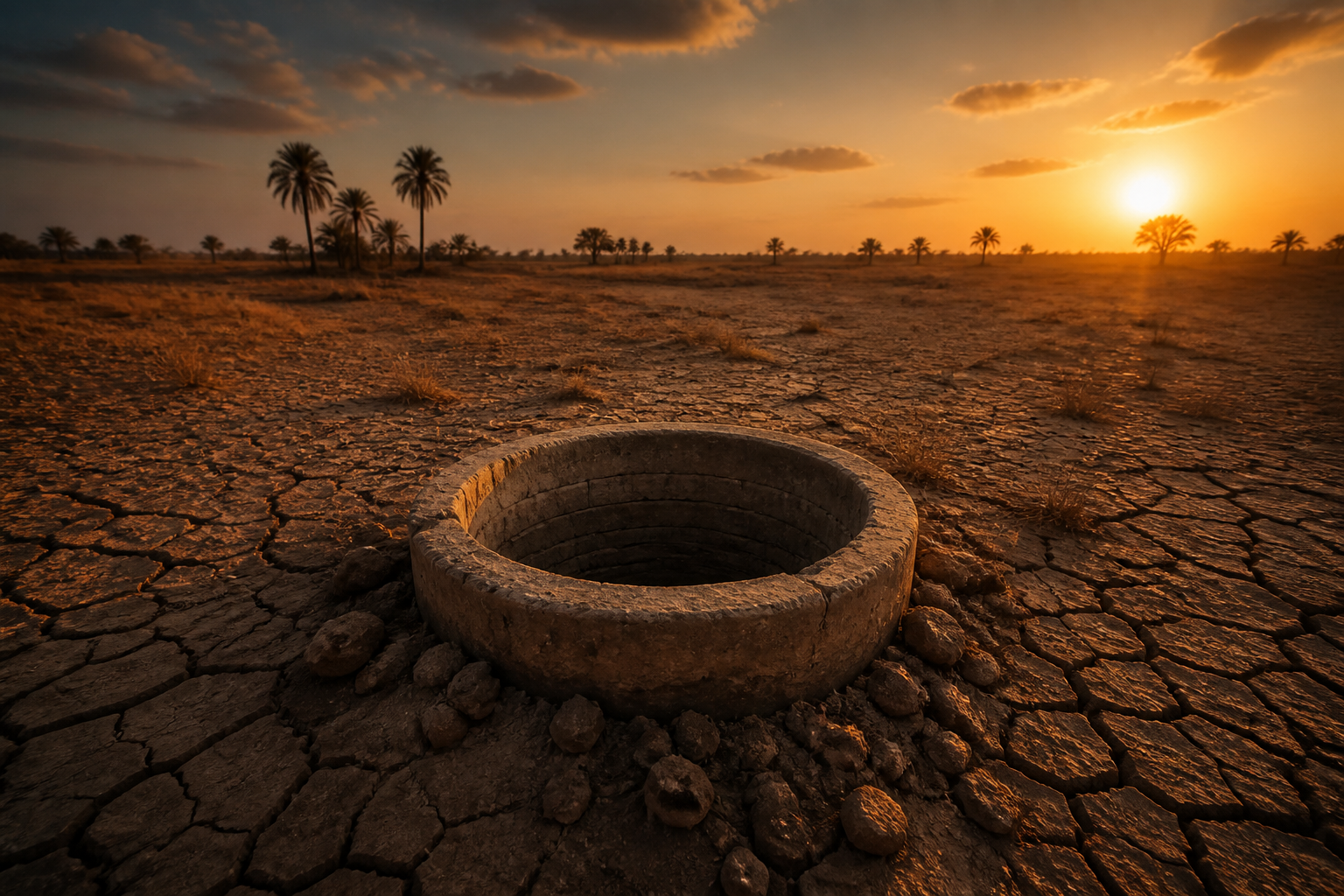
The global agricultural landscape is currently contending with a convergence of pressures that threaten to dismantle the foundational assumptions of twentieth-century food production. For decades, the primary objective of international agrifood policy was the pursuit of yield at any cost, supported by relatively stable climatic conditions and the considerable political influence of national farmers unions. However, the emergence of what the United Nations now characterises as a supersized El Niño event, a phenomenon of such intensity that it may become the strongest ever recorded, has introduced a level of volatility that renders traditional farming models obsolete. In Sri Lanka, the deepening drought has already begun to desiccate wells and evaporate rural incomes, serving as a harrowing precursor to the systemic shocks anticipated across the global south. This shift is not merely an environmental crisis, it represents a fundamental realignment of the economic relationship between the state, the land, and the primary producer.
The End of the Agrarian Veto
Perhaps the most significant shift in the institutional landscape is the changing nature of agricultural lobbying and its relationship with central government. For much of the post-war era, organisations such as the Ulster Farmers Union in the United Kingdom or the powerful grain cooperatives of the American Midwest held what amounted to a veto over rural policy. This dynamic is rapidly eroding, as exemplified by recent statements from the Agriculture Minister Andrew Muir, who has signaled that the days of farmers unions dictating policy in a unilateral fashion are over. The modern state is increasingly prioritising environmental sustainability and carbon sequestration over the traditional interests of industrial-scale livestock and tillage. This tension is not unique to Northern Ireland, it is being mirrored across the European Union and the Commonwealth, where governments are redirecting subsidies toward public goods rather than simple production volume. The transition is painful for those accustomed to a protectionist status quo, yet it is an unavoidable response to the fiscal and ecological costs of intensive agriculture.
The Meteorics of Market Instability
As the UN warns of unprecedented temperatures and moisture deficits, the commodity markets are reacting with predictable nervousness. The current El Niño cycle is expected to strengthen further and persist well into the coming year, creating a bifurcated reality for global markets. While certain regions may experience temporary windfalls from shifting rainfall patterns, the overall trajectory for staples such as rice, wheat, and sugar is one of heightened risk. In South Asia, the failure of monsoon rains to provide sufficient groundwater recharge has left smallholders in a state of precariousness that transcends mere seasonal fluctuation. The exhaustion of aquifers in Sri Lanka is a canary in the coal mine for other major exporters, including India and Thailand, where water management systems are struggling to cope with the prolonged absence of precipitation. This leads to a tightening of export restrictions as nations pivot toward food nationalism, further inflating global prices and exacerbating the cost-of-living crisis in import-dependent economies.
Institutional Adaptability in the Face of Desiccation
To mitigate the impact of this climatic shift, a radical overhaul of water infrastructure and crop selection is required. The current crisis in Sri Lanka, where wells that have served communities for generations are now dry, highlights the fragility of reliance on surface-level and shallow groundwater sources. Investment must shift toward deep-aquifer management, desalination for high-value horticulture, and the adoption of drought-tolerant cultivars. The international community, led by institutions such as the Food and Agriculture Organization of the United Nations, must facilitate the transfer of technology and capital to the regions most affected. The challenge is that this capital is often scarce in the very regions where the drought is most severe. Without a coordinated effort to de-risk investments in resilient infrastructure, the world risks a permanent contraction in the productive capacity of the tropics, leading to a long-term relocation of the global breadbasket toward more temperate latitudes.
The Reconfiguration of the Value Chain
Beyond the farm gate, the agrifood value chain is undergoing a process of structural consolidation and digitisation. Large-scale processors and retailers are increasingly bypassing traditional intermediaries to secure direct contracts with producers who can guarantee sustainable and climate-resilient practices. This shift is driven by both consumer demand for transparency and the necessity of supply chain security. As volatility becomes the new baseline, the ability to predict yields through satellite imagery, soil sensors, and predictive analytics becomes a competitive advantage. Companies that fail to integrate these technologies into their procurement strategies will find themselves exposed to the same sudden shortages that have recently plagued the global sugar and cocoa markets. The era of cheap, abundant, and predictable commodities is being replaced by a sophisticated market where data is as valuable as the harvest itself.
Geopolitical Implications of Food Insecurity
The intersection of El Niño-driven crop failures and geopolitical tension creates a volatile cocktail for international relations. History suggests that spikes in food prices are frequently the catalysts for civil unrest and migration, particularly in the Middle East and North Africa. The current drought-induced contraction of farmer incomes in South Asia could easily spill over into broader economic instability if not managed through robust social safety nets. Furthermore, the strategic use of food exports as a tool of statecraft is likely to increase as nations seek to secure their own domestic needs before fulfilling international obligations. The erosion of the agrarian veto, while necessary for environmental progress, also risks alienating rural populations who feel abandoned by the urban-centric policy elite, potentially fueling populist movements that could further destabilise international trade agreements.
A New Paradigm for Global Agrifood
Looking ahead, the success of the global agricultural sector will depend on its ability to reconcile the competing demands of productivity, sustainability, and equity. The transition away from the farmer-dictated policy models of the past must be handled with sensitivity to ensure that the primary producers who are most vulnerable to climatic shocks are not left behind. This requires a move toward regenerative practices that restore soil health and enhance water retention, coupled with a financial system that rewards long-term stewardship over short-term yield. The supersized El Niño of 2024 and 2025 serves as a definitive warning that the planetary boundaries of our current food system have been reached. The future of the industry lies not in the continuation of old grievances between unions and ministers, but in a collaborative effort to build a resilient, data-driven, and environmentally conscious global food architecture that can withstand the increasingly harsh realities of a warming world.