The Architecture Of Displacement: Infrastructure Finance Amidst The Great AI Realignment
An analytical exploration of the growing schism between high-growth digital infrastructure and the struggling transport sector, examining Bank of America's $250bn commitment and the systemic risks of AI-driven displacement.
The global economic landscape is currently defined by a profound and unsettling paradox where the relentless expansion of digital capacity stands in stark contrast to the intensifying fragility of physical logistics and traditional labour markets. Even as Anthropic reports quarterly revenues eclipsing eleven point five billion dollars, a figure that underscores the insatiable appetite for generative intelligence, the foundations of the physical economy are showing signs of significant strain. The transportation sector has become a primary casualty of this technological pivot, recording over forty-one thousand dismissals in the first seven months of the year, representing a staggering three hundred and three per cent increase compared to the previous period. This divergence suggests that the infrastructure of the future is not merely being built alongside the old, but is actively cannibalising the capital and human resources once reserved for the movement of goods and people. As Wall Street becomes increasingly enmeshed in Nvidia's five hundred billion dollar strategic expansion, the underlying credit markets are beginning to signal caution, with the cost of insuring technology company debt rising through credit default swaps. This editorial examines the intersection of this capital migration and the monumental financial initiatives, such as Bank of America's two hundred and fifty billion dollar critical infrastructure commitment, which seek to stabilise a volatile transition.
The Financialisation Of Digital Sovereignty
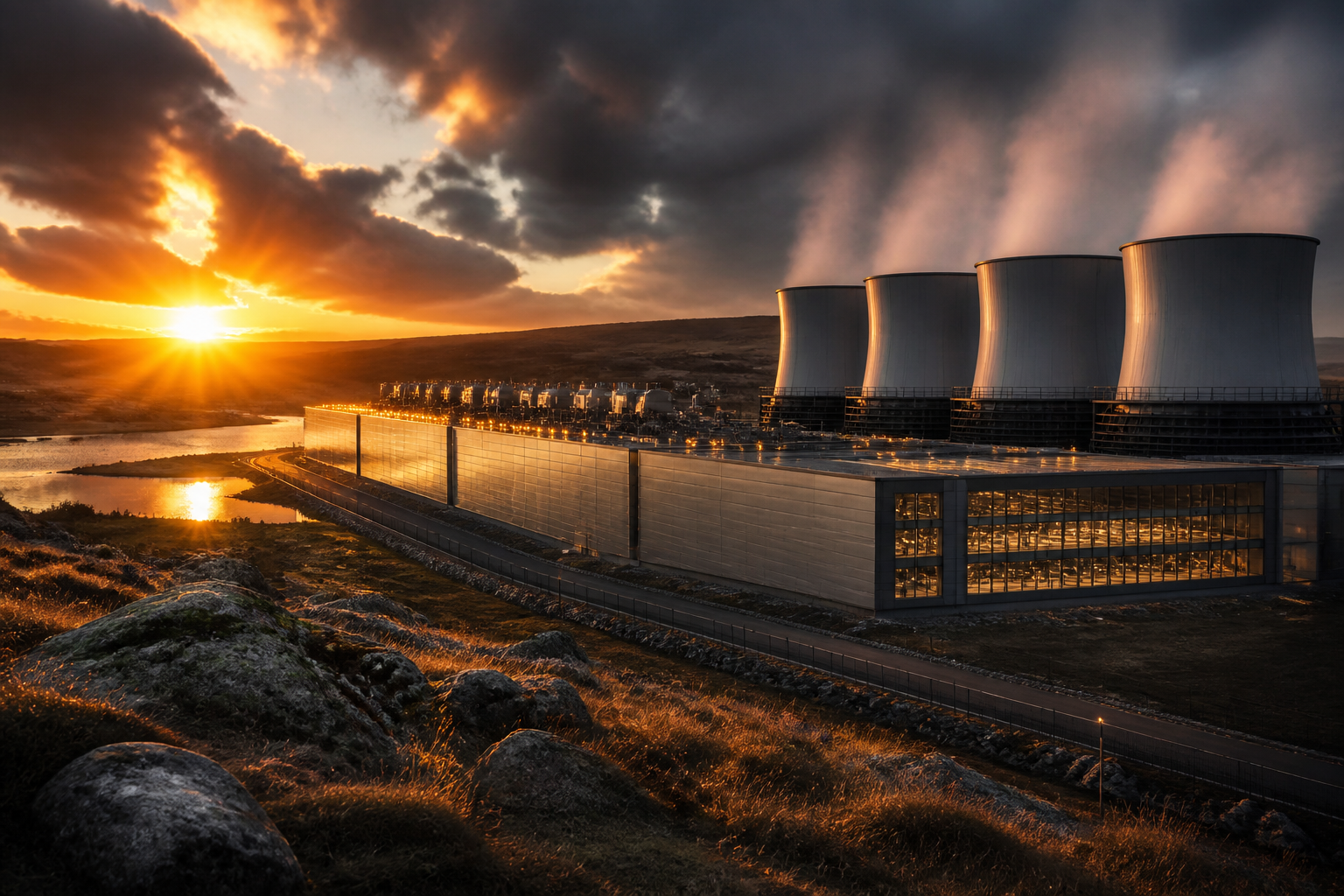
The scale of capital now being deployed into the digital bedrock of the American economy reflects a shift from speculative venture funding to institutional state-building. Bank of America's launch of its Critical Infrastructure Finance Initiative represents a seminal moment in this transition, dedicating a quarter of a trillion dollars specifically to energy, digital systems, and core physical assets. This is no longer merely an investment in software or services, but a massive underwriting of the power grids and data centres required to sustain the artificial intelligence frenzy. When a single financial institution commits such a vast sum, it acknowledges that the digital environment has reached the status of a public utility, yet one that remains largely in private hands. The initiative arrives at a time when the Institute for Supply Management and S&P Global are reporting fluctuating manufacturing indices, suggesting that while the production of physical goods remains in a state of flux, the demand for the infrastructure that processes information is absolute. The concentration of capital into these high-performance computing environments is creating a new hierarchy of asset classes, where the reliability of a power connection to a server farm is now valued more highly than the traditional throughput of a shipping terminal.
The Transport Paradox And The Labour Churn
While the digital sector attracts unprecedented investment, the infrastructure of movement is grappling with a crisis of redundancy and automation. The transportation industry has seen the second largest number of dismissals in the United States this year, a phenomenon driven largely by the implementation of autonomous systems and the optimisation of logistics through algorithmic management. This surge in layoffs, which has seen the volume of job losses quadruple year-on-year, highlights a growing disconnect between technological efficiency and social stability. Infrastructure, by its traditional definition, was an engine of mass employment, yet the modern digital-first approach prioritises the elimination of human friction. As Florida's Port Everglades and logistical hubs in Texas and Missouri attempt to modernise through various state-level incentives, they find themselves caught between the need for high-tech upgrades and the reality of a shrinking workforce. The infrastructure desk views this as a structural realignment where the physical act of moving cargo is being devalued in favour of the data-driven systems that oversee the process. The resulting friction is not merely economic but social, as the rapid pace of AI-driven displacement outstrips the ability of the workforce to retrain for a high-tech economy.
Credit Markets And The Cost Of Technological Ambition
The exuberance surrounding the growth of firms like Nvidia and Anthropic has obscured a growing anxiety within the credit markets. Credit default swaps, the financial instruments used to hedge against corporate default, are seeing increased activity in the technology sector, suggesting that the cost of insuring tech-heavy debt is no longer negligible. This indicates that while equity markets remain intoxicated by the promise of five hundred billion dollar expansion plans, debt markets are beginning to price in the risks of over-extension and the high capital expenditure required to maintain a competitive edge. The infrastructure required to support artificial intelligence is exceptionally capital-intensive, requiring not only billions in silicon but also billions in bespoke real estate and dedicated energy generation. As the cost of borrowing remains influenced by broader macroeconomic uncertainty and manufacturing volatility, the ability of these technology giants to service their massive debt loads will depend on their ability to turn revenue into consistent cash flow. The recent surge in revenue at Anthropic provides some comfort, yet the sheer volume of investment flowing into this sector creates a systemic risk if the anticipated productivity gains from AI do not materialise in the broader economy rapidly enough to offset the costs of building the foundation.
Regional Incentives And The New Industrial Policy
In response to these global shifts, a granular competitive landscape is emerging across the United States, as individual states attempt to anchor the new economy within their borders. From Massachusetts to Florida, the use of infrastructure incentives has become a primary tool of industrial policy. These regional efforts, often focused on energy resilience and digital connectivity, are designed to attract the massive data centre projects that are currently the darlings of the institutional investment world. In Missouri and Texas, the focus has shifted toward securing the supply chains necessary for manufacturing the components of the digital revolution. However, this fragmented approach to infrastructure development creates a patchwork of capabilities that may not be sufficient to meet the national demand for a unified energy and transport strategy. The reliance on local incentives to drive national-scale infrastructure projects risks creating an environment of uneven development, where regions that cannot afford to subsidise big tech are left with decaying physical infrastructure while wealthier hubs become fortresses of digital excellence. The Bank of America initiative may provide a necessary bridge for these projects, but the underlying tension between state-level competition and national strategic necessity remains unresolved.
Real Estate And The Repurposing Of Physical Assets
The commercial real estate sector is currently the primary laboratory for this great infrastructure realignment. As traditional office spaces face declining demand, the industry is looking toward the conversion of physical assets into data-processing hubs and logistical centres. The Altus Research findings on the United States market indicate that while macro factors are weighing heavily on traditional real estate, the appetite for specialised infrastructure assets remains robust. This shift is not without its complications, as the power and cooling requirements for a modern data centre far exceed the capacity of a standard commercial building. Consequently, the value of land is being recalculated based on its proximity to fibre-optic trunk lines and high-voltage electrical substations rather than its proximity to city centres or retail corridors. This repurposing of the built environment represents a fundamental change in how we perceive the utility of land and buildings. The infrastructure of the future is being carved out of the shell of the past, creating a new form of industrial real estate that is highly automated and requires minimal human occupation, further exacerbating the trends seen in the transportation job market.
Forward Outlook On The Integrated Economy
Looking toward the end of the decade, the primary challenge for policymakers and investors will be the integration of these disparate trends into a cohesive economic framework. The current trajectory suggests a deepening divide between a high-margin digital infrastructure and a struggling physical service economy. To avoid a period of prolonged social and economic instability, the capital currently being deployed by institutions like Bank of America must be balanced with investment in the human capital and physical networks that remain essential to a functioning society. The transportation sector, while currently in the throes of displacement, will eventually require a new model of operation that leverages AI without entirely discarding the human element. Furthermore, the volatility in the credit markets regarding tech debt serves as a reminder that even the most promising technological revolutions are subject to the laws of financial gravity. The coming years will likely see a rationalisation of the AI infrastructure boom, as the initial frenzy of expansion gives way to a more disciplined approach to asset management and debt sustainability. The ultimate success of this transition will depend on whether the architecture of displacement can be transformed into an architecture of inclusion, ensuring that the digital foundations of the future support, rather than undermine, the physical realities of the present.