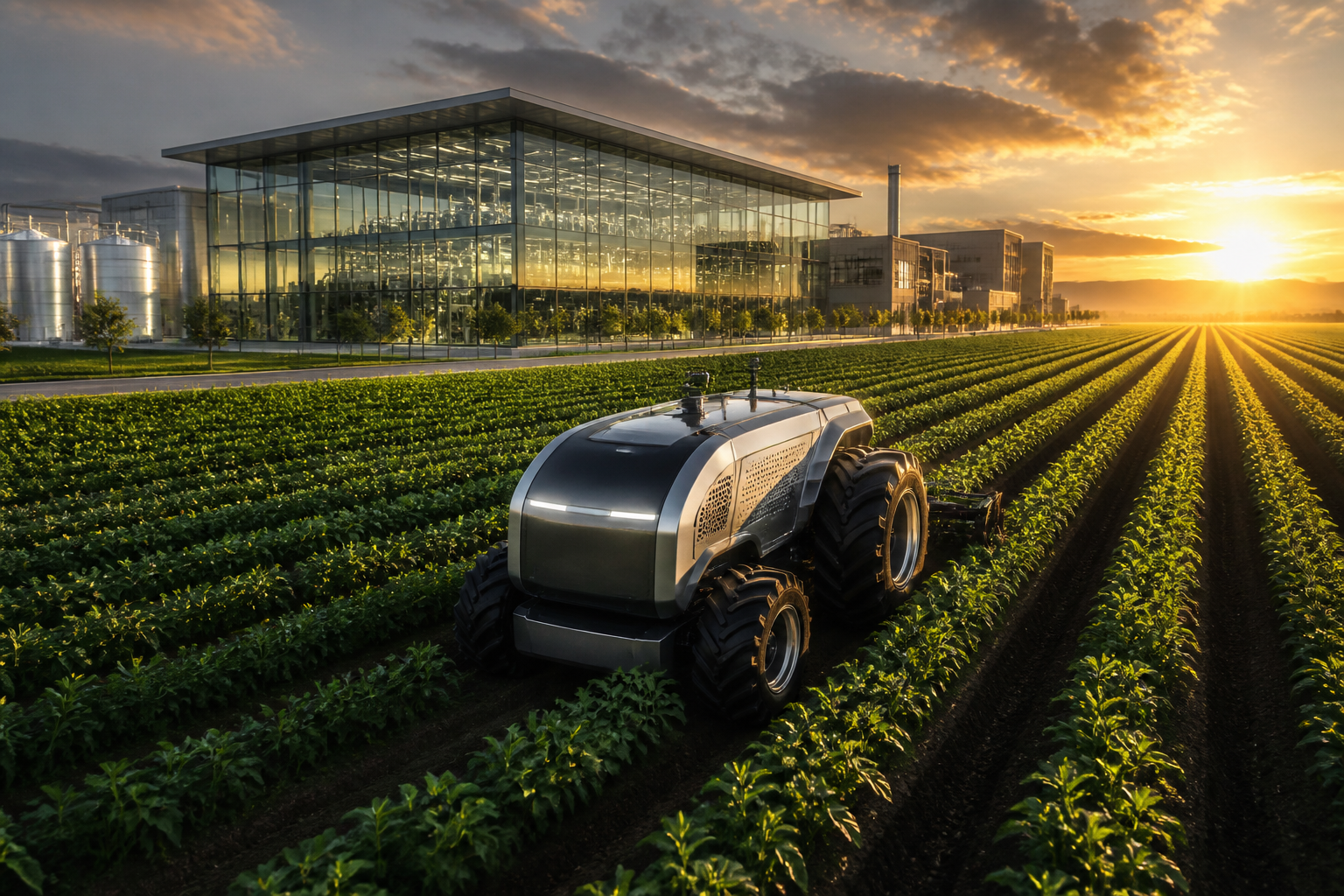
The Agrifood Multiplication Effect: Re-evaluating The Global Value Chain
An in-depth analysis of the burgeoning agrifood sector, examining how jurisdictions like Ontario and Michigan are leveraging farm-gate outputs to drive multi-billion dollar industrial growth and employment.
The contemporary economic narrative surrounding the agricultural sector has too often been confined to the narrow perimeter of the farm gate, yet modern fiscal data suggests a far more expansive reality. In jurisdictions as diverse as North America and West Africa, the primary production of commodities is merely the catalyst for an intricate web of industrial processing, logistical innovation, and sophisticated financial engineering. By examining the current trajectory of the industry, it becomes evident that the true strength of a nation’s food system lies not in the mere volume of its harvests, but in the complexity of the value-added services that follow. This multiplication effect is transforming rural landscapes into hubs of high-tech manufacturing and professional services, thereby challenging the obsolete perception of agriculture as a sunset industry. As capital flows increasingly towards ag-tech and mechanised infrastructure, the sector is repositioning itself as the cornerstone of resilient, sovereign economic policy.
The Ontario Paradigm and the Power of Integration
The scale of the modern agrifood apparatus is perhaps best illustrated by the current performance of Ontario, Canada, where the sector has evolved into a formidable economic engine. Recent data indicates that the provincial agrifood industry now contributes in excess of 51 billion dollars annually to the regional economy, a figure that underscores its systemic importance. This is not a success story built on raw exports alone, rather, it is the result of a deliberate integration between primary producers and a vast network of manufacturers, retailers, and distributors. This ecosystem supports approximately 867,000 jobs, demonstrating that for every individual working in a field, dozens more are employed in laboratories, processing plants, and corporate offices. The Ontario Federation of Agriculture has long advocated for this holistic view, noting that the economic ripples of a single farm reach deep into urban centres and industrial parks. By fostering a climate where secondary and tertiary industries can thrive alongside primary production, the region has created a buffer against the volatility of global commodity markets.
Mechanisation and the Financial Architecture of Growth
Transitioning from developed Western markets to emerging economies, the challenges of agricultural productivity often hinge upon the availability of sophisticated credit and machinery. In Nigeria, the Bank of Agriculture has recently intensified its efforts to bridge this gap through strategic discussions with state governments regarding large-scale mechanisation and bespoke farmer financing. The Managing Director and CEO of the institution has emphasised that sustainable growth is impossible without a transition from subsistence methods to capital-intensive operations. By providing the financial architecture necessary for smallholders to access tractors and advanced irrigation systems, the bank aims to elevate the entire national value chain. This shift is not merely about increasing yields, it is about creating a bankable asset class that attracts private equity and institutional investment. When finance and mechanisation are aligned, the risks inherent in seasonal farming are mitigated, allowing for a more predictable and stable economic contribution from the rural sector.
Research Institutions as Catalysts for Regional Stability
The role of academic and research institutions in sustaining the agrifood momentum cannot be overstated, particularly in regions where specialised crops define the local economy. Michigan State University Extension serves as a prime example of how scientific rigour translates into commercial viability. Through inter-industry research into the economic importance of fruits and vegetables, the university provides the empirical data necessary for Michigan’s farmers to make informed investment decisions. This partnership between the academy and the private sector supports a wide array of employment opportunities, ranging from biotechnological research to advanced supply chain management. By focusing on high-value specialty crops, Michigan has secured a niche that requires constant innovation to maintain competitive advantages. These research initiatives do not merely improve crop resilience, they provide the intellectual framework for new business models and market entry strategies that ensure the long-term health of the state’s agricultural footprint.
Beyond the Farm Gate: The Manufacturing Synergy
A critical component of the modern agricultural story is the synergy between the field and the factory. The processing of raw materials into high-value consumer goods represents the most significant portion of the value chain’s economic contribution. When we look at the manufacturers and equipment suppliers that serve the agrifood sector, we find a high-tech industry that mirrors the precision of the automotive or aerospace sectors. This industrial base is responsible for significant tax revenues and infrastructure development, yet it remains tethered to the health of the primary producer. If the farm fails, the factory closes, making the preservation of arable land and the support of the farming community a matter of national industrial security. This interdependence suggests that policymakers must treat agriculture not as a siloed interest, but as an essential input for a broader manufacturing strategy. Investment in local processing facilities reduces the reliance on imported finished goods and keeps the economic value within the borders, a strategy that is increasingly popular in a world of fractured global trade.
Employment Dynamics in a Tech-Driven Landscape
The nature of work within the agrifood sector is undergoing a quiet revolution, moving away from manual labour towards roles that require sophisticated technical and analytical skills. The nearly 900,000 jobs supported by the sector in Ontario are increasingly found in software development for precision farming, the management of automated greenhouses, and the oversight of complex international logistics. This shift is essential for attracting a younger, tech-savvy workforce that might otherwise overlook the agricultural industry. As artificial intelligence and the internet of things become standard tools for monitoring soil health and crop maturation, the demand for data scientists and engineers within the sector will only grow. This evolution provides a significant opportunity for regional development, as it allows for the creation of high-paying, stable jobs in areas that have historically been prone to brain drain towards major financial hubs. The modern agrifood professional is as likely to be found behind a computer screen as behind a steering wheel, reflecting the sophisticated reality of twenty-first-century food production.
Navigating the Geopolitical and Environmental Headwinds
Despite the robust growth of the agrifood sector, it faces significant headwinds from geopolitical instability and the escalating climate crisis. The volatility of energy prices and the disruption of global fertiliser supplies have forced a rethink of supply chain resilience. Many nations are now prioritising local production and the development of circular bio-economies to insulate themselves from external shocks. This inward turn is not a rejection of global trade, but a strategic recalibration intended to ensure food security. Environmental concerns are also driving a shift towards regenerative practices and carbon sequestration, which are being incentivised by new financial instruments and government subsidies. The ability of the sector to adapt to these pressures will determine its future viability. Firms that can demonstrate sustainability and traceability will find themselves at a distinct advantage as consumers and investors alike demand greater accountability from the food system. The integration of environmental, social, and governance criteria into agricultural lending is no longer a luxury, it is a prerequisite for participating in the global market.
A Future Defined by Resilience and Innovation
Looking ahead, the agrifood sector is poised to remain a primary driver of global economic health, provided that it continues to embrace the complexities of its value chain. The transition from a commodity-based model to a technology-driven service and manufacturing powerhouse is well underway, but it requires sustained support from both the public and private sectors. Governments must continue to invest in rural infrastructure and high-speed connectivity to ensure that the digital tools of modern farming are accessible to all. Meanwhile, the financial sector must develop more sophisticated risk-assessment models that account for the unique cycles of agricultural production. As we move towards a future where the global population continues to expand and resources become more precious, the efficiency of our agrifood systems will be the ultimate measure of our economic ingenuity. The story of agriculture is no longer just about what is grown in the soil, it is about how we harness that growth to build a more stable, prosperous, and sustainable world for the generations to come.