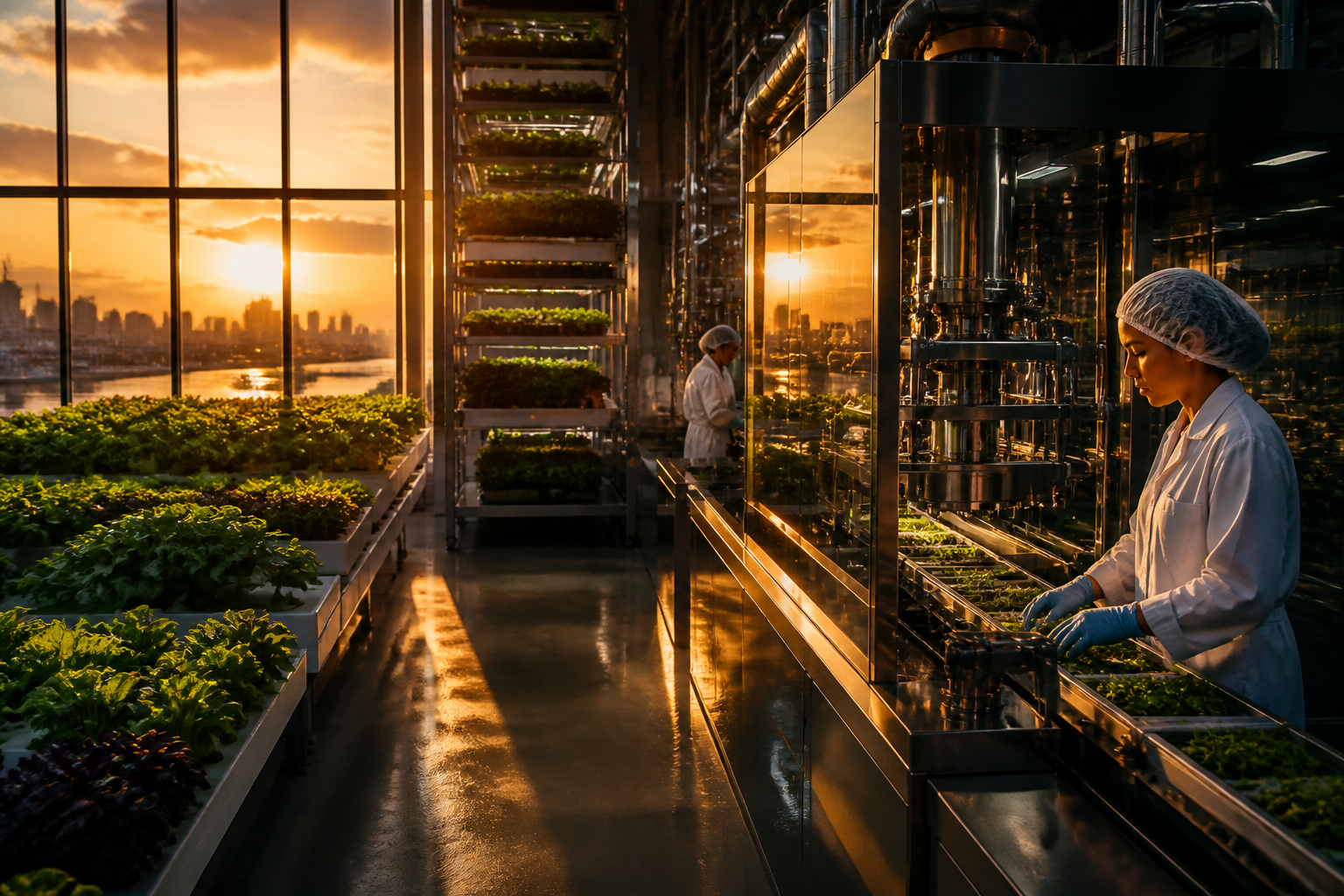
The Agrifood Imperative: Navigating The Structural Shift In Global Value Chains
This editorial examines the profound economic expansion of the global agrifood sector, where value-added exports and industrial integration now contribute over $9.6 trillion to the global economy amidst shifting policy.
The modern agricultural sector has long since transcended the romanticised, pastoral boundaries of the individual farmstead. In the current economic climate, the transition from primary production to a highly integrated agrifood industrial complex represents one of the most significant structural shifts in the global economy. Recent data indicates that the total economic impact of food and agriculture-related industries grew by a remarkable 11.8 per cent over the last twelve months, reaching a staggering 9.63 trillion dollars. This growth is not merely a reflection of inflationary pressures but rather a testament to the increasing sophistication of value-added processes that occur long after a crop has left the field. In regions where agriculture was once viewed as a legacy industry, it is now emerging as a primary driver of gross domestic product, often surpassing traditional heavyweights such as beef or dairy in its broader economic contribution. The narrative of the sector is no longer one of simple subsistence or commodity extraction, it is now a story of industrial resilience, technological integration, and strategic sovereign importance.
The Diversification Of Regional Economic Drivers
In the developed economies of the West, the reliance on the agrifood sector has reached levels that demand a reassessment of regional fiscal policy. In Ontario, for instance, the agri-food sector now contributes more than 51 billion dollars annually to the provincial economy. This figure is underpinned by a workforce of approximately 867,000 individuals, meaning that one in every nine jobs in the province is tied to the food supply chain. Such concentration illustrates that the health of the broader economy is inextricably linked to the stability of the agricultural framework. When nearly ten per cent of a region's employment is anchored in one sector, the vulnerability to climate volatility and trade disruptions becomes a matter of national security. Furthermore, certain jurisdictions now rely on this sector for up to 8 per cent of their total GDP, a figure that highlights a growing dependence on the secondary and tertiary stages of food production. The economic impact is no longer confined to the rural periphery, it has permeated the urban industrial centres where processing, packaging, and logistical innovation take place.
The Erosion Of Traditional Influence And Policy Reconfiguration
As the economic weight of the agrifood sector increases, the political dynamics governing it are undergoing a painful but necessary recalibration. The traditional relationship between state ministers and agricultural unions is being tested by new social and environmental imperatives. In the United Kingdom, specifically within the jurisdiction of Northern Ireland, Agriculture Minister Andrew Muir has recently signalled a departure from the historical status quo. His assertion that the days of farmers' unions dictating policy are over represents a significant pivot in governance. This shift suggests that policy is no longer being designed solely for the benefit of the primary producer but is instead being crafted to address a broader spectrum of stakeholders, including environmental advocates and urban consumers. This friction highlights a broader global trend where the agrarian lobby must compete with climate-driven mandates and the pressure to reduce carbon footprints. The challenge for policymakers lies in balancing these new environmental expectations with the need to support a sector that remains a vital component of the national economic fabric.
Value Added Strategies And The Export Frontier
In the competitive arena of international trade, the pursuit of value-added farm exports has become the new frontier for growth. Business groups in the United States and various Southeast Asian nations are increasingly focusing on the conversion of raw commodities into high-value consumer goods before they cross international borders. This strategy is designed to capture a larger share of the profit margin that has historically been surrendered to overseas processors. By investing in local processing facilities and branding, nations can transform a simple grain shipment into a sophisticated food product, thereby generating higher tax revenues and creating more skilled employment opportunities. The Cambodian Ministry of Commerce, alongside various international business groups, is currently seeking to boost these value-added exports by providing tailored investment incentives. These incentives are specifically designed to attract foreign capital into the mid-stream of the agrifood supply chain, ensuring that the economic benefits of agricultural production are retained within the domestic economy for as long as possible.
Navigating The Downturn In Commodity Cycles
Despite the overarching growth of the agrifood complex, the primary production level continues to face cyclical volatility that threatens the solvency of individual enterprises. In the United Kingdom and North America, agricultural economists are issuing new guidance for surviving what appears to be a significant downturn in the farm economy. Producers of corn, soybeans, cattle, and swine are grappling with a confluence of rising input costs and fluctuating market prices. The cost of fuel, fertiliser, and machinery has remained stubbornly high, while the prices received at the farm gate have failed to keep pace. This squeeze on margins is forcing a consolidation within the industry, as smaller operators find it increasingly difficult to achieve the economies of scale required to remain profitable. For those who remain, the focus has shifted toward precision agriculture and data-driven decision making as a means of reducing waste and optimizing yields. The survival of the family-run farm now depends as much on financial literacy and risk management as it does on traditional agronomic skill.
Technological Integration And The Future Of Labour
The integration of advanced technology is the invisible thread connecting these disparate economic trends. From the use of satellite imagery to monitor crop health to the implementation of automated systems in processing plants, the sector is undergoing a digital transformation. This technological shift is essential for addressing the chronic labour shortages that plague the agrifood sector in many developed nations. However, it also introduces a new set of challenges, particularly regarding the capital expenditure required to adopt these innovations. The high cost of entry for state-of-the-art agricultural technology risks creating a two-tier system where only the most capital-rich operations can afford to compete. To mitigate this, some governments are exploring public-private partnerships to facilitate the rollout of rural broadband and shared technological infrastructure. The goal is to ensure that the efficiencies gained through automation are accessible to a broader range of producers, thereby maintaining the competitive diversity of the market.
Strategic Outlook For The Coming Decade
Looking toward the end of the decade, the agrifood sector will continue to occupy a central role in the geopolitical and economic strategies of leading nations. The focus will likely remain on enhancing the resilience of supply chains against both climatic shocks and geopolitical tensions. We expect to see an increase in sovereign wealth fund investments into agrifood infrastructure, particularly in regions that offer high potential for value-added growth. The tension between the traditional agricultural lobby and the new era of environmental governance will persist, requiring a more nuanced approach to diplomacy within the sector. Ultimately, the transition from a commodity-based agricultural model to an integrated agrifood economy is an irreversible process. Those nations and firms that successfully navigate this transition by investing in value-added processes and technological integration will find themselves at the forefront of a new era of industrial prosperity. The future of agriculture is not just in the soil, it is in the sophisticated systems that bring the product to the global table.