The Agrarian Renaissance: Reconciling Industrial Scale with Decarbonised Resilience
Global agriculture stands at a critical juncture as nations attempt to balance food security with decarbonisation. We examine the roles of biotechnology in South Africa, renewable energy in Nigeria, and state-led capital investment in the United States.
The global agricultural landscape is currently undergoing a structural metamorphosis that transcends simple seasonal fluctuations. As geopolitical volatility and climate instability threaten the integrity of international supply chains, the imperative for sovereign food security has moved from the periphery of trade policy to the very centre of national security strategies. This shift is characterised by a move away from purely extractive methods toward a sophisticated, data-driven synthesis of biotechnology and renewable infrastructure. In jurisdictions as diverse as the American Midwest and the sub-Saharan corridors, policymakers are increasingly viewing the agricultural sector not merely as a primary industry to be subsidised, but as a high-technology engine capable of driving macroeconomic growth. The convergence of capital-intensive irrigation, renewable energy adoption, and genomic innovation is creating a new hierarchy of agricultural power, where efficiency is defined by the resilience of the ecosystem as much as by the yield per hectare.
The Strategic Imperative of State-Led Capital Investment
In the United States, the focus has shifted toward dismantling the systemic barriers that have historically hindered the agility of domestic producers. Tim Boring, the Director of the Michigan Department of Agriculture and Rural Development (MDARD), has recently emphasised the necessity of breaking down traditional silos to foster a more integrated agrifood economy. The 'Make it in Michigan' initiative serves as a microcosm of this broader trend, where state-level intervention aims to secure the supply chain by investing in local food processing and agricultural businesses. With a projected allocation of approximately $9.1 million, the programme underscores a fundamental realisation: that the stability of the food system is predicated on the financial health and technical sophistication of mid-sized regional enterprises. By touring local facilities and assessing the friction points in the value chain, MDARD is reflecting a wider global movement toward 'friend-shoring' and the localisation of critical infrastructure, ensuring that the distance between the farm gate and the consumer’s plate is reduced through targeted fiscal support.
Nigeria’s Ambition and the Socio-Economic Multiplier
Across the Atlantic, Nigeria is embarking on a similarly ambitious trajectory, though one focused on the dual objectives of food security and mass employment. The Nigerian government’s strategy to transform agriculture into a primary driver of the national economy is rooted in the implementation of approved agricultural capital budgets. Estimates suggest that a full and transparent deployment of these funds could result in the creation of roughly 3.5 million direct jobs at both federal and state levels. This is not merely a social welfare project; it is a calculated economic manoeuvre to transition millions of workers from the informal sector into a regulated, productive agrifood framework. The challenge remains the execution of these capital projects, which require a sophisticated level of institutional oversight to ensure that the capital reaches the intended irrigation projects, storage facilities, and transport networks. If successful, Nigeria’s model could provide a blueprint for other emerging economies seeking to leverage their demographic dividend through agrarian industrialisation.
Renewable Technology and the Empowerment of the New Vanguard
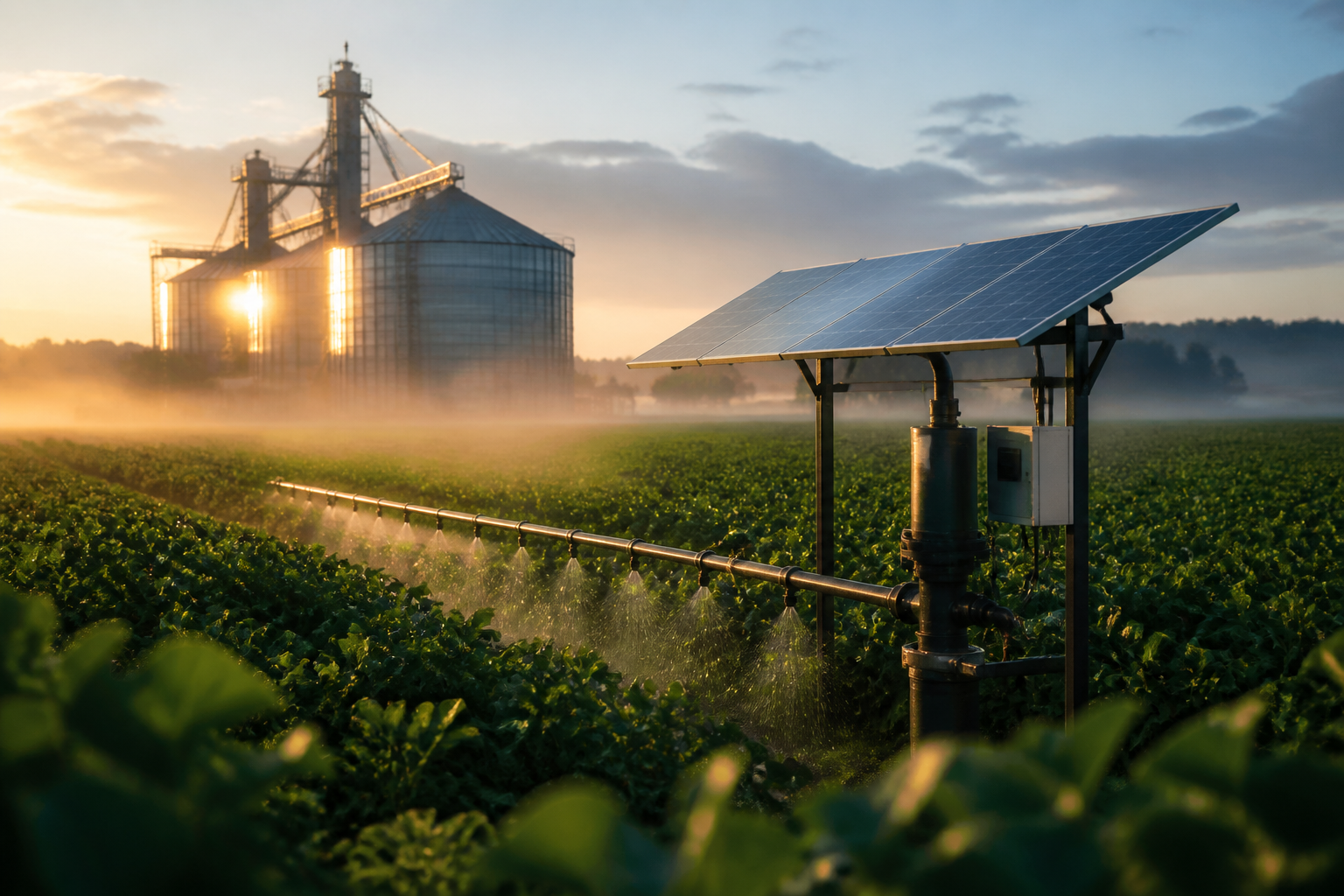
One of the most significant shifts in the sector is the integration of clean energy into the agricultural workflow, particularly in regions where the central power grid is either unreliable or non-existent. In Nigeria, a new wave of businesses specialising in renewable technology is partnering with organisations like RMI to empower women and youth in the agricultural sector. These agri-tech enterprises are deploying solar-powered irrigation pumps, cold-storage solutions, and processing equipment that allow smallholders to add value to their produce at the source. This transition to renewable technology is critical for reducing post-harvest losses, which remain a significant drain on the GDP of developing nations. By decentralising power, these technological interventions are effectively democratising the agricultural value chain, allowing younger entrepreneurs and women-led cooperatives to bypass traditional infrastructure bottlenecks. This trend represents a fundamental shift in the rural economy, where the 'green' transition is synonymous with economic liberation and improved profit margins for the primary producer.
Biotechnology and the Architecture of Resilience
While infrastructure provides the framework, biotechnology is providing the genetic resilience required to withstand an increasingly erratic climate. In South Africa, the adoption of advanced biotech has proven to be a cornerstone of the nation’s agricultural productivity. According to insights from platforms such as ThriveAgric, the use of data-driven genomic selection and genetically modified crops has enabled South African farmers to maintain high yields despite periodic droughts and pest pressures. The narrative surrounding biotechnology is moving beyond the binary debates of the past; it is now framed as an essential tool for creating a robust food system. In this context, data is the new fertiliser. The ability to monitor crop health at a granular level and to deploy bio-engineered solutions that require fewer chemical inputs is aligning agricultural output with environmental sustainability. The South African experience suggests that the future of large-scale farming lies in the marriage of biological science and digital monitoring, creating a system that is as efficient as it is adaptable.
The Data-Driven Farm and the USDA’s Role in Global Standards
In the developed world, the role of data is perhaps best exemplified by the work of the United States Department of Agriculture’s National Agricultural Statistics Service (NASS). As a global benchmark for agricultural reporting, the NASS provides the empirical foundation upon which global commodity markets operate. The meticulous collection of data on everything from soil moisture levels to crop yields serves as a vital signal for international investors and policymakers. In an era of high-frequency trading and volatile food prices, the transparency provided by these statistical services acts as a stabilising force. The ongoing digitisation of this data, and its integration with satellite imagery and machine learning, is allowing for a level of predictive analysis that was previously impossible. This transparency is not just a tool for market efficiency; it is a prerequisite for the 'smart' agriculture that the global community now demands, where every unit of input, be it water, nitrogen, or capital, must be accounted for and optimised.
Synthesising the Future of Agrifood Intelligence
As we look toward the middle of the decade, the primary challenge for the agrifood sector will be the synthesis of these disparate trends into a cohesive global strategy. The disparity between the highly mechanised, data-heavy systems of North America and the emerging, renewable-powered networks in Africa and Asia is narrowing, not through the homogenisation of methods, but through the shared adoption of efficiency-enhancing technologies. The investment landscape is shifting in response; venture capital is increasingly flowing toward firms that can demonstrate both environmental stewardship and high-volume output. We are entering an era where the 'social licence' to farm is intrinsically linked to the ability to prove sustainable practices through data. The institutions that will thrive are those that can navigate the complexities of international trade while maintaining a resilient, technologically advanced domestic production base. The agrarian renaissance is not a return to the past, but a leap into a future where biology, technology, and capital are inextricably linked in the pursuit of a stable global food supply.