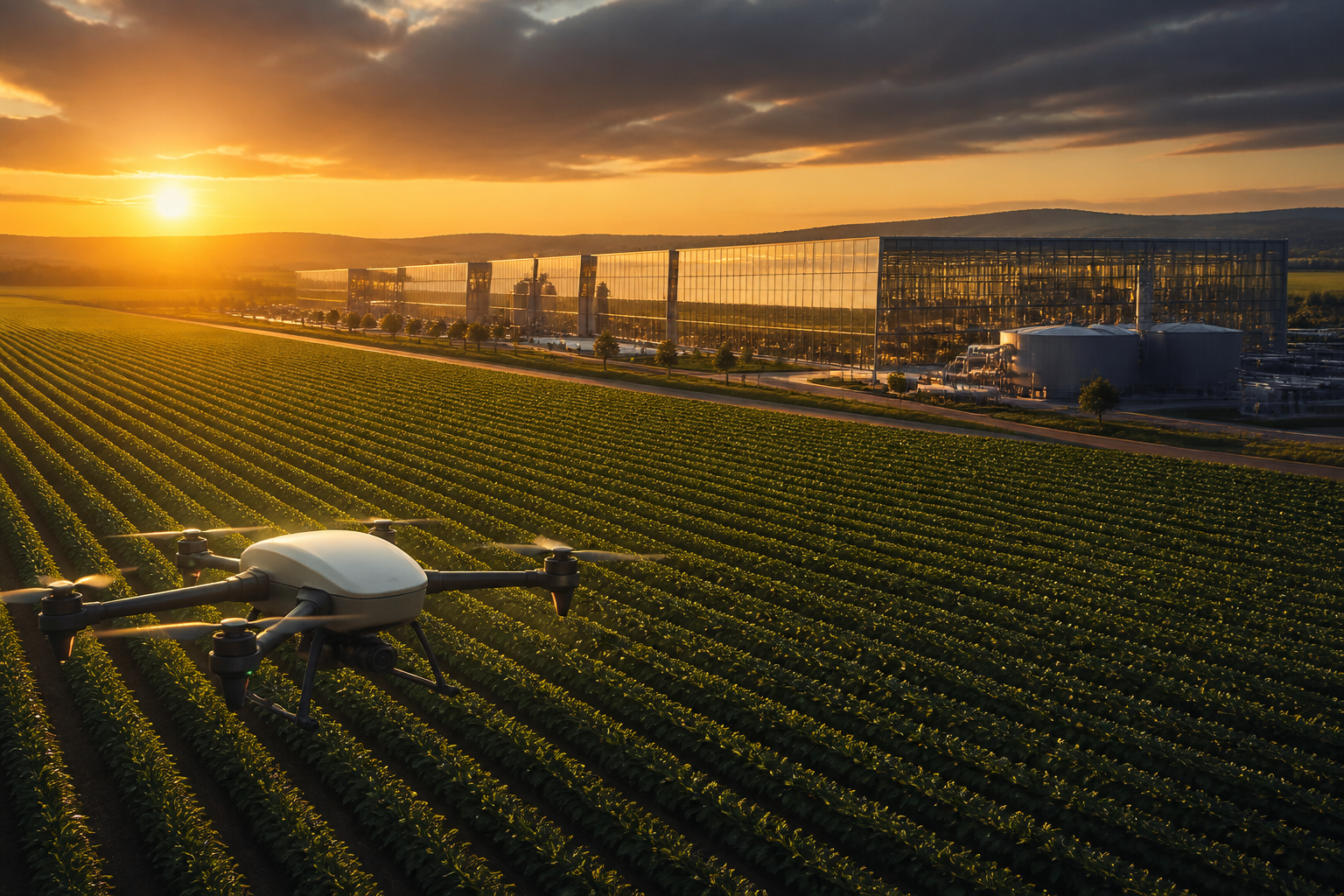
The Agrarian Reconfiguration: Bridging the Transatlantic Yield Gap through Innovation
Global agriculture faces a defining moment as U.S. planting delays and African biotech adoption reshape the industry. This editorial examines the intersection of climate finance, technology, and geopolitical partnerships.
The global agricultural landscape is currently traversing a period of profound structural adjustment, characterized by an uneasy tension between traditional methodology and the exigencies of a warming planet. In the northern hemisphere, the United States Department of Agriculture (USDA) has recently observed a concerning inertia in seasonal planting, with the 2026 cycle commencing at a pace significantly below historical averages. This deceleration is not merely a statistical anomaly but a systemic warning regarding the fragility of global supply chains when confronted with erratic meteorological patterns. Conversely, across the African continent and within the corridors of emerging markets, a counter-narrative of technological leapfrogging is taking shape. The convergence of climate-resilient biotechnology, substantial private equity inflows, and strategic diplomatic partnerships is creating a new blueprint for food security that challenges the established hegemony of Western agricultural dominance.
The American Bottleneck and the Fragility of Scale
The slow start to the American planting season, as detailed in the USDA’s August 2026 reports, serves as a poignant reminder that even the world’s most industrialized agrifood systems are not immune to environmental volatility. The delay in getting seeds into the ground has immediate repercussions for global commodity markets, particularly in corn and soy, where U.S. yields dictate the baseline for international pricing. This operational friction is compounded by a tightening credit environment and the rising cost of inputs, which have begun to erode the margins of even the most efficient mid-western enterprises. Analysts at ECONOMIC & ACTU observe that this seasonal lag is symptomatic of a broader need for the North American sector to reassess its reliance on narrow windows of peak productivity. The transition from large-scale monoculture to more diversified, climate-adaptive management is no longer a peripheral environmental concern but a core fiscal necessity for the survival of the American family farm.
African Agritech and the Biotechnology Frontier
While the American heartland grapples with logistical headwinds, South Africa and its regional neighbours are emerging as a laboratory for agricultural innovation. The recent adoption of advanced biotechnology in South African maize and wheat production demonstrates a shift towards institutionalised resilience. Data, as articulated by sector leaders such as ThriveAgric, has transitioned from a supplementary asset to the primary driver of farm management. By integrating geospatial analytics with drought-resistant seed varieties, African agribusinesses are mitigating the risks associated with unpredictable rainfall. This technological maturation is not occurring in a vacuum; it is being propelled by a recognition among the Malabo Montpellier Panel and other high-level advisory bodies that the transformation of agrifood systems is the most viable path toward addressing the continent’s youth unemployment crisis. By repositioning agriculture as a high-tech, high-growth sector, regional governments are attempting to decouple their economies from a reliance on raw commodity exports in favour of value-added processing.
The Rise of Climate-Resilient Finance
The capital requirements for this global transition are immense, yet the financial sector is responding with unprecedented focus. A landmark development in the third quarter of 2026 saw a major impact investor secure $90 million specifically earmarked for the expansion of climate-resilient agribusinesses across developing markets. This infusion of capital is designed to bridge the gap between smallholder necessity and institutional scalability. Unlike traditional development aid, this wave of investment is strictly performance-oriented, targeting enterprises that can demonstrate measurable gains in soil carbon sequestration, water efficiency, and yield stability. The School of Agricultural Policy notes that this shift in capital allocation reflects a broader trend within the ESG (Environmental, Social, and Governance) framework, where food security is increasingly viewed as a critical component of global geopolitical stability. The success of these investments will depend on the ability of local agrifood systems to absorb such capital without succumbing to the inflationary pressures currently affecting rice millers and other essential processors.
Bilateral Diplomacy and the South-South Cooperation Model
Geopolitics is increasingly dictating the flow of agricultural technology and expertise. A significant example of this is the recent partnership between the Ministry of Agriculture, Food Security & New Growth Industries and the Embassy of the Republic of China (Taiwan). This collaboration, focused on technical knowledge transfer and the implementation of precision irrigation systems, represents a departure from the traditional North-South aid paradigm. Instead, it fosters a model of bilateral cooperation where specific regional challenges are met with targeted technological solutions. These diplomatic initiatives are essential for smaller nations seeking to insulate themselves from the price shocks of the global grain trade. By fostering domestic self-sufficiency through Taiwanese expertise in intensive cultivation, these nations are building a bulwark against the volatility that frequently plagues the international market during periods of U.S. or European production shortfalls.
The Processing Paradox and Infrastructure Constraints
Despite the optimism surrounding biotech and finance, a significant hurdle remains in the form of mid-stream infrastructure. In many emerging markets, particularly within the rice sector, the high cost of energy and logistics continues to limit the efficacy of government-led farm interventions. Rice millers have frequently cited the prohibitive expense of modernizing facilities as a primary reason for the persistent gap between farm-gate prices and consumer affordability. Without a commensurate investment in the “hidden middle” of the food supply chain, specifically storage, milling, and cold-chain logistics, the gains made through superior seeds and data-driven planting will remain trapped at the local level. The challenge for policymakers in 2027 will be to ensure that the technological revolution at the farm level is matched by an industrial revolution in the processing sector, thereby ensuring that increased yields translate into genuine food security and economic growth.
A Forward-Looking Synthesis
As we look toward the final quarters of the decade, the divide between the traditional agricultural powers and the emerging innovators is narrowing. The U.S. will likely remain the world’s breadbasket, but its dominance will be contingent upon a rapid integration of the same biotechnological and data-driven strategies currently being pioneered in the Global South. The $90 million climate-finance package mentioned earlier is likely only the vanguard of a much larger movement of private capital into the sector. For the global investor, the opportunity lies not in the commodities themselves, but in the technologies that make those commodities possible under adverse conditions. The future of the agrifood sector belongs to those who can master the synthesis of biological resilience and digital precision. The slow start to the 2026 planting season may well be remembered as the moment the industry finally acknowledged that the old ways of farming are no longer compatible with the new realities of the Earth’s climate.