The Agrarian Realignment: Navigating The New Geopolitics Of Global Food Security
This analysis explores the systemic shift in global agriculture as nations move away from legacy lobbying toward data-driven sovereignty. From the UK to Southeast Asia, we examine the forces redefining the future of food.
The global agricultural landscape is currently undergoing its most profound structural transformation since the Green Revolution, as the confluence of geopolitical instability, climate volatility, and the erosion of legacy lobbying power forces a radical reimagining of how the world feeds itself. For decades, the sector functioned under a paradigm of hyper-globalisation, where supply chains were optimized for cost rather than resilience, and where powerful domestic unions dictated national policy through a lens of protectionism. However, as Andrew Muir, the Agriculture Minister for Northern Ireland, recently observed, the era in which singular farmers unions could dictate the trajectory of state policy is drawing to a definitive close. This shift signals a broader move towards a diversified, data-driven approach to food security that prioritises environmental sustainability and technological integration over the preservation of twentieth-century subsidies. As nations grapple with the dual pressures of inflationary food prices and the urgent need for carbon sequestration, the relationship between the state, the land, and the market is being rewritten in real time.
The Erosion Of Traditional Agrarian Influence
The diminishing influence of traditional agricultural unions represents a significant pivot in the political economy of the West. Historically, organisations such as the Ulster Farmers Union or the French Fédération Nationale des Syndicats d'Exploitants Agricoles held a near-monopoly on rural policy, often leveraging their electoral weight to secure favorable subsidies that frequently ran counter to broader economic or ecological objectives. Today, however, the rise of multi-stakeholder governance models and the increasing urgency of the climate crisis have diluted this singular influence. Governments are increasingly looking beyond the farm gate to include environmental NGOs, consumer advocacy groups, and technology firms in the policy-making process. This democratisation of agricultural discourse is not merely a political choice but a structural necessity, as the complexity of modern food systems requires a multidisciplinary approach that traditional agrarian lobbies are often ill-equipped to provide. By broadening the consultative framework, states are attempting to build more resilient systems that can withstand the exogenous shocks of the twenty-first century, even if it means confronting long-standing domestic interests.
The Geopolitics Of Caloric Sovereignty
In the wake of the disruptions caused by the conflict in Ukraine and the subsequent volatility in the Black Sea grain markets, the concept of food sovereignty has moved from the fringes of radical activism to the centre of national security strategy. Countries that once relied heavily on the efficient flow of global commodities are now investing heavily in domestic production and diversified sourcing. China, for instance, has redoubled its efforts to achieve self-sufficiency in staples, while also expanding its agricultural footprint in Brazil and Sub-Saharan Africa to secure long-term supply lines. This movement towards caloric sovereignty is not an isolationist impulse but a pragmatic response to the weaponisation of trade. In this new era, the ability to produce, store, and distribute food is viewed with the same strategic weight as energy production or semiconductor manufacturing. Consequently, we are seeing a significant reallocation of capital toward infrastructure projects, such as massive grain storage facilities and advanced irrigation systems, designed to buffer national economies against the vagaries of international markets and political blackmail.
Technological Disruption And The Precision Revolution
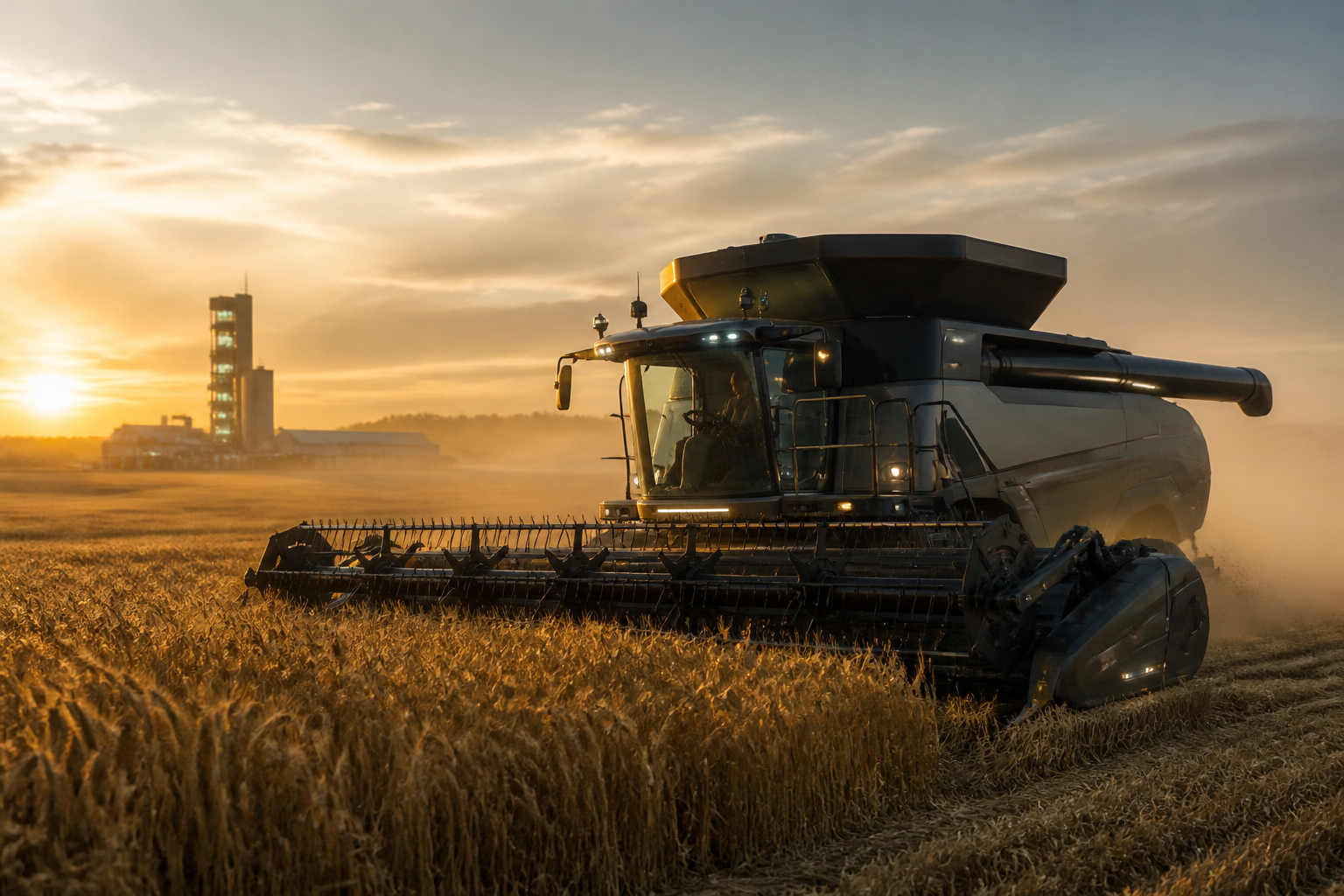
The transition from intensive industrial farming to precision agriculture represents the most significant technological leap in the history of the sector. By integrating satellite imagery, autonomous machinery, and artificial intelligence, producers are now able to manage fields at the level of the individual plant rather than the hectare. Companies like John Deere and Trimble are no longer merely equipment manufacturers but have evolved into data analytics powerhouses that provide farmers with the tools to optimise every drop of water and every gram of fertiliser. This shift is essential for meeting the dual goals of increasing yields and reducing environmental impact. Furthermore, the rise of controlled-environment agriculture, such as the vertical farming initiatives pioneered by firms like Plenty or Infarm, offers a glimpse into a future where food production is decoupled from the constraints of geography and climate. While these technologies remain capital-intensive and are currently focused on high-value crops, their continued maturation is vital for the long-term stability of urban food supplies in an increasingly volatile world.
The Financialisation Of Natural Capital
As the global financial system begins to internalise the costs of climate change, the agricultural sector is finding itself at the forefront of the new natural capital economy. Carbon credits, biodiversity offsets, and regenerative farming premiums are becoming integral components of farm income, often rivaling the revenue generated from the sale of commodities themselves. Financial institutions, including Rabobank and HSBC, are increasingly linking credit facilities to environmental performance metrics, creating a powerful incentive for producers to adopt sustainable practices. This financialisation of the land presents both opportunities and risks. While it provides a new source of capital for the necessary transition to low-carbon farming, it also risks creating a two-tier system where large-scale, data-rich operations can easily monetise their environmental stewardship, while smaller, traditional holders are left behind. The challenge for policymakers is to create a regulatory framework that ensures these new markets are transparent, robust, and accessible to all participants in the agricultural value chain.
Labour Dynamics And The Automation Imperative
The agricultural sector is currently facing a chronic labour shortage that is driving a rapid acceleration in automation. From the fruit orchards of Kent to the vast dairies of New Zealand, the historical reliance on seasonal migrant labour is becoming increasingly untenable due to shifting demographic trends and more restrictive immigration policies. In response, there has been a surge in investment in robotics and automated harvesting systems. Start-ups like Abundant Robots and Iron Ox are developing solutions that can perform tasks once thought to require the dexterity of a human hand. However, this transition is not without its social costs. The displacement of human labour by machines necessitates a radical rethinking of rural economies and the provision of new pathways for workers whose livelihoods are being transformed. The automation imperative is not just about efficiency, it is a defensive move against a shrinking workforce that threatens to leave crops rotting in the fields and drive food prices to unsustainable levels.
Environmental Stewardship And The Nitrogen Dilemma
Perhaps the most contentious issue facing modern agriculture is the management of nitrogen and phosphorus runoff, which has led to widespread ecological degradation in waterways across the globe. From the Great Barrier Reef to the Gulf of Mexico, the legacy of over-fertilisation is coming home to roost. Governments, particularly in the Netherlands and parts of the United States, have introduced stringent new regulations to curb nutrient pollution, often sparking fierce protests from the farming community. The nitrogen dilemma highlights the fundamental tension between the need for high-yield food production and the imperative to protect the natural systems that sustain life. Resolving this tension will require a combination of new technology, such as slow-release fertilisers and bio-stimulants, and a shift in dietary patterns toward less resource-intensive proteins. The transition to a more circular nutrient economy is no longer a peripheral environmental concern, it is a prerequisite for the continued social license of the agricultural industry to operate at scale.
The Future Outlook For Global Agrifood
Looking ahead, the next decade will be defined by an intense competition between the traditional models of agricultural production and a new, technology-centric vision of the land. The era of cheap, abundant food supported by hidden environmental subsidies is coming to an end, replaced by a more complex system where the true cost of production is increasingly reflected in the price at the checkout. For investors and policymakers, the focus must remain on the long-term resilience of the system rather than short-term gains. We should expect to see a consolidation of land ownership in the hands of entities capable of managing the technological and regulatory complexities of the new era, alongside a resurgence of high-tech, local production in urban centres. The role of the state will shift from one of simple subsidy provider to that of a strategic partner, helping the sector navigate the transition toward a net-zero future. While the challenges are immense, the potential for a more efficient, sustainable, and secure food system has never been greater, provided that we are willing to embrace the radical changes required to achieve it.