The Agrarian Pivot: Navigating Volatility and Innovation in Global Food Systems
In an era of unprecedented climatic stress and shifting trade dynamics, the global agricultural sector is undergoing a profound structural realignment, driven by renewable integration and volatile commodity markets.
The global agricultural landscape is currently traversing a period of profound structural realignment, where the traditional certainties of seasonal cycles and predictable trade flows have been supplanted by a volatile synthesis of climatic volatility, geopolitical friction, and rapid technological disruption. As the industry moves into the latter half of the decade, the imperatives of food security are increasingly being weighed against the necessity of environmental stewardship. This tension is perhaps most visible in the widening divergence between primary production and market valuations, where farmland remains an outperforming asset class even as farmers grapple with the complexities of input costs and supply chain bottlenecks. The current epoch represents more than a mere cyclical adjustment; it is a fundamental re-engineering of how the world produces, processes, and values its most essential commodities.
The Divergence of Asset Values and Operational Realities
One of the most striking phenomena in the current agricultural economy is the persistent resilience of farmland values. According to recent McKinsey assessments, farmland continues to outpace broader farm income trends, functioning as a robust hedge against inflation and a sought-after alternative asset for institutional investors. This appreciation occurs against a backdrop of significant operational headwinds. In the United States, for instance, the pace of planting for staples such as corn remains sluggish, with USDA figures indicating that early-season progress has historically struggled to gain momentum in the face of erratic weather patterns. In early 2026, corn plantings were recorded at a mere four per cent, reflecting a cautious approach by producers who are increasingly wary of the risks associated with premature seeding in an unstable climate.
This disconnect between land value and operational ease is further exacerbated by the continued volatility in the fertiliser markets. Nutrient-specific price fluctuations have become the norm, forcing producers into a defensive posture regarding their input strategies. The decoupling of traditional price correlations means that nitrogen, phosphate, and potash markets are no longer moving in lockstep, requiring a more granular level of financial sophistication from farm managers. As input costs remain elevated, the margins for error in the primary sector have narrowed significantly, placing a premium on precision and long-term capital planning rather than short-term yield maximization.
Renewable Integration and the Nigerian Vanguard
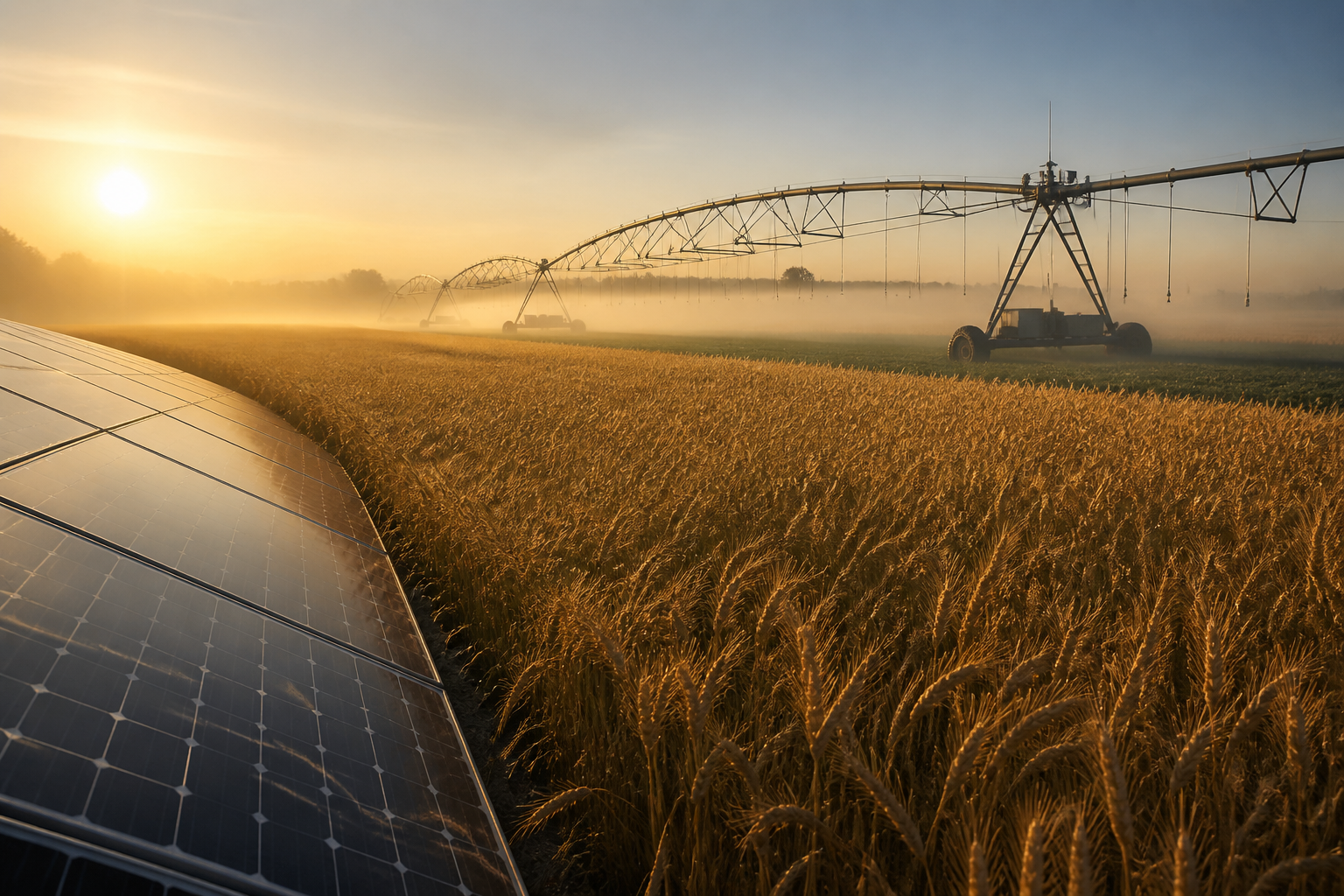
A pivotal shift is occurring in the nexus between energy and agriculture, particularly within emerging markets that are leveraging renewable technologies to bypass traditional infrastructural deficits. In Nigeria, a new wave of agribusinesses is pioneering a model that integrates solar power and decentralized energy systems directly into the agricultural value chain. This movement, supported by international initiatives such as those led by RMI, focuses on empowering women and youth by providing the technological tools necessary to process and preserve harvests without reliance on a fragile national grid. By deploying renewable-powered cold storage and processing equipment, these enterprises are effectively reducing post-harvest losses, which have historically undermined the economic viability of smallholder farming in Sub-Saharan Africa.
The implications of this technological leapfrogging are profound. It suggests that the future of agricultural productivity in developing economies will not be built on the fossil-fuel-intensive models of the twentieth century but on a distributed network of green energy. The emergence of half a dozen major Nigerian firms specialising in these technologies indicates a maturation of the local market, where sustainable practice is no longer seen as a luxury but as a prerequisite for operational resilience. This shift not only addresses carbon footprints but also democratizes access to the value chain, allowing regional players to compete more effectively in global markets by stabilizing their output and quality.
Biofuels and the Transformation of Oilseed Demand
The industrial application of agricultural products is undergoing a similar metamorphosis, driven largely by policy shifts in the biofuel sector. The demand for soybeans, in particular, has been structurally altered by the strengthening of biofuel mandates across both North and South America. This pivot towards renewable diesel and sustainable aviation fuel has created a secondary, and often more lucrative, market for oilseeds, providing a floor for prices even during periods of global oversupply. However, this trend introduces a new set of risks, as food-versus-fuel debates regain prominence in the halls of international policy-making.
Institutions are now forced to navigate the complex ethics of land-use change, where the incentive to produce fuel for the transport sector may detract from the production of affordable food for human consumption. In the United Kingdom and Europe, this has led to rigorous debates over subsidy structures and the role of regenerative agriculture in balancing these competing demands. The result is a highly fragmented regulatory environment where the profitability of a crop is determined as much by its energy potential and carbon sequestration credits as by its nutritional value. For global traders, this necessitates a more sophisticated understanding of carbon markets and legislative trajectories than was required a decade ago.
Regional Innovation Grants and the Micro-Economic Engine
While global trends often dominate the headlines, the role of localized innovation grants in stimulating agricultural diversity cannot be understated. In North America, regional governments, such as that of Frederick County, are increasingly using Agriculture Innovation Grants to stimulate small-to-medium enterprise (SME) growth within the sector. Recent awards totaling over 150,000 dollars to various local agricultural businesses demonstrate a strategic shift towards diversifying the rural economy. These grants are often targeted at projects that expand value-added processing, such as artisanal dairies or high-tech hydroponic facilities, which allow farmers to capture a greater share of the consumer dollar.
This micro-economic support is critical in fostering a resilient agricultural ecosystem that can withstand macro-economic shocks. By encouraging diversification, regional authorities are reducing their dependence on a single commodity or market. These localized efforts act as a laboratory for the broader industry, testing new technologies and business models that can eventually be scaled. Furthermore, they address the demographic challenges facing the sector by making agriculture a more attractive and technologically advanced career path for the next generation of entrepreneurs, thereby ensuring the long-term continuity of the food supply system.
Logistics, Hydrology, and the Infrastructure Gap
The physical movement of agricultural goods remains a significant bottleneck, with hydrological challenges creating persistent disruptions in key transport arteries. In the United States, the water levels of the Mississippi River have become a recurring concern for the agribusiness sector, impacting the efficiency of grain barge movements to the Gulf of Mexico. When water levels fail to meet operational minimums, the resulting increase in freight costs and decrease in shipping capacity ripples through the global supply chain, affecting everything from corn prices in Cairo to soy shipments in Shanghai. This vulnerability highlights the urgent need for infrastructure investment that accounts for the new hydrological realities of a changing climate.
Beyond the Americas, the logistics of agriculture are being tested by the need for more sophisticated cold chains and traceability systems. As consumers in developed markets demand greater transparency regarding the provenance and environmental impact of their food, the infrastructure required to track a product from the field to the fork has become an essential component of market access. This digital and physical infrastructure gap represents a significant barrier for many producers, yet it also provides an opportunity for technology firms to integrate blockchain and IoT solutions into the agricultural landscape, creating a more transparent and responsive global trade system.
Climate as the Definitive Business Mandate
It is no longer an exaggeration to state that climate change has become the single most important factor in agricultural business decisions. As noted by industry leaders in recent Kansas City Fed discussions, the structural factors shaping long-term economic conditions are now inextricably linked to environmental variables. The ability of a business to adapt to these changes, whether through the adoption of drought-resistant crop varieties, the implementation of precision irrigation, or the transition to carbon-neutral operations, will determine its survival in the coming decades. The industry is moving beyond the era of voluntary ESG reporting into a period of mandatory climate risk assessment.
This shift is also redefining the relationship between agriculture and the financial sector. Banks and insurers are increasingly incorporating climate resilience into their lending criteria, meaning that farms with robust environmental management plans are likely to receive more favourable terms. This creates a powerful economic incentive for sustainable practice, aligning the interests of the financier with those of the environmentalist. However, for those unable to make the transition, the risk of stranded assets and uninsurable operations is becoming a tangible reality. The professionalization of climate risk management is thus the new frontier for agricultural executives, requiring a blend of agronomic expertise and financial acumen.
A Forward-Looking Outlook for Global Food Systems
Looking ahead to the remainder of 2026 and beyond, the agricultural sector will likely be defined by an acceleration of the 'ag-tech' revolution and a deeper integration of the primary sector into the circular economy. We anticipate that the volatility in fertiliser and input markets will drive a permanent shift towards biological alternatives and precision application technologies that minimize waste. Furthermore, as the renewable energy transition gathers pace, the role of the farm as a combined producer of food and energy will become the standard rather than the exception. This 'dual-use' land strategy will provide farmers with more diverse revenue streams, buffering them against the inherent risks of commodity production.
However, the path forward is not without its perils. The geopolitical environment remains fractious, and the threat of protectionism continues to loom over global trade. The ability of international institutions to maintain open and transparent markets will be crucial in preventing localized shortages from escalating into global crises. For the astute investor and the forward-thinking producer, the current landscape offers significant opportunities to capitalize on the inefficiencies of the transition. The successful agricultural enterprises of the future will be those that view environmental constraints not as a hindrance to growth, but as the primary catalyst for innovation and long-term value creation.