The Agrarian Paradox: Navigating Contraction and Capital Intensity in Global Markets
This editorial examines the divergence between declining net farm incomes and the robust expansion of the secondary agrifood sector, analysing the shift toward high-capital mechanisation in Ontario, Saskatchewan, and beyond.
The global agricultural sector is currently navigating a period of profound structural adjustment, characterized by a stark divergence between raw production profitability and the broader economic resilience of the agrifood value chain. While the United States Department of Agriculture, through its Economic Research Service, has signalled a substantial contraction in net farm income, forecasting a decrease of approximately 22.8 percent for the 2023 fiscal year relative to the previous period, the secondary and tertiary layers of the industry continue to demonstrate significant growth. This paradox suggests that the economic weight of agriculture has migrated from the primary act of cultivation to the sophisticated networks of processing, logistics, and technological integration. As operational costs escalate and commodity prices fluctuate, the industry is undergoing a metamorphosis, shifting away from labour-intensive traditionalism toward a capital-intensive model defined by mechanisation and strategic state-backed financing. The resilience of the sector now rests not merely on the fertility of the soil, but on the capacity of institutional frameworks to facilitate credit and the ability of corporate giants to maintain supply chain integrity amidst geopolitical volatility.
The Fiscal Contraction of Primary Production
The most pressing concern for policymakers is the precipitous decline in primary producer margins. According to the Economic Research Service, the anticipated 22.8 percent drop in net farm income represents one of the most significant year-on-year corrections in recent history, even as overall productivity metrics remain stable. This contraction is driven by a confluence of rising input costs, particularly in energy and synthetic fertilisers, and a softening of the record-high commodity prices witnessed in the preceding two years. In this environment, the financial viability of mid-sized holdings is increasingly under threat, necessitating a more rigorous approach to risk management. The volatility in the United States serves as a bellwether for international markets, where the cost of borrowing has risen in tandem with central bank efforts to curb inflation, thereby squeezing the liquidity available to independent operators. As debt-servicing costs mount, the industry is seeing a consolidation of land ownership, as only the most highly capitalised entities possess the balance sheets required to weather such sustained fiscal headwinds.
Industrial Resilience Beyond the Farm Gate
Despite the tribulations facing individual growers, the broader agrifood ecosystem remains a formidable pillar of national economies. In Ontario, Canada, the sector contributes more than 51 billion dollars annually to the provincial economy, providing employment for approximately 867,000 individuals. This equates to roughly one in every ten jobs in the province, illustrating that the economic story of agriculture extends far beyond the perimeter of the field. The stability of this sector is maintained through a complex web of food processing facilities, packaging plants, and retail distribution networks that have successfully decoupled their growth from the immediate fluctuations of farm-gate prices. By adding value through sophisticated manufacturing, these downstream entities insulate the broader economy from the inherent risks of primary agriculture. The Ontario model demonstrates that a diversified agrifood strategy can sustain high employment levels and robust economic output even when the primary producers themselves are facing a period of austerity and transition.
The Strategic Importance of Specialised Inputs
The role of multinational corporations in securing global food security has never been more visible, as evidenced by the performance of firms such as Nutrien. As a dominant force in the fertiliser market, Nutrien supports more than 4,000 jobs across Saskatchewan and has supplied approximately 27.5 million tonnes of fertiliser to international markets. The ability of such firms to maintain consistent output is critical for global yields, yet it also highlights the dependency of the modern agricultural model on concentrated supply chains. When input providers face logistical constraints or geopolitical barriers, the ripple effects are felt by every smallholder and industrial farm globally. The concentration of the fertiliser and potash industry in regions like Saskatchewan provides a strategic advantage to the North American market, yet it also places a significant responsibility on these firms to manage environmental concerns and price volatility. The health of the global agricultural economy is thus inextricably linked to the operational efficiency and ethical conduct of these large-scale input providers.
Mechanisation and the Evolution of Rural Finance
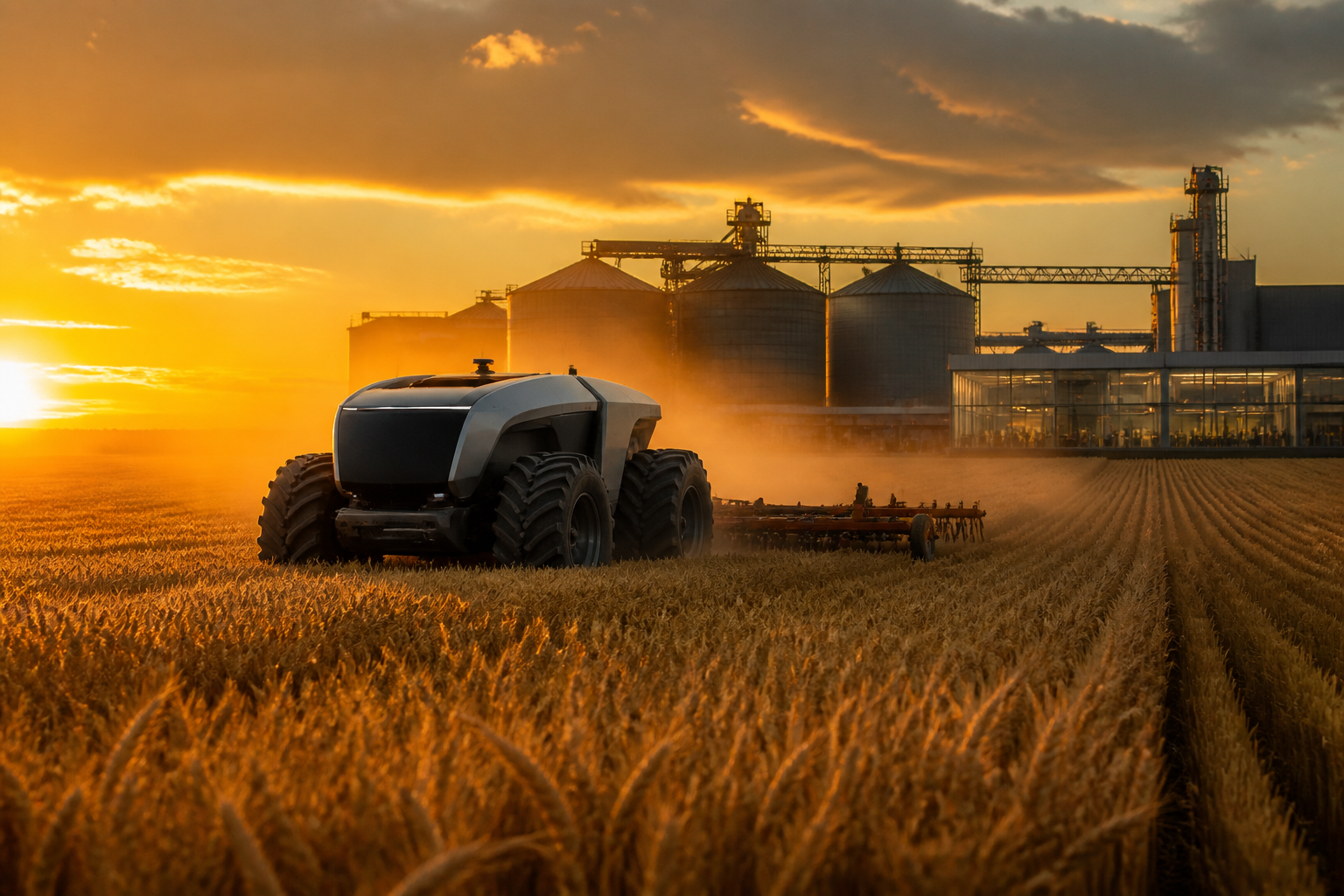
To combat the rising cost of labour and the declining margins of primary production, a renewed focus on agricultural mechanisation has emerged as a central theme in institutional discourse. The Bank of Agriculture Limited has recently engaged in high-level discussions with state governments to address the twin challenges of farmer financing and technological adoption. The transition toward automated harvesting, precision irrigation, and satellite-guided planting requires significant upfront capital investment, which is often beyond the reach of traditional smallholders. Consequently, the role of specialised financial institutions is evolving from simple lenders to strategic partners in technological transformation. By providing targeted credit facilities for machinery, these institutions enable farmers to achieve the economies of scale necessary to survive in a low-margin environment. The move toward mechanisation is no longer a luxury but a fundamental requirement for global competitiveness, as it reduces the reliance on seasonal labour and optimises the use of increasingly expensive chemical inputs.
Regional Investment as a Catalyst for Growth
Public sector investment remains a vital lubricant for the machinery of agricultural commerce. Recent allocations, such as the investment of over 10 million dollars in Ontario, are designed to help provincial farmers expand their businesses and create high-quality employment opportunities. In specific regions, smaller grants, such as the 288,000 dollars directed toward local agricultural businesses, act as catalysts for innovation at the grassroots level. These funds are frequently targeted at improving market access, enhancing cold-chain logistics, and supporting the adoption of sustainable practices. When government investment is coordinated with private sector ambition, it creates a virtuous cycle of growth that can offset the broader macroeconomic trends of income contraction. The efficacy of these investments, however, depends on their ability to reach the segments of the market that are most vulnerable to price shocks, ensuring that the diversity of the agricultural landscape is preserved against the pressures of industrial consolidation.
The Geopolitical Dimension of Food Sovereignty
Agricultural policy is increasingly being viewed through the lens of national security and food sovereignty. As global supply chains face disruption from climate events and international conflict, the ability to maintain a domestic surplus has become a primary objective for sovereign states. This shift is driving a return to protectionist sentiments in some quarters, while in others, it is fostering new bilateral trade agreements focused on agricultural resilience. The strategic importance of the sector is reflected in the way governments are now willing to intervene in markets to ensure the continuity of supply, whether through direct subsidies or the facilitation of state-backed insurance schemes. For the international investor, this creates a complex landscape where political risk must be weighed alongside traditional market analysis. The future of the agrifood sector will be shaped by the tension between the efficiency of global trade and the necessity of regional self-sufficiency, a balance that requires sophisticated diplomacy and robust domestic infrastructure.
A Forecast for the Transformed Agrarian Landscape
Looking ahead, the agricultural sector is poised for a period of intense technological consolidation and structural revaluation. The projected decline in net farm income for the current year should be viewed not as a permanent retreat, but as a painful yet necessary correction that will accelerate the adoption of efficiency-driving technologies. We anticipate that the most successful actors in the coming decade will be those who can integrate biological science with digital precision, reducing their environmental footprint while maximising every unit of input. The role of the farmer is transitioning from a steward of the land to a manager of complex data systems and high-value capital assets. Meanwhile, the agrifood sector will continue to expand its share of the national gross domestic product in advanced economies, driven by consumer demand for traceable, sustainable, and high-quality products. While the fiscal challenges of the present moment are significant, the fundamental demand for food and fibre ensures that agriculture remains the most essential industry in the global economy, provided it can successfully navigate the transition toward a more capital-efficient and technologically integrated future.