The Agrarian Engine: Quantifying the Multiplier Effect of Global Agri-Food Value Chains
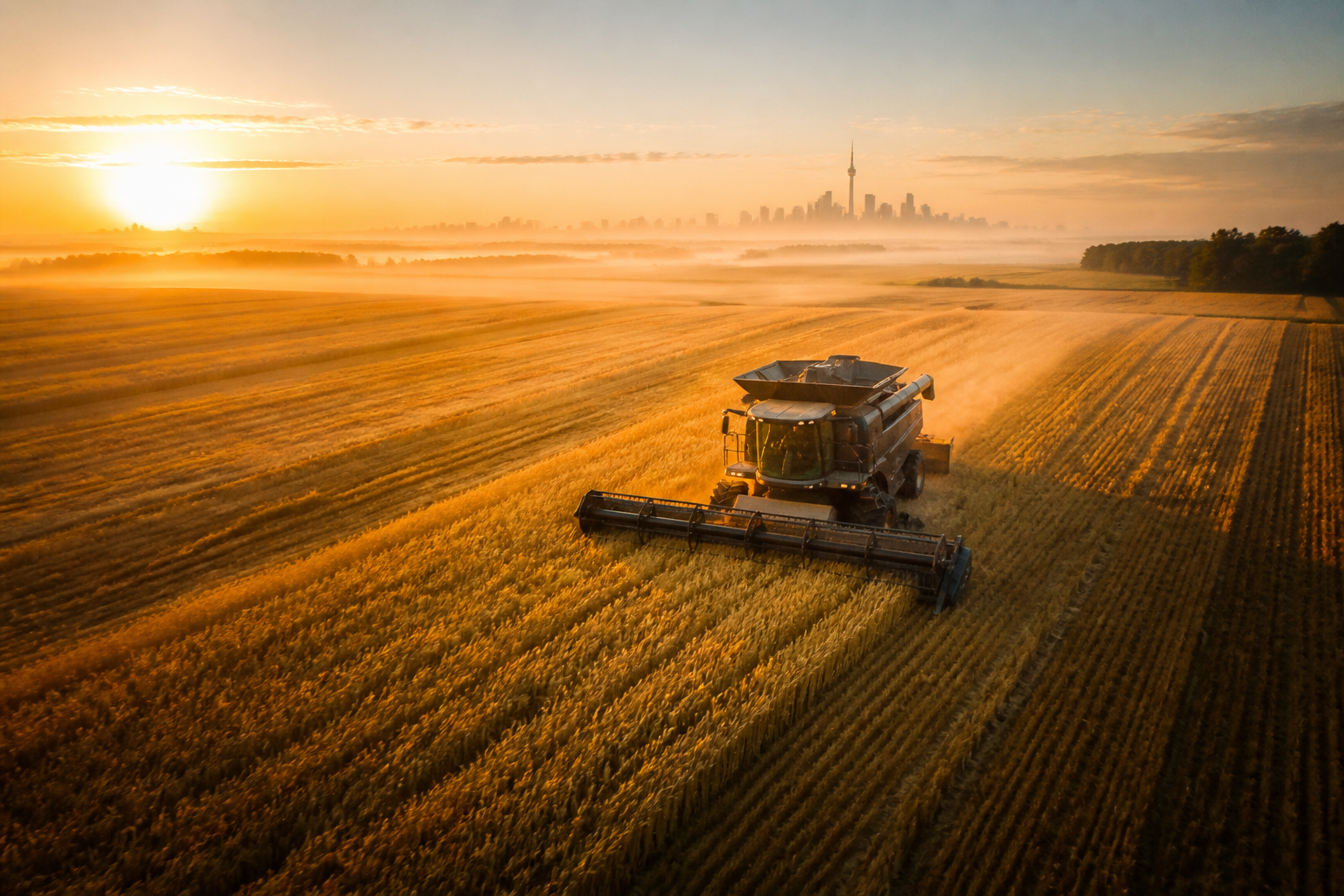
Agriculture is no longer confined to the farm gate. With Canada's sector contributing over 150 billion dollars to GDP and Ontario alone supporting nearly 870,000 jobs, the industry has become a primary engine of growth.
The contemporary global economy is often discussed through the lens of silicon and software, yet the most foundational sector of human industry is currently undergoing a quiet, structural metamorphosis. Agriculture is frequently mischaracterised as a legacy industry of diminishing returns, a view that ignores the sophisticated inter-dependencies that now define the modern agri-food value chain. Far from being a peripheral actor in national accounts, the sector acts as a primary economic multiplier, where every unit of output at the farm gate translates into a complex web of logistical, processing, and retail activity. This systemic importance is most visible in advanced economies such as Canada, where the agricultural and agri-food industry has ascended to become an absolute powerhouse, contributing approximately 150.8 billion dollars to the national gross domestic product. The narrative of agriculture is no longer merely one of food security, it is a narrative of industrial resilience, technological integration, and high-value employment that anchors both rural stability and urban prosperity.
The Canadian Paradigm and the Ontario Multiplier
To understand the magnitude of this sectoral influence, one must examine the specific provincial contributions that aggregate into national dominance. In Ontario, the agri-food sector contributes more than 51 billion dollars annually to the provincial economy, a figure that underscores its role as a cornerstone of the regional fiscal landscape. This contribution is not an isolated metric, rather, it is supported by a robust labour market comprising approximately 867,000 jobs. These roles are not limited to traditional cultivation but span the entire spectrum of the supply chain, including food processing, advanced biotechnology, and international trade logistics. The density of this employment network suggests that agriculture is a primary driver of social mobility and regional development. When nearly one million people in a single province find their livelihoods linked to the soil, the health of the agricultural sector becomes synonymous with the health of the state itself. Institutions like MNP and the Ontario Federation of Agriculture have long argued that this far-reaching impact demands a shift in policy perception, moving away from treating farming as a subsidised necessity and toward viewing it as a sophisticated investment vehicle.
Research as a Catalyst for Regional Prosperity
Innovation in the agricultural sector is rarely a matter of chance, it is the result of deliberate academic and institutional intervention. In the United States, the Michigan State University Extension serves as a prime example of how research-driven support can bolster regional economic outcomes. By providing fruit and vegetable growers with data-driven insights and technical assistance, such institutions directly support employment opportunities across the state of Michigan. This relationship between the laboratory and the field is essential for maintaining competitive advantages in an increasingly volatile global market. The economic importance of fruits and vegetables extends beyond the immediate harvest, it feeds into a secondary economy of packaging facilities, refrigerated transport networks, and specialised retail. By lowering the barriers to entry for new technologies and sustainable practices, extension programmes ensure that the agri-food sector remains an attractive destination for capital and talent. This synergy between academia and industry is the silent engine that maintains the productivity of the midwestern agricultural heartland.
Financial Architecture and Mechanisation in Emerging Markets
The economic story of agriculture is equally compelling in the developing world, where the focus shifts toward the structural transformation of smallholder productivity. Recent high-level discussions between financial institutions and state governments have highlighted a growing emphasis on agricultural mechanisation and farmer financing. For instance, the leadership at major financial firms has been engaging in strategic dialogues to ensure that finance works better for the people and businesses that form the backbone of the agrarian economy. The goal is to move beyond subsistence by providing the capital necessary for mechanised equipment, which significantly increases yields and reduces post-harvest losses. This transition is critical for emerging economies where agriculture often employs a majority of the workforce but contributes disproportionately less to GDP due to inefficiencies. By integrating formal banking structures into the rural economy, states can unlock the latent value of their land, turning fragmented farming plots into consolidated, high-output industrial zones.
The Invisible Infrastructure of the Agri-Food Chain
Much of the economic weight of the agricultural sector is hidden from the consumer in what can be described as the invisible infrastructure of the value chain. This includes the sophisticated software used for precision agriculture, the international legal frameworks governing seed patents, and the intricate derivatives markets that allow farmers to hedge against climate risk. The sophistication of these services means that the modern farmer is as much a data analyst and a risk manager as they are a cultivator of crops. This evolution has attracted a new tier of corporate involvement, from multinational logistics firms to specialised fintech startups. The result is a sector that is increasingly insulated from localised shocks through diversification and global integration. As the industry moves toward greater transparency and traceability, the demand for high-end professional services within the agri-food space is expected to grow, further cementing its position as a driver of high-skilled employment.
Addressing the Challenges of Scarcity and Sustainability
Despite its immense contribution, the agri-food sector faces an existential paradox, it must expand its output to meet the demands of a growing global population while simultaneously reducing its environmental footprint. The economic cost of climate change, manifested through erratic weather patterns and soil degradation, poses a significant threat to the 150 billion dollar contribution seen in nations like Canada. Addressing these challenges requires a massive reallocation of capital toward regenerative practices and carbon-sequestering technologies. The transition to a green agricultural economy is not merely an environmental mandate but an economic necessity. Companies that fail to adapt to the new realities of resource scarcity will find themselves excluded from global markets that increasingly demand environmental, social, and governance compliance. Conversely, those that lead the way in sustainable intensification will likely capture the next wave of value in the global food system.
Strategic Outlook for the Decadal Horizon
Looking toward the next decade, the trajectory of the agri-food sector will be defined by its ability to integrate disparate technologies into a cohesive and resilient ecosystem. We expect to see a further blurring of the lines between agriculture and the broader technology sector, as artificial intelligence and autonomous systems become standard features of the farm-to-table journey. The economic story will continue to expand far beyond the farm, with the most significant growth occurring in the high-margin areas of bio-based materials and personalised nutrition. Governments that recognise the strategic importance of this sector will likely increase their investments in rural broadband, technical education, and trade infrastructure to safeguard their share of the global market. As we have seen in Ontario and Michigan, the strength of the agricultural sector is a reliable barometer for the overall resilience of the economy. In an era of geopolitical uncertainty and supply chain fragility, a robust and technologically advanced agri-food industry is the ultimate sovereign asset, providing not only the calories required for life but the capital required for national progress.