The Agrarian Engine: Navigating The Geopolitical And Economic Complexity Of Global Food Systems
Agriculture is no longer a peripheral sector but a primary driver of industrial growth. From Ontario to India, the integration of state-backed finance and advanced mechanisation is reshaping the global food economy.
The global agricultural sector is undergoing a profound structural metamorphosis, transitioning from a fragmented collection of primary producers into a highly integrated, technology-intensive industrial apparatus. While the traditional narrative of farming often focuses on the vagaries of climate and crop yields, the contemporary reality is one of complex capital flows, geopolitical positioning, and rigorous state-led investment strategies. In regions as diverse as Ontario, Saskatchewan, and rural India, the agri-food chain has emerged as a critical pillar of sovereign economic resilience. Governments and private enterprises alike are increasingly recognising that food security is inseparable from national security, leading to a surge in public-private partnerships aimed at modernising infrastructure and enhancing productivity. As global supply chains remain sensitive to exogenous shocks, the ability to maintain a robust, mechanised, and financially liquid agricultural sector is becoming the ultimate arbiter of long-term economic stability.
The Financial Architecture Of Modern Agronomy
The infusion of capital into agricultural enterprises is no longer limited to basic lending, but now encompasses sophisticated financial instruments and state-directed grants designed to stimulate specific industrial outcomes. In Ontario, the provincial administration has committed over 10 million dollars to bolster the growth of local farmers, a move intended to catalyse job creation and broaden the reach of regional agri-food businesses. This scale of investment is mirrored in smaller, targeted allocations, such as the 288,000 dollars recently directed towards agricultural businesses in specific Pennsylvania districts. These figures, while varying in magnitude, represent a broader trend of acknowledging the sector as a primary engine of regional prosperity. By providing the liquidity necessary for expansion, state actors are attempting to mitigate the inherent risks of a sector exposed to volatile commodity prices and rising input costs. Furthermore, the role of dedicated financial institutions, such as the Bank of Agriculture Limited, is becoming increasingly pivotal. The recent engagements of Managing Director Mr. Ayo with various state governments regarding farmer financing indicate a shift towards institutionalised credit frameworks. These discussions are essential for bridging the gap between small-scale landholders and the capital required to transition into more commercially viable, large-scale operations.
Mechanisation And The Industrialisation Of The Field
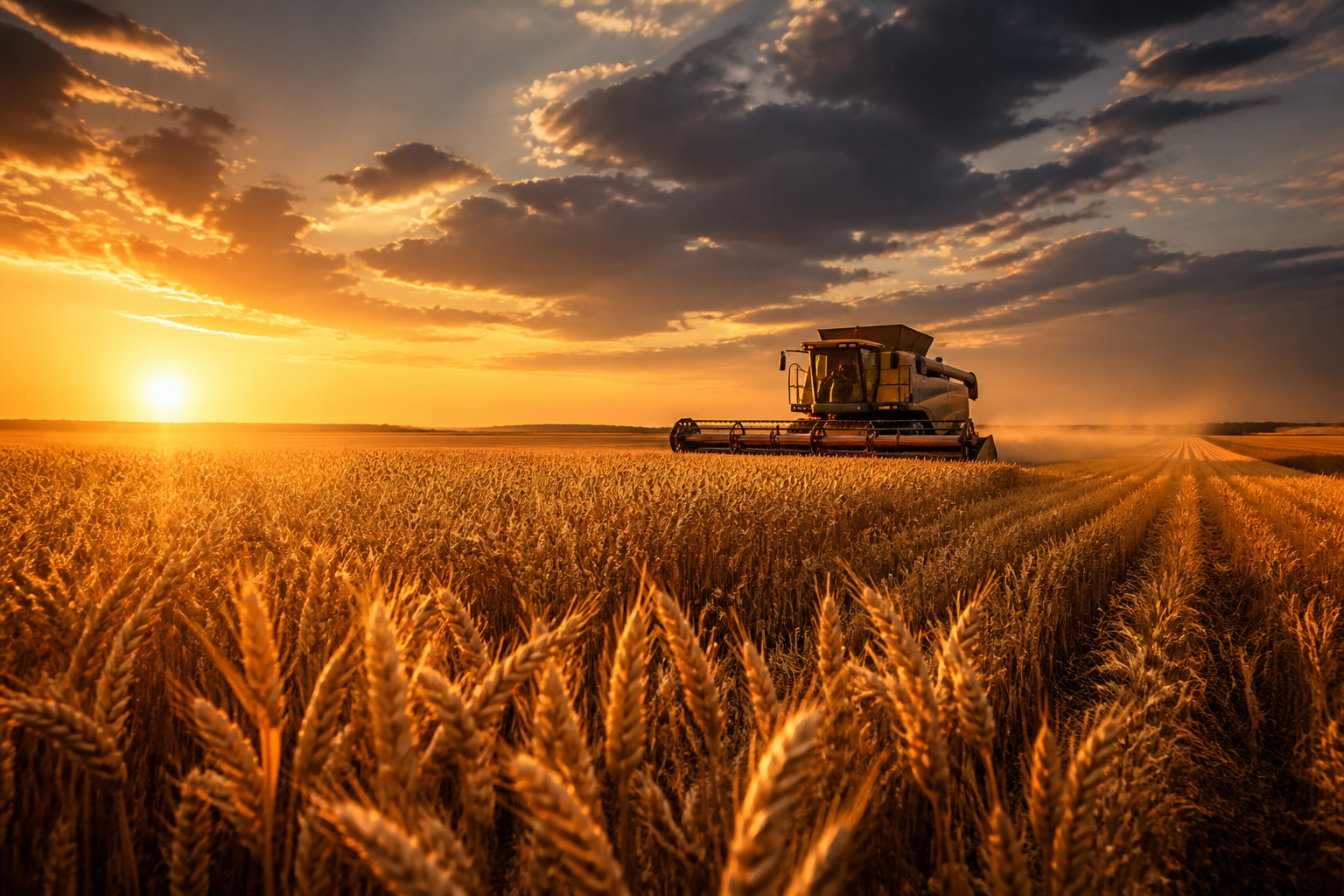
The shift towards agricultural mechanisation is a prerequisite for the survival of the sector in a competitive global market. The transition from labour-intensive methods to automated, high-output systems is not merely a matter of convenience, it is an economic necessity. In Nigeria and other developing markets, the dialogue between banking executives and state officials frequently centres on how to facilitate the acquisition of modern machinery. Mechanisation addresses the dual challenges of labour shortages and the need for precision in crop management. When farms are equipped with state-of-the-art tractors, harvesters, and irrigation systems, the resulting increase in efficiency allows for a more predictable and scalable food supply. This industrialisation extends beyond the farm gate, influencing the entire value chain from processing to distribution. In Ontario, the agri-food sector has become one of the province's most significant economic drivers, precisely because it has integrated advanced technology into every stage of production. The resulting efficiency does more than just produce food, it creates high-value jobs in engineering, data analysis, and logistics, thereby diversifying the rural economy and reducing its dependence on raw commodity exports.
Global Input Markets And The Fertilizer Paradigm
Central to the productivity of modern agriculture is the global trade in inputs, particularly fertilizers, which remain a cornerstone of high-yield farming. The prominence of Nutrien in Saskatchewan illustrates the massive scale of this sub-sector. By supporting more than 4,000 jobs and supplying 27.5 million tonnes of fertilizer, Nutrien exemplifies how a single corporate entity can anchor a regional economy. The extraction and distribution of potash and nitrogen-based products are critical components of a global supply chain that sustains the caloric needs of billions. However, the concentration of input production in specific geographic hubs creates a vulnerability that many nations are now seeking to address. The cost of these inputs is a primary determinant of food inflation, as seen in the recent fluctuations in global market prices. As farmers face higher costs for essential nutrients, the pressure on profit margins increases, often leading to calls for government intervention or subsidies. The economic health of the agri-food sector is therefore inextricably linked to the stability of the energy and mining sectors, which provide the raw materials for modern fertilizer production.
Commodity Volatility And Domestic Price Controls
The market dynamics of India provide a compelling case study in the challenges of managing agricultural supply and demand within a massive, growing economy. Recent developments in the Indian sugar and onion markets highlight the tension between industry expectations and government mandates. Despite government requests, sugar mills have shown reluctance to advance their crushing seasons, reflecting the complexities of operational timing and market forecasting. Similarly, the surge in onion prices to 27 rupees per kilogram at Lasalgaon, driven by delays in the kharif crop, demonstrates how sensitive local markets are to seasonal disruptions. These price spikes have immediate repercussions for the broader economy, contributing to inflationary pressures that central banks must then manage. The Indian experience underscores the difficulty of balancing the needs of producers, who require fair prices to sustain their livelihoods, with the needs of consumers, who require affordable food. In this context, agriculture is not just a commercial activity, it is a socio-political variable that can dictate the stability of a nation's internal markets.
The Integrated Value Chain Beyond The Farm Gate
To view agriculture solely through the lens of primary production is to overlook the vast economic ecosystem that surrounds it. The modern agri-food sector encompasses everything from biotechnology and equipment manufacturing to food processing and international logistics. In Ontario, this integrated approach has turned the sector into a powerhouse that supports businesses far removed from the actual fields. The production of fuel from agricultural feedstock, for instance, represents a significant diversification of the revenue base for farmers and processors. This multi-layered economic contribution means that a downturn in agricultural productivity has a ripple effect across multiple industries. When a local agricultural business in Pennsylvania receives funding to modernise its operations, the benefits accrue to the local construction firms that build the facilities, the technology providers who install the systems, and the logistics companies that transport the finished products. This interconnectedness is why sovereign states are increasingly treating agriculture as a strategic industrial sector rather than a traditional heritage industry.
A Strategic Outlook For Global Agri-Food Systems
Looking ahead, the global agriculture and agri-food sector will likely be defined by a movement towards greater self-reliance and technological sophistication. As geopolitical tensions continue to disrupt traditional trade routes, the impetus for regionalised food systems will grow. We should expect to see more aggressive state interventions in the form of capital grants and infrastructure investment, similar to the initiatives witnessed in North America and West Africa. The integration of artificial intelligence and satellite imagery into farm management will further enhance precision, allowing for higher yields with fewer environmental inputs. However, the sector will remain vulnerable to the volatile prices of energy and minerals, which dictate the cost of production. The ability of nations to secure their supply of fertilizers and advanced machinery will be the defining factor in their agricultural success. In conclusion, the transformation of agriculture into a high-tech, capital-intensive industry is an irreversible trend. Those nations and businesses that can successfully navigate the intersection of finance, technology, and resource management will not only secure their food supplies but also drive the next wave of global economic growth.