The Agrarian Dilemma: Navigating Deflationary Pressures and Structural Shifts in Global Food Systems
A deep analysis of the 2026 agricultural landscape, exploring the tension between stagnant planting rates, the National Corn Growers Association’s 30 billion bushel target, and the systemic transformation of farm finance.
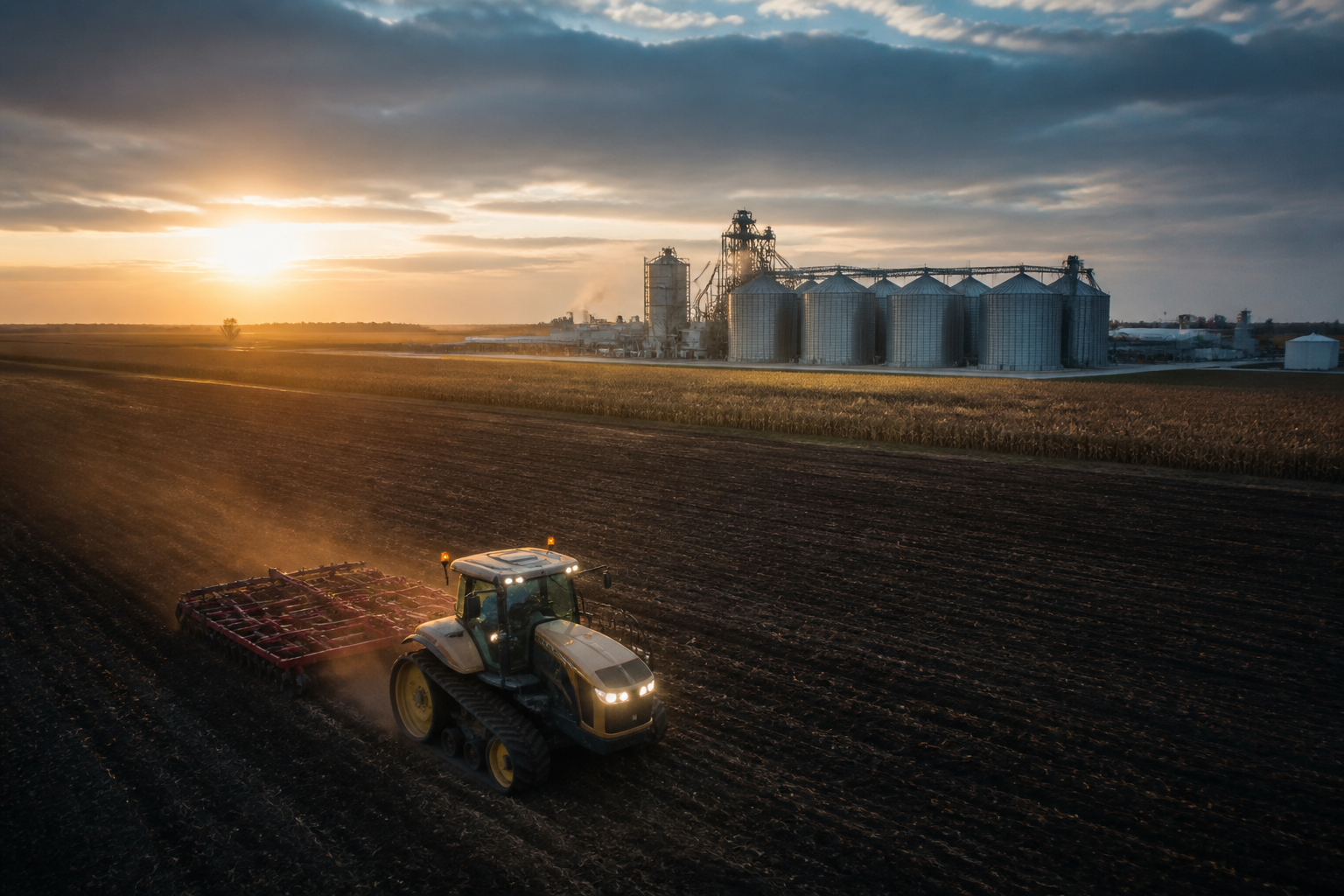
The global agricultural landscape in the mid-2020s is defined by a paradox of immense technological potential set against a backdrop of tightening fiscal margins. While institutional giants such as the National Corn Growers Association are setting ambitious long-term targets, including a drive to secure thirty billion bushels in new demand, the immediate reality for the primary producer is one of profound uncertainty. As of mid-August 2026, planting progress for critical staples has remained sluggish, with corn plantings reaching a mere four per cent, a marginal increase from two per cent in the preceding week. This lack of momentum reflects a broader structural malaise that has haunted the sector since the significant correction in net farm income first forecast by the United States Department of Agriculture Economic Research Service. The transition from the record profitability of 2022 to the current era of cautious capital deployment illustrates the fragility of the international food supply chain, where the intersection of climate volatility and shifting commodity markets leaves little room for error.
The Financial Retrenchment of the Primary Producer
To understand the current state of global agriculture, one must look back at the watershed moments of 2023, when the Economic Research Service forecast a twenty-two point eight per cent decrease in net farm income. This decline was not merely a statistical outlier, but rather the beginning of a sustained period of fiscal consolidation. While the median income for farm households has historically remained resilient, the volatility of the commodities market has forced a reappraisal of the traditional farming business model. In the present environment, farmers are facing what analysts describe as the most difficult decision-making cycle in a generation. The high cost of inputs, particularly energy-intensive fertilisers, continues to weigh heavily on balance sheets despite the best efforts of global suppliers to maintain distribution volumes. For the individual operator, the decision to plant becomes a calculated risk assessment where the potential for yield is constantly weighed against the high probability of suppressed market prices and rising debt service costs.
Fertilisers and the Infrastructure of Productivity
The role of multinational corporations in stabilising these supply chains cannot be overstated. Nutrien, a dominant force in the global potash and nitrogen markets, continues to serve as a bellwether for the health of the sector. By supporting more than four thousand jobs across Saskatchewan and supplying twenty-seven point five million tonnes of fertiliser to international markets, the company highlights the sheer scale of the logistical operations required to sustain global food security. However, the reliance on such large-scale industrial inputs creates a vulnerability to geopolitical shifts and supply chain disruptions. The concentration of fertiliser production in specific geographies, such as Western Canada, means that any localised economic or political friction has an immediate cascading effect on the ability of farmers in distant markets to maintain soil health. The current market dynamics suggest that while supply remains relatively stable, the affordability of these inputs for small to mid-sized enterprises remains a primary barrier to achieving the production volumes envisioned by national trade bodies.
Institutional Reform and the Role of Agribanking
Beyond the physical inputs of seeds and fertilisers, the transformation of agriculture is increasingly driven by the evolution of financial institutions. The Bank of Agriculture has moved beyond traditional lending roles to engage more deeply with federal ministries, aiming to integrate agricultural policy with broader economic development goals. This shift is evident in the recent enrollment of nearly three hundred thousand farmers into new institutional programmes ahead of nationwide implementation. These initiatives are designed to solve one of the most persistent problems in the sector, the lack of a clear path to market. By providing farmers with guaranteed off-take agreements and more transparent pricing mechanisms, the bank aims to reduce the inherent volatility that has historically deterred long-term investment. This institutionalisation of the farm-to-market pipeline represents a significant departure from the fragmented trading systems of the past, suggesting a future where data-driven finance plays as large a role in crop success as the weather itself.
The Quest for New Demand in a Saturated Market
The National Corn Growers Association has identified a thirty billion bushel target as the north star for the industry, yet achieving this requires a radical expansion of end-use applications. As traditional food and feed markets reach saturation in developed economies, the focus has shifted toward the bio-economy and industrial applications. The push for sustainable aviation fuels and bio-plastics is no longer a peripheral concern but a core component of the demand strategy. However, the path to thirty billion bushels is fraught with regulatory hurdles and the need for significant capital expenditure in processing infrastructure. Without a corresponding increase in planting rates, which currently remain at historic lows for the season, these demand targets risk becoming aspirational rather than achievable. The tension between the ambitious goals of trade associations and the cautious reality of the field creates a strategic gap that policy makers are struggling to bridge through subsidies and research grants.
Regional Disparities and the Global Supply Narrative
While North American and European agricultural sectors grapple with deflationary pressures and technological transitions, the emerging markets present a different set of challenges. In regions where the Bank of Agriculture is most active, the focus remains on basic market access and the reduction of post-harvest losses. The disparity between the high-tech, precision-agriculture approach of Saskatchewan and the developing infrastructure of emerging economies highlights the uneven nature of global food systems. For the international business community, this represents both a risk and an opportunity. The standardisation of farming practices and the digitisation of supply chains offer the potential for a more integrated global market, but only if the financial tools available to developed-world farmers are adapted to meet the needs of those in transition economies. The success of the current nationwide implementation programmes will be a critical test of whether institutional reform can truly move the needle on global production capacity.
A Strategic Outlook for the Decades Ahead
Looking toward the end of the decade, the agricultural sector must reconcile its massive scale with the need for granular, local-level resilience. The transition toward a more structured and financed agricultural economy is inevitable, but it will not be without its casualties. The consolidation of smaller farms into larger corporate entities is likely to continue as the complexity of managing thirty billion bushel demand cycles exceeds the capacity of the traditional family farm. However, the rise of ag-tech and the intervention of specialised financial institutions like the Bank of Agriculture may provide a lifeline for those willing to embrace new models of production. The long-term health of the industry will depend on the ability to balance the industrial requirements of global food security with the economic viability of the individual producer. As the industry moves forward, the focus must remain on creating a clearer path to market, ensuring that when the seeds are finally in the ground, the harvest has a guaranteed and profitable destination.