The Agrarian Contraction: Navigating the Intersection of Trade Volatility and Industrial Slump
An analytical deep dive into the cyclical downturn facing global agriculture, examining the impact of downsizing at firms like John Deere, the necessity of rural benchmarking, and the shifting landscape of trade policy.
The global agricultural landscape is currently grappling with a multifaceted crisis that transcends the traditional seasonal cycles of peak and trough. Recent structural adjustments within the industry suggest that the buoyancy experienced during the post-pandemic recovery has given way to a more sober, disciplined reality. Economic indicators across major Western economies, stretching from the grain belts of North America to the pastoral heartlands of Europe, point towards a deceleration in capital expenditure and a tightening of credit conditions. This contraction is most visibly manifested in the industrial machinery sector, where titans such as John Deere have initiated significant workforce reductions. When an industry bellwether of such stature implements job cuts, as evidenced by the recent announcement of over 100 redundancies, it signals a broader malaise in farmer confidence and a strategic retrenchment by those who supply the necessary implements of production. This development establishes the context for a wider discussion on the sustainability of current agricultural models in an era defined by high interest rates, volatile trade relations, and the increasing frequency of climate-induced disruptions.
The Industrial Retrenchment and Capital Constraints
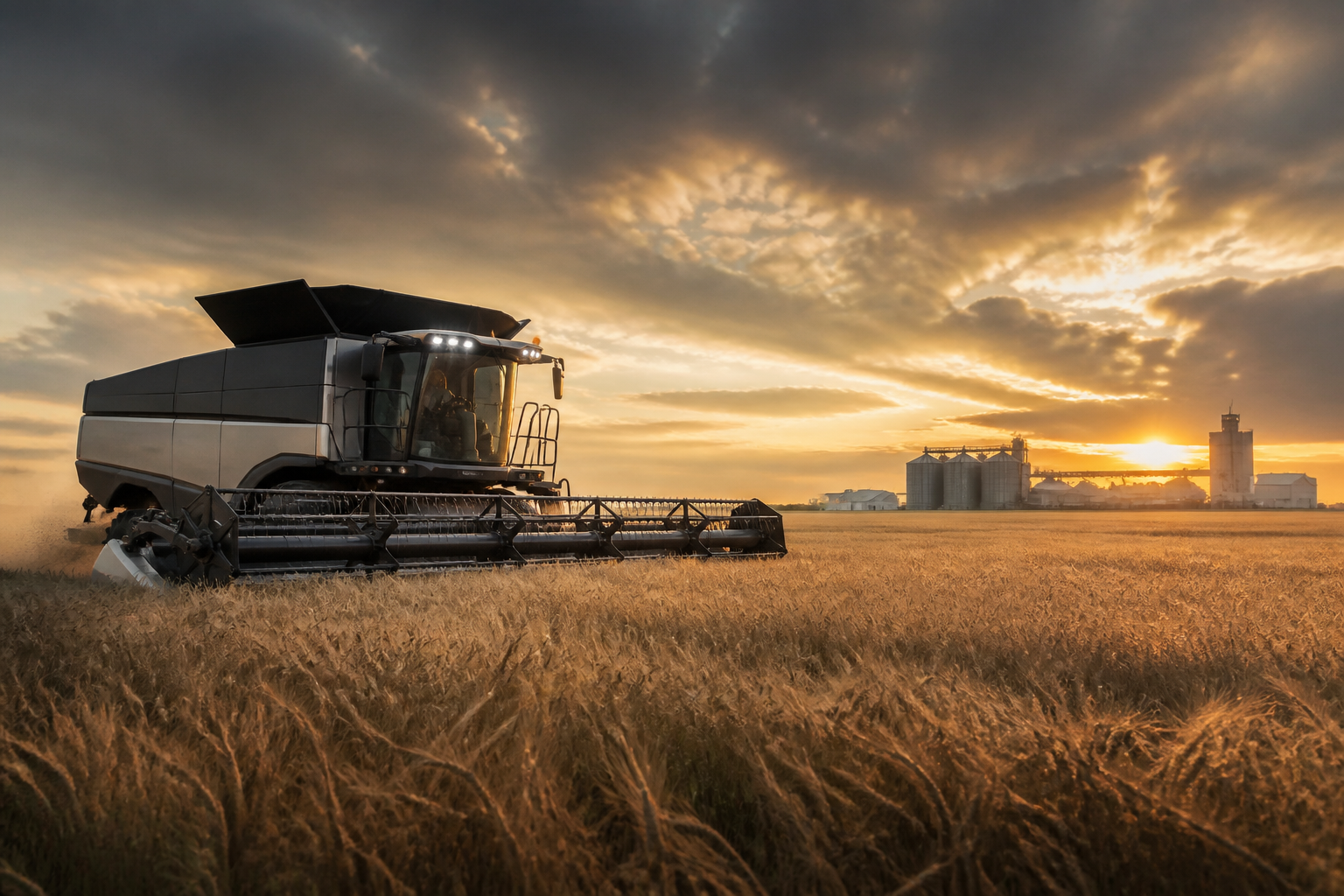
The decision by leading agricultural equipment manufacturers to reduce their headcounts is not an isolated tactical manoeuvre but rather a strategic response to a systemic slump in demand. For years, low-cost capital and high commodity prices encouraged a surge in machinery sales as farmers sought to modernise through automation. However, as the Federal Reserve and the Bank of England maintains elevated interest rates to combat persistent inflation, the cost of financing six-figure combines and autonomous tractors has become prohibitive for many medium-to-large-scale enterprises. The resulting drop in order books has forced manufacturers to reconcile their exuberant production targets with the stark reality of a sluggish global economy. This industrial cooling is a leading indicator for the broader agri-food sector; it suggests that the period of reckless expansion is over, replaced by an era of asset sweating and delayed replacement cycles. The implications for technological adoption are profound, as the very tools intended to drive efficiency are now being priced out of reach for the producers who need them most.
Trade Policy as a Geopolitical Lever
Agricultural trade remains one of the most contentious and vital components of global diplomacy, serving as both a bridge between nations and a weapon in geopolitical disputes. The Organisation for Economic Co-operation and Development (OECD) has frequently highlighted that trade is essential for food security and the livelihoods of those within the supply chain. Yet, we are witnessing a resurgence of protectionist sentiment that threatens to undermine these established paradigms. In North America, the United States Department of Agriculture continues to project the nation as a leader in global exports, yet this leadership is increasingly challenged by shifting alliances and the weaponisation of tariffs. The fluidity of agricultural markets means that a policy shift in Washington or Brussels can instantaneously alter the fortunes of a soy grower in the Midwest or a beef producer in Queensland. As trade barriers are erected in the name of national security or domestic protectionism, the efficiency of the global food system is compromised, leading to increased price volatility for consumers and reduced margins for the primary producer.
The Benchmarking Imperative and Operational Excellence
In the face of these macroeconomic headwinds, the distinction between high-performing farms and their less efficient counterparts is widening. A recent report by Scottish Land and Estates has underscored a critical need to place rural businesses at the heart of national economic growth strategies. The central thesis of this movement is the adoption of rigorous benchmarking and business planning. Historically, agriculture has been a sector driven by tradition and anecdotal evidence; however, the modern environment demands a pivot toward data-driven management. By analysing key performance indicators such as input-to-output ratios, nutrient use efficiency, and debt-to-equity metrics, farms can identify the marginal gains necessary to survive periods of low commodity prices. This institutional approach to husbandry requires a cultural shift, moving the focus away from sheer yield and toward operating profit. Governments and industry bodies are increasingly being called upon to support this transition through enhanced advisory services and the facilitation of peer-to-peer learning networks.
Climate Resilience and the Role of State Intervention
Environmental volatility is no longer a theoretical risk but a present reality that is actively deforming agricultural balance sheets. In Canada, the Agriculture and Agri-Food department has been forced to activate the AgriRecovery Initiative to alleviate the financial strain caused by persistent droughts. Similarly, the joint investment of $12 million by the Canadian federal government and the Ontario provincial government to protect farmers highlights the growing role of the state as an insurer of last resort. This trend raises fundamental questions about the long-term viability of certain farming practices in regions increasingly prone to extreme weather. While state-funded safety nets are essential for preventing immediate systemic collapse, they do not address the underlying necessity for structural adaptation. The transition towards drought-resistant cultivars, sophisticated irrigation management, and soil health restoration is an expensive endeavour that requires significant long-term capital, capital that is currently scarce due to the aforementioned industrial slump.
Strengthening the Agri-Food Supply Chain
The resilience of the food system is not merely determined at the farm gate but throughout the complex network of processors, logisticians, and retailers. The current economic climate is forcing a consolidation within this chain, as smaller players are absorbed or pushed out by rising energy and labour costs. To protect the integrity of the supply chain, there is a growing consensus that rural businesses must be integrated more deeply into the broader industrial strategy. This involves diversifying income streams through value-added processing and renewable energy generation, thereby reducing the reliance on volatile raw commodity markets. Strengthening these links requires a collaborative effort between the public and private sectors to ensure that infrastructure, ranging from rural broadband to regional processing hubs, is robust enough to support a distributed and resilient food economy. Without such investment, the rural heartland risks becoming a mere extraction zone, vulnerable to the whims of global commodity traders and multinational retailers.
Future Outlook: A New Paradigm of Productivity
Looking ahead, the agricultural industry is entering a transformative period where the metrics of success are being radically redefined. The era of cheap money and predictable weather is fading into the rear-view mirror, replaced by a landscape characterised by high inputs, volatile markets, and an urgent mandate for sustainability. The current industrial contraction, while painful for those facing redundancy in the manufacturing sector, may serve as a necessary corrective, purging inefficiencies and forcing a long-overdue focus on operational resilience. Investors and policymakers must now look beyond short-term yield spikes and focus on the structural health of the agrarian economy. We expect to see a surge in demand for precision agriculture tools that offer a clear and rapid return on investment, alongside a continued shift towards professionalised farm management. The winners in this new era will be those who can harness data to mitigate risk and those who view environmental stewardship not as a regulatory burden, but as the foundational pillar of their business's long-term solvency. The resilience of the global food system depends not on returning to the status quo, but on the disciplined pursuit of a more intelligent, adaptive, and institutionalised form of agriculture.