The Agrarian Contraction: Navigating Structural Decay Amidst a Global Glut
Editorial analysis of the current agricultural downturn, exploring how equipment manufacturer layoffs, shifting OECD trade dynamics, and climate-driven fiscal interventions are reshaping the international agrifood sector.
The global agricultural sector is currently grappling with a paradoxical crisis of productivity and paralysis. While the United Nations and the United States Department of Agriculture (USDA) continue to stress the imperative of food security for a burgeoning global population, the commercial reality on the ground is increasingly defined by industrial retrenchment and sagging commodity prices. The euphoria of the post-pandemic recovery has evaporated, replaced by a cold analytical focus on cost-containment and structural efficiency. Across the Great Plains of North America to the pastoral heartlands of Scotland, the agrarian economy is facing a confluence of pressures: high interest rates that inhibit capital expenditure, a cyclical downturn in machinery demand, and a volatile geopolitical landscape that threatens the free movement of goods. This is no longer a temporary fluctuation in the market cycle but rather a fundamental realignment of the agrifood value chain, where resilience is being weighed against the ruthless demands of fiscal solvency.
The Industrial Retreat and the Machinery Slump
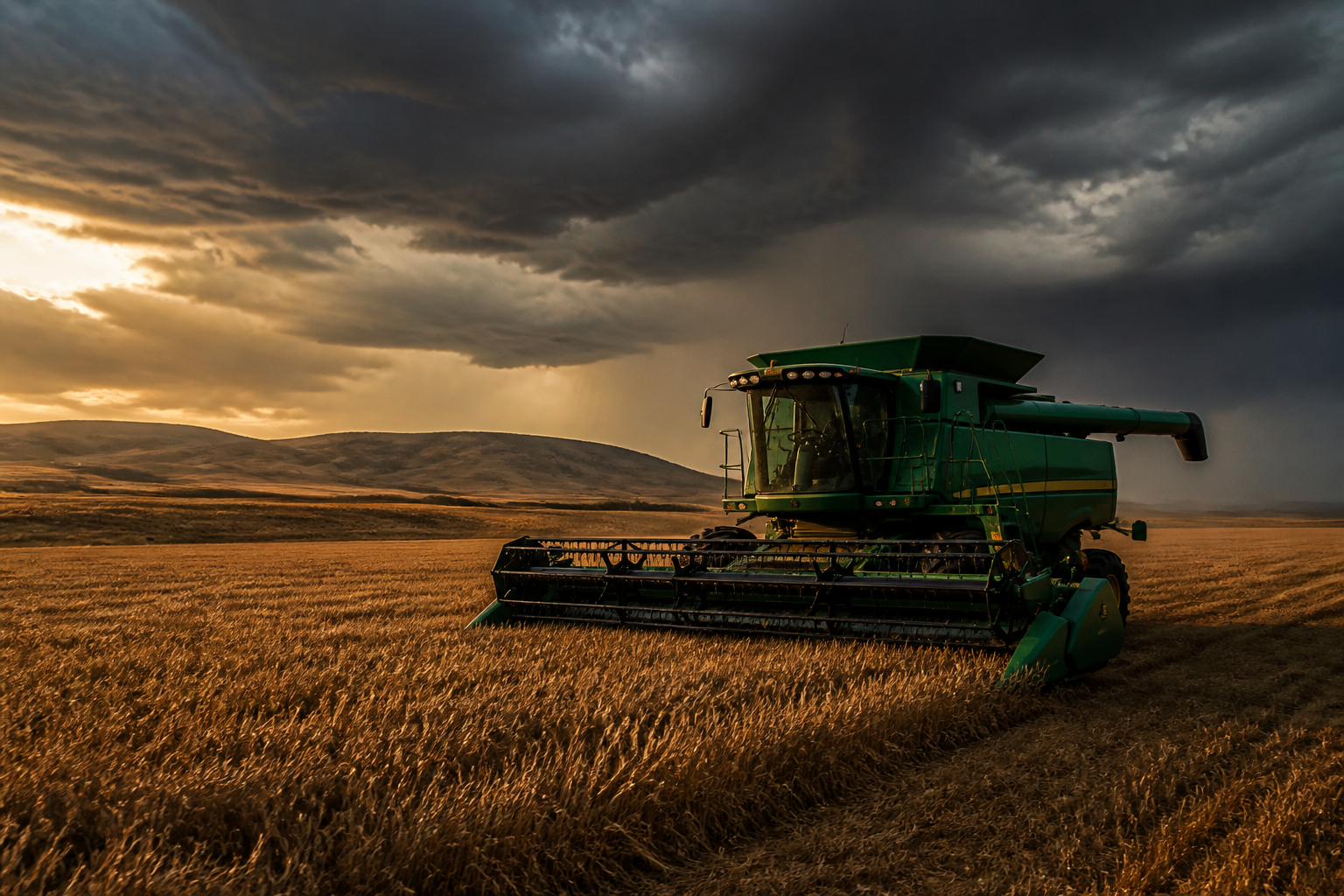
The most visible indicator of this cooling climate is the recent upheaval within the agricultural machinery sector. Heavyweight manufacturers, most notably John Deere, have commenced a series of strategic redundancies that signal a deep-seated apprehension regarding short-term demand. The announcement of approximately 170 job losses across major equipment producers, including 100 at Deere alone, reflects a broader malaise in rural capital investment. These cuts are not merely isolated corporate restructurings; they are the consequence of a sluggish global economy where farmers are deferring purchases of high-tech harvesters and tractors in favour of extending the life-cycles of existing fleets. When the industrial giants of the Midwest signal a retreat, it suggests that the exuberant growth models of the previous decade are being overhauled in favour of a more conservative, defensive posture. This downturn in equipment sales often serves as a bellwether for the wider economy, indicating that the primary producers, the farmers themselves, are bracing for a period of restricted liquidity and narrowing margins.
Trade Volatility and the Geopolitics of Nutrition
International trade remains the lifeblood of the agrifood sector, yet it is currently hemmed in by a rising tide of protectionism and shifting regulatory frameworks. According to recent data from the Organisation for Economic Co-operation and Development (OECD), agricultural trade is vital for supporting the livelihoods of millions, yet the friction in these markets is increasing. The tension between the need for open borders to ensure food security and the political desire for national self-sufficiency has created a fragmented global marketplace. For many exporters, the predictability of the World Trade Organisation era has been replaced by a patchwork of bilateral agreements and sudden tariff impositions. This volatility is particularly taxing for smaller producers who lack the bureaucratic infrastructure to navigate complex rules of origin or varying sanitary and phytosanitary standards. As the USDA seeks to maintain its leadership in global agriculture, it find itself competing in a world where trade is increasingly used as a tool of diplomatic leverage rather than a simple mechanism for economic exchange.
The Call for Rural Centrality in National Growth
In the United Kingdom, particularly within the devolved administration of Scotland, a new discourse is emerging that seeks to position rural businesses at the very core of national economic strategy. A recent report by Scottish Land & Estates has highlighted the necessity of moving beyond traditional subsidies toward a model of high-performance farm management. This shift advocates for enhanced benchmarking, rigorous business planning, and a focus on on-farm management improvements. The objective is to transform the traditional estate or family farm into a sophisticated commercial entity capable of competing on a global stage without perpetual reliance on state intervention. By placing rural enterprises at the heart of growth, policymakers hope to reverse decades of urban-centric investment bias. This requires a double-pronged approach: improving digital connectivity in remote regions and ensuring that the financial sector recognises the unique risk profiles of biological assets. The Scottish model suggests that the future of agriculture lies not in greater volume, but in superior management and technical efficiency.
Climate Resilience and the Fiscal Burden of Disruption
While market forces dictate the pace of industrial activity, the environment remains the ultimate arbiter of agricultural success. Agriculture and Agri-Food Canada has recently been forced to activate the AgriRecovery Initiative, a fiscal safety net designed to support farmers reeling from the devastating effects of prolonged drought. The Canadian government, alongside provincial partners in Ontario, is investing upwards of $12 million to fortify the sector against environmental shocks. These interventions highlight the growing cost of climate adaptation; as extreme weather patterns become the norm rather than the exception, the state is increasingly required to act as an insurer of last resort. This creates a challenging fiscal dynamic where public funds are diverted from long-term research and development to immediate disaster relief. The long-term sustainability of the sector depends on whether these investments can move beyond temporary bailouts toward the structural fortification of the land itself, through soil health initiatives and advanced water management systems.
Precision Agriculture as a Survival Mechanism
In an era of high input costs, ranging from fertiliser to diesel, the adoption of precision agriculture has transitioned from a luxury to an existential necessity. The ability to apply nutrients and pesticides with centimetre-level accuracy is no longer just about environmental stewardship; it is about the preservation of the bottom line. However, the paradox of the current moment is that the very technology required to survive this downturn, autonomous machinery and AI-driven analytics, requires the kind of capital expenditure that many farms are currently unable to afford. This creates a technical divide: a tier of high-performing, data-rich farms that can optimise every square metre of soil, and a larger group of traditional producers who risk being left behind in a low-margin trap. Financial institutions and agritech firms must therefore find innovative ways to de-risk these investments, perhaps through equipment-as-a-service models or performance-based financing, to ensure that the technological revolution does not stall during the current economic contraction.
The Outlook for a Fragmented Harvest
Looking ahead to the mid-2020s, the agricultural sector must reconcile itself to a world where growth is uneven and hard-won. The era of cheap credit and stable global supply chains is unlikely to return in the immediate future. Instead, the industry will be defined by its ability to navigate a landscape of high interest rates and decarbonisation mandates. We should expect further consolidation among primary producers as smaller operations, unable to absorb the shocks of market volatility, are acquired by larger corporate entities with deeper pockets and better access to data. Furthermore, the role of the state is likely to evolve from a provider of direct subsidies to a partner in risk management and infrastructure development. The success of the global agrifood system will ultimately depend on its capacity to innovate under pressure. Those businesses that can integrate high-performing management traits with a flexible approach to global trade and climate resilience will emerge from this contraction as the new leaders of the agrarian economy. The harvest of the future will be won not just in the field, but in the rigorous analysis of data and the prudent management of the balance sheet.