The Agrarian Calculus: Navigating Sovereign Risks And Yield Volatility In Global Markets
As geopolitical tensions reshape the global supply chain, the agrifood sector faces a transformative era. This analysis explores how institutional capital and state policy are converging to address the systemic challenges of the decade.
The international agrifood complex is currently undergoing its most profound structural realignment since the mid-twentieth century, driven by a volatile confluence of climatic instability, geopolitical fragmentation, and a fundamental reassessment of just-in-time supply chains. As sovereign states increasingly view food security through the lens of national defence, the traditional liberalised trade model is being supplanted by a new paradigm of strategic autonomy and regionalised resilience. This shift is not merely a reaction to recent logistical disruptions but represents a deeper recognition that the globalised caloric engine, which has underpinned decades of relative stability, is no longer fit for purpose in an era of heightened systemic risk. The subsequent reallocation of capital, led by institutional investors and state-backed entities, marks the beginning of a capital-intensive transition toward precision agriculture and resilient infrastructure that will redefine the cost of production for generations to come.
The Geopolitics of the Caloric Deficit
The erosion of the post-Cold War consensus on free trade has nowhere been more evident than in the grain corridors of Eastern Europe and the maritime arteries of the Black Sea. The protracted conflict in Ukraine has served as a catalyst for a broader rethink of global dependency on a handful of breadbasket regions. Nations such as Egypt and Indonesia, which have historically relied upon the vast wheat surpluses of the Danube and Dnieper basins, are now aggressively diversifying their procurement strategies. This diversification is not without cost, as it involves longer shipping routes, higher insurance premiums, and the necessity of maintaining larger strategic reserves. The resulting inflationary pressure is not a transitory phenomenon but a structural adjustment to a world where the security of supply is valued more highly than the efficiency of the transaction.
Institutional players like the Archer-Daniels-Midland Company and Bunge Global have had to recalibrate their risk models to account for the weaponisation of food exports. We are witnessing a transition from a buyer's market to a seller's market, where state-owned enterprises, particularly those in the Middle East and East Asia, are securing long-term supply agreements that bypass traditional commodity exchanges. This movement toward bilateralism threatens to marginalise smaller, developing economies that lack the sovereign wealth or diplomatic leverage to compete in a constrained market. The role of the World Trade Organisation in mediating these disputes appears increasingly diminished, as member states prioritise domestic stability over international commitments.
Technological Sovereignty and the Precision Frontier
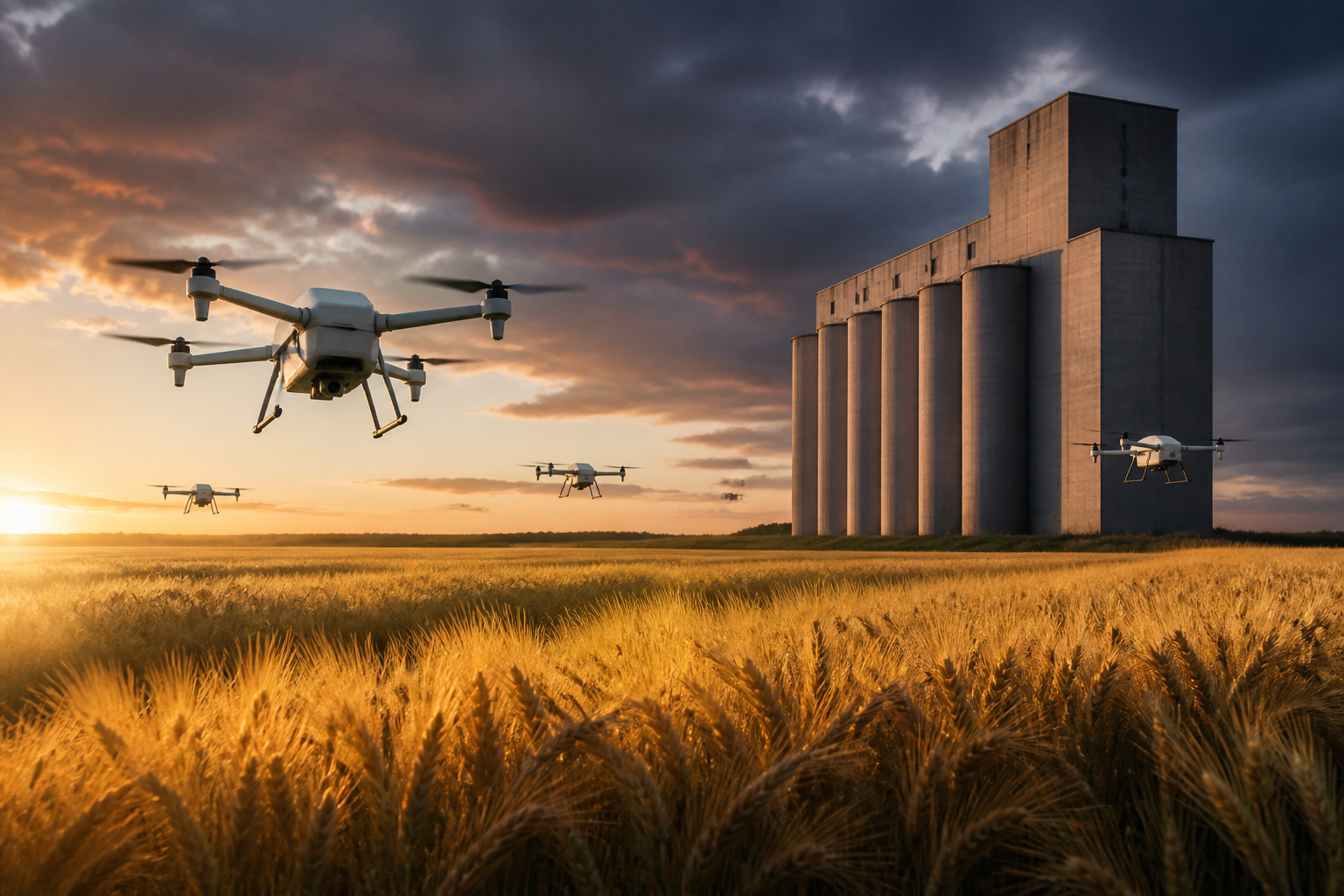
In response to the rising costs of traditional inputs such as synthetic fertilisers and hydrocarbon-dependent energy, the industry is pivoting toward a second green revolution defined by digitisation and biological innovation. This transition is led by a new cohort of agritech firms and established giants like Bayer AG and John Deere, which are integrating artificial intelligence into the very fabric of the farmstead. The objective is to decouple yield growth from resource consumption, using satellite telemetry and soil sensors to apply water and nutrients with surgical precision. This is no longer the domain of speculative venture capital but has become a core requirement for commercial viability in a high-interest-rate environment where every percentage point of waste represents a direct threat to solvency.
However, the adoption of these technologies creates a new form of digital divide. The capital expenditure required to implement autonomous machinery and real-time data analytics is immense, creating a barrier to entry that favors large-scale corporate holdings over traditional family-operated farms. In regions like the American Midwest and the Australian Outback, the consolidation of land is accelerating as institutional investors, including pension funds and private equity firms, seek tangible assets that offer a hedge against inflation. These sophisticated owners have the balance sheets necessary to absorb the upfront costs of technological adoption, thereby widening the productivity gap between industrialised agriculture and the smallholder systems that still provide a significant portion of the world's caloric intake.
The Re-emergence of Protectionism and Subsidy Wars
The European Union, through its revised Common Agricultural Policy, is attempting to balance the competing demands of environmental stewardship and food security. The introduction of the Farm to Fork strategy has sparked significant friction, as farmers across the continent protest against what they perceive as an overly prescriptive regulatory framework that hampers their competitiveness against imports from less regulated jurisdictions. This tension has led to a resurgence of agrarian populism, forcing governments in Paris, Berlin, and Warsaw to reconsider the pace of the green transition. The political cost of rising food prices is a potent deterrent to radical reform, and many administrations are finding themselves trapped between their climate commitments and the immediate necessity of social stability.
In North America, the legislative landscape is similarly fraught. The United States continues to utilise its Farm Bill as a primary instrument of economic policy, providing a massive safety net that allows domestic producers to remain competitive even in periods of extreme price volatility. This level of state intervention is echoed in China, where the central government is intensifying its focus on seed sovereignty and domestic self-sufficiency. By investing heavily in state-owned enterprises such as ChemChina and its subsidiary Syngenta, Beijing is attempting to reduce its reliance on Western intellectual property. This global trend toward agricultural nationalism is likely to result in a more fragmented market, where regulatory alignment becomes a tool of diplomatic alignment rather than a pathway to universal standards.
The Financialisation of Arable Land
As equity markets experience heightened volatility, the investment community has turned its attention toward arable land as a premier asset class. The logic is simple yet compelling, land is a finite resource with a low correlation to traditional financial instruments and a proven ability to preserve value over long horizons. Organizations such as TIAA's Nuveen and various sovereign wealth funds from the Gulf region have become some of the largest owners of agricultural acreage globally. This financialisation has profound implications for the structure of the industry, as the focus shifts from short-term seasonal profits to long-term capital appreciation and sustainable yield management.
The entry of institutional capital brings a level of professionalisation and transparency that was previously lacking in many regional markets. It also facilitates the development of sophisticated risk management tools, such as index-based weather insurance and blockchain-enabled supply chain tracking. Yet, this trend also invites scrutiny regarding the social impact of land concentration. In sub-Saharan Africa and parts of Latin America, the acquisition of large tracts of land by foreign entities has raised questions about land rights and the displacement of local populations. The challenge for the coming decade will be to ensure that institutional investment acts as a catalyst for development rather than a driver of dispossession.
Logistical Resilience and the Infrastructure Gap
The fragility of global logistics was laid bare by the pandemic and subsequent maritime bottlenecks in the Suez Canal and the Panama Canal. For the agrifood sector, where perishability is a constant constraint, the need for robust infrastructure is paramount. This includes not only deep-water ports and rail networks but also the cold-chain facilities required to transport high-value products like horticultural goods and animal proteins across long distances. In emerging markets, the lack of adequate storage and processing facilities results in significant post-harvest losses, sometimes exceeding thirty percent of total production. Addressing this infrastructure gap is a prerequisite for improving global food security and reducing the environmental footprint of the industry.
Investment in resilient logistics is also a matter of climate adaptation. As extreme weather events become more frequent, the ability to rapidly redirect trade flows and maintain the integrity of the cold-chain will be essential. We are seeing a shift toward decentralized processing hubs, situated closer to the point of production, which reduces the reliance on a few vulnerable nodes in the global network. This move toward localized value addition not only enhances resilience but also creates economic opportunities in rural areas, helping to mitigate the urban migration that has strained the social fabric of many developing nations. The role of multilateral development banks, such as the World Bank and the African Development Bank, will be critical in financing these long-term infrastructure projects.
The Sustainability Mandate and the Cost of Transition
The agrifood sector is responsible for a significant portion of global greenhouse gas emissions, placing it at the heart of the climate debate. The transition to a low-carbon food system is no longer an optional ethical choice but a commercial necessity, as consumers and regulators increasingly demand transparency and accountability. Major retailers like Nestlé and Unilever are setting ambitious targets for regenerative agriculture within their supply chains, putting pressure on producers to adopt practices that sequester carbon and enhance biodiversity. However, the costs associated with this transition are substantial, and there is an ongoing debate about who should bear the burden of these expenditures.
Regenerative practices, such as cover cropping and reduced tillage, often involve a temporary decline in yields and a requirement for new equipment and expertise. Without adequate financial support or price premiums, many farmers are reluctant to make the leap. The development of carbon credit markets specifically tailored for agriculture offers a potential solution, providing a new revenue stream for producers who can demonstrate verifiable carbon sequestration. However, the lack of standardised measurement and reporting protocols remains a significant hurdle. Until these markets mature, the transition will likely be driven by a combination of government mandates and the strategic requirements of the world's largest food and beverage corporations.
A New Era of Strategic Resource Management
The outlook for the global agrifood sector is one of managed complexity and increasing capital intensity. The era of cheap calories, underpinned by abundant energy and stable weather, has reached its conclusion. In its place, we are entering a period where food security is inextricably linked to technological prowess, sovereign stability, and environmental sustainability. For investors and policymakers alike, the priority must be the creation of a more resilient and equitable system that can withstand the shocks of a fractured global order. This will require a departure from the short-termism that has characterised much of the industry's recent history, in favour of a more holistic approach to resource management.
The winners in this new landscape will be those who can successfully navigate the intersection of biology and data, leveraging innovation to overcome the constraints of a finite planet. While the challenges are formidable, the potential for a more efficient and sustainable global food system has never been greater. The current period of disruption, though painful, provides the necessary impetus for the structural reforms that have been delayed for too long. As we move forward, the agrarian calculus will increasingly depend on the ability to balance the competing demands of productivity and preservation, ensuring that the world's growing population can be fed without compromising the ecological foundations upon which all economic activity ultimately depends.