The Twilight Of Certainty: Navigating The Deflation Of The Artificial Intelligence Premium
A profound shift in investor sentiment has triggered a monumental retreat from AI-adjacent equities. This editorial explores the systemic repercussions of the $797 billion valuation evaporate and the return of the bears.
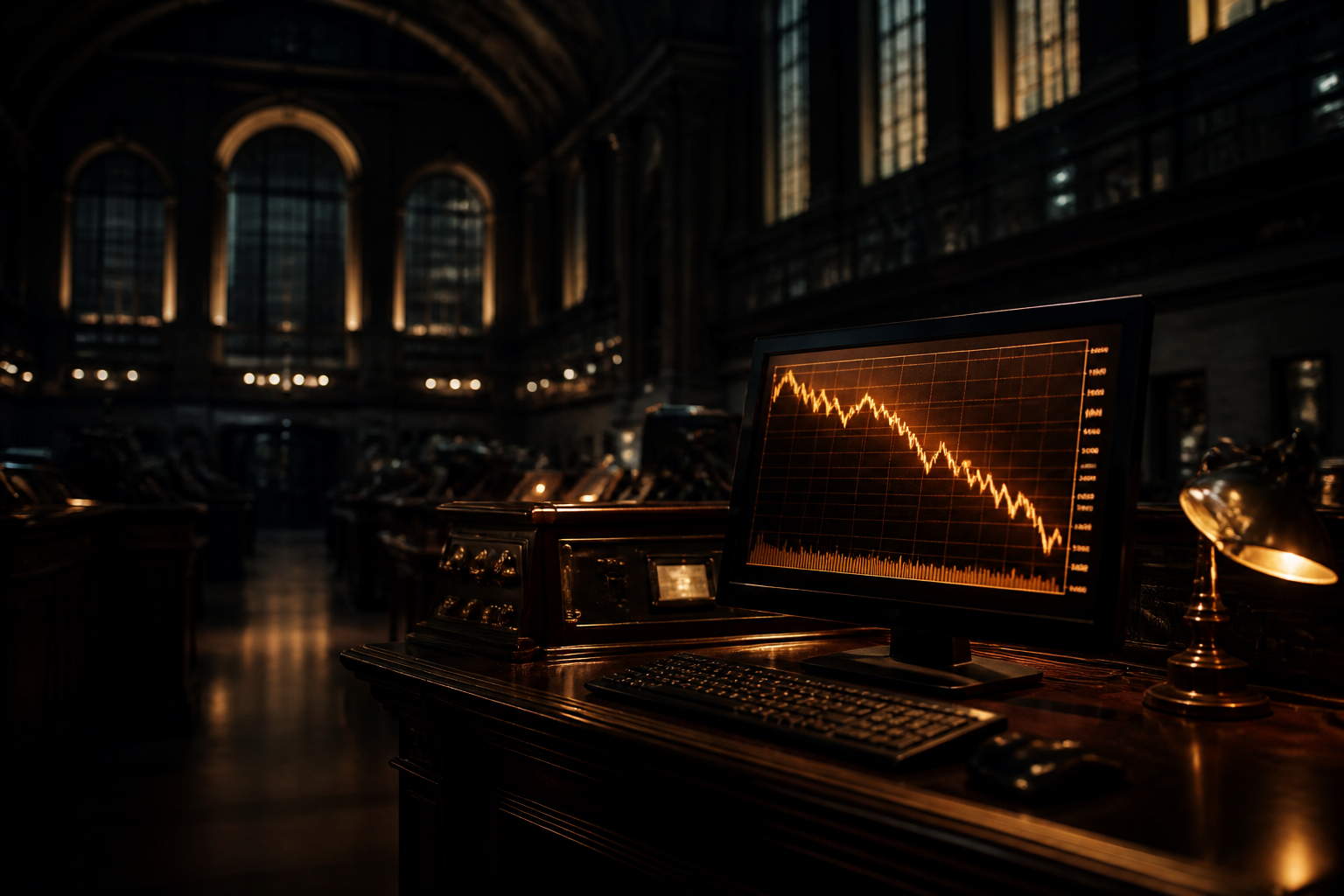
The transition from speculative exuberance to structural scepticism often occurs with a suddenness that belies the preceding years of quiet accumulation. On the trading floors of New York, London, and Tokyo, the long-standing consensus regarding the inexorable ascent of artificial intelligence is currently weathering its most severe interrogation. In a single, punishing session, the so-called ‘Magnificent Seven’, the cohort of technology behemoths including Nvidia, Microsoft, and Alphabet that have underpinned global equity indices, witnessed the evaporation of approximately $797 billion in aggregate market value. This contraction represents the most significant retrenchment since early 2024 and serves as a stark harbinger of a broader macroeconomic revaluation. The prevailing narrative, which previously treated heavy capital expenditure on silicon and large language models as a self-evident necessity, has been replaced by a rigorous demand for quantifiable returns on investment. As high-growth technology sectors face this existential scrutiny, the return of ‘the shorts’, investors betting against the continued prosperity of these firms, reaches levels not seen in nearly four years, signalling that the era of uncritical optimism has definitively passed.
The Great Recalibration of Silicon Valuations
For nearly two years, the global financial architecture has been anchored by the assumption that generative artificial intelligence would trigger a productivity revolution comparable to the deployment of the steam engine or the internet. However, the latest quarterly reporting cycle has introduced a dissonant note into this symphony of progress. While revenue growth remains nominally robust, the sheer scale of the capital expenditure required to maintain the necessary infrastructure has begun to weigh heavily on corporate balance sheets. Institutional investors, once content to fund the build-out of vast data centres and the acquisition of expensive H100 GPU clusters, are now questioning the timeline for monetisation. The sell-off in the Nasdaq, which recently suffered a decline exceeding 2%, was not merely a technical correction but an ideological pivot. It reflects a growing anxiety that the ‘AI bubble’ may have reached its structural limit, at least in terms of valuation multiples. When Microsoft and its peers signal increased spending with no immediate acceleration in cloud margins, the market reacts not to the potential of the future, but to the reality of the present cash flows.
Short Selling and the Revival of Market Skepticism
Perhaps the most telling indicator of this shifting tide is the aggressive return of short-selling activity on Wall Street. Data for June suggests that short positions against technology equities have reached record highs, as professional money managers grow increasingly wary of the underlying volatility in the tech sector. This resurgence of the bears suggests that the ‘AI bull market’, now nearly four years old when traced back to the post-pandemic recovery, is being viewed as overextended. The revival of short selling serves a critical, if painful, function in price discovery, puncturing the echo chambers of venture capital and momentum trading. For much of 2023 and early 2024, shorting the high-flying semiconductor stocks was a fast route to portfolio underperformance; today, it is becoming a cornerstone of defensive strategy. This change in sentiment is also manifesting in the options market, where the cost of hedging against a further collapse in tech valuations has spiked significantly, reflecting a consensus that the current floor may yet be breached.
Global Contagion and the Nikkei’s Warning
The malaise affecting the American technology giants has rapidly metastasised into a global phenomenon, illustrating the intrinsic interconnectedness of 21st-century capital markets. In Tokyo, the Nikkei 225 index recently fell by more than 2%, a move primarily driven by the same anxieties regarding AI spending that have plagued the S&P 500. Japan, home to critical links in the semiconductor supply chain such as Tokyo Electron and Advantest, is particularly sensitive to shifts in the capital spending cycles of American big tech. When the architects of AI software signal a pause or a pivot, the builders of the hardware hardware are the first to feel the chill. This cross-border contagion suggests that the AI-led recovery was a global synchronisation of hope, and its retreat will be equally universal. The vulnerability of the Japanese indices further highlights a broader regional risk across Asia, where the heavy concentration of tech-weighted indices makes national economies susceptible to the whims of Silicon Valley’s quarterly earnings calls.
Geopolitical Volatility and the Energy Paradox
Compounding the uncertainty in the technology sector is a renewed surge in geopolitical risk and commodity volatility. Brent crude oil prices recently breached the $100 per barrel threshold for the first time since May, driven by an escalation of hostilities in the Middle East. This resurgence of inflationary pressure creates a complex dilemma for central banks, particularly the Federal Reserve and the Bank of England. High energy prices historically act as a tax on global growth, potentially dampening the consumer spending that many software firms rely upon for their service-based revenue. Furthermore, the news of impending tariffs has added a layer of protectionist friction to the global economy, contributing to a 1.5% dip in crude futures as traders weigh the likelihood of a trade-war-induced slowdown. The paradoxical relationship between tech and energy, where AI requires immense power but its valuation is threatened by energy-driven inflation, is becoming a central theme for the 2024-2025 fiscal period.
The Divergence of Fortunes and the Flight to Quality
In this climate of heightened anxiety, a discernible ‘flight to quality’ is underway, albeit one that looks different from previous cycles. While the technology sector plunged by over 5% in specific sessions, traditional safe-haven assets such as gold futures have risen, recently gaining 2%. This suggests that capital is flowing out of speculative digital futures and back into tangible stores of value. Even within the technology sector itself, a divergence is emerging. Firms with clear, defensive cash flows and less exposure to the AI hardware arms race are being viewed with renewed appreciation, while those whose valuations are predicated entirely on a ‘hyperscale’ future are being sold off. The slowing of U.S. GDP growth serves as a sobering backdrop to this transition, reminding market participants that even the most revolutionary technologies cannot entirely decouple from the realities of the business cycle and the aggregate demand of a slowing economy.
Conclusion: The Path Toward a Mature AI Economy
As we look toward the final quarters of the year, the primary challenge for the corporate world will be to navigate the gap between technological potential and commercial reality. The current volatility should not be mistaken for the total failure of artificial intelligence; rather, it is the painful process of a technology maturing from a speculative theme into a standard industrial utility. We expect a period of ‘rationalisation,’ where companies that have over-invested in AI infrastructure without a clear path to profitability will be forced to restructure or scale back. Conversely, the firms that can demonstrate tangible productivity gains, reducing operational expenditure rather than just increasing capital expenditure, will eventually lead the next phase of the cycle. The era of the ‘AI premium’ is ending, but the era of the ‘AI economy’ is only just beginning. Investors must now trade the broad-brush excitement of the visionary for the precise, analytical scrutiny of the auditor. In the long term, this return to fundamental valuations is not a crisis, but a necessary correction for the health of the global financial system.