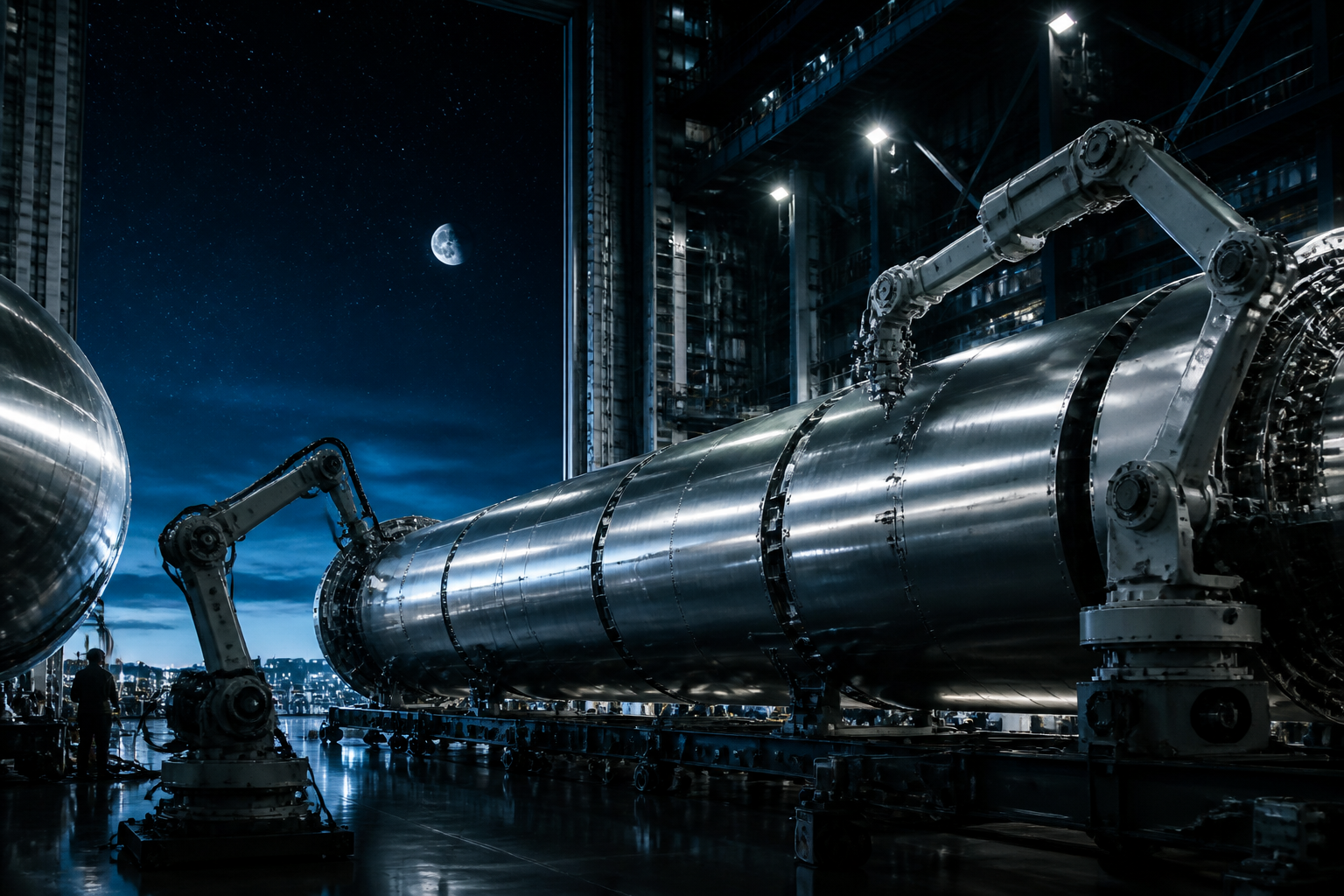
Orbital Arbitrage: The Ascendance of Space Exploration in the Post-Inflationary Era
A deep analysis of the shifts in global capital markets as the space exploration sector, led by the SPCX index, decouples from terrestrial volatility to offer a new frontier for institutional investment and strategy.
The global economic landscape presently exists in a state of suspended animation, caught between the receding tide of structural inflation and the encroaching reality of a high-interest-rate plateau. While traditional equities remain hypersensitive to every nuance of the Federal Reserve’s rhetoric and the volatility of Brent Crude prices, a profound shift is occurring within the specialized industrial sectors. Most visible amongst these is the commercial space exploration industry, which has begun to transition from a speculative venture-capital playground into a robust pillar of the modern industrial economy. The recent performance of the SPCX index and the acceleration of private aerospace initiatives suggest that we are witnessing the birth of a genuine orbital economy, one that operates on longer cycles and more profound capital requirements than the ephemeral digital booms of the previous decade.
The Divergence of Market Sentiments
Recent market data reveals a striking dichotomy between broader equity indices and the specialized sectors of aerospace and defense. While global shares experienced a marked dip on Friday, influenced primarily by the cessation of diplomatic efforts between United States and Iranian negotiators, the underlying strength of American industrial stocks has remained surprisingly resilient. This resilience is not merely a byproduct of geopolitical tension but rather a reflection of a fundamental reallocation of capital. Institutional investors are increasingly seeking shelter in sectors that offer tangible assets and long-term strategic utility. The collapse of peace talks has traditionally spurred a flight to safety, yet the current trend suggests a flight to 'future-proofing.' Companies within the Space Exploration Technologies Corp ecosystem and their ancillary suppliers are benefiting from a paradigm where sovereignty and technological supremacy are inextricably linked. This is a far cry from the irrational exuberance of the early 2020s; it is a calculated bet on the infrastructure of the twenty-first century.
Inflationary Pressures and the Search for Value
The broader economic context remains dominated by the search for a definitive end to the inflationary cycle. Wall Street is currently maintaining a vigil for the latest inflation updates, which serve as the primary barometer for the Federal Reserve’s terminal rate trajectory. Despite falling oil prices, which have historically provided a much-needed reprieve for consumer-facing industries, the industrial core remains wary of the persistence of core inflation. In this environment, the allure of the aerospace sector lies in its relative insulation from immediate consumer demand shocks. Unlike the software-as-a-service (SaaS) sector, which faces scrutiny over subscription retention in a tightening credit environment, the space sector is underpinned by multi-year government contracts and monumental capital expenditure that is less sensitive to quarter-on-quarter fluctuations. We are seeing a shift from the 'capital light' philosophy that dominated the Silicon Valley consensus toward a 'capital intensive' model that rewards long-term industrial vision.
The Artificial Intelligence Catalyst in Industrial Design
A critical, yet often overlooked, driver of the current aerospace boom is the integration of advanced computational intelligence. Software companies are poised to benefit immensely from the generative AI revolution, but the most profound impacts are being felt in the design and telemetry of aerospace hardware. The reduction in research and development timelines afforded by AI-driven simulation has allowed firms to bypass the traditional, decade-long development cycles that once characterized the industry. This technological tailwind is creating a virtuous cycle: as software becomes more adept at managing the complexities of orbital mechanics and materials science, the cost of entry for commercial entities continues to plummet. This is not merely about automation; it is about the democratization of highly complex engineering tasks, allowing mid-cap firms to compete in a domain previously reserved for national space agencies and the most well-capitalized defense contractors.
Geopolitical Volatility as a Strategic Driver
The recent disruption in diplomatic channels between Washington and Tehran serves as a somber reminder of the fragility of the terrestrial order. In the analytical framework of the modern economist, such volatility is a constant that must be hedged against. The expansion of satellite constellations and the development of independent orbital assets are increasingly viewed as essential components of national security and economic autonomy. This has led to a significant influx of sovereign wealth into the sector, as nations across the Middle East and Asia seek to diversify their domestic economies away from fossil fuel dependence and towards high-technology manufacturing. The fall in oil prices may provide temporary relief to the global transportation sector, but for the energy-exporting nations, it reinforces the urgency of the 'Vision 2030' style transformations that prioritize the space and technology sectors as the new foundations of national wealth.
Capital Markets and the IPO Horizon
Looking toward the near-term financial calendar, the market is preparing for a series of high-profile earnings releases and potential initial public offerings (IPOs) that will test the depth of investor appetite for industrial innovation. While the IPO market has been largely moribund due to high borrowing costs, the aerospace sector remains a notable exception of interest. Institutional desks are closely monitoring the economic calendar for signs that the cost of capital may finally be easing, which would trigger a release of pent-up demand for new listings. The transition from private funding rounds to public market scrutiny will be a defining moment for the sector, separating firms with sustainable business models from those that have survived solely on the enthusiasm of venture capital. The focus is shifting from 'flight-proven' technology to 'margin-proven' profitability, a necessary evolution for any industry seeking to achieve broad-market legitimacy.
A Forward-Looking Outlook for the Orbital Decade
As we project the economic trajectory for the remainder of the year and into the mid-decade, the primacy of the aerospace and defense sectors appears secure. The convergence of AI-driven efficiency, geopolitical necessity, and a gradual stabilizing of the global credit environment creates a unique window for structural growth. Investors and policymakers alike must recognize that the 'space race' of the present era is fundamentally different from that of the 1960s; it is not a race for prestige, but a race for the logistics and data infrastructure that will underpin the global economy. Those who dismiss the current surge in space-related equities as a mere niche phenomenon risk overlooking the most significant industrial transformation since the dawn of the internet age. The future of commerce is no longer bound by the horizon, and the capital markets are finally beginning to reflect this boundless reality. The emphasis will remain on those firms that can bridge the gap between speculative engineering and reliable, repeatable commercial delivery, ensuring that the orbital economy remains a terrestrial asset for decades to come.