The New Frontiers Of Innovation As Capital Realigns With Geopolitical Necessity
This editorial examines the convergence of artificial intelligence, sovereign wealth, and defence technology, exploring how recent shifts in the UAE and US market performance are reshaping the global startup landscape.
The global innovation economy is currently navigating a period of profound structural metamorphosis, characterized by a move away from the speculative excesses of the software-as-a-service era toward a more grounded, albeit complex, integration of artificial intelligence and national security. While the US economy shows signs of resilience with jobless claims recently falling to 196,000, the underlying current of the technology sector is being driven by a frantic race for semiconductor dominance and the physical infrastructure required to sustain the next decade of digital growth. This is no longer merely a matter of private enterprise, rather, it has become a fundamental pillar of statecraft. As Nvidia and Micron remain at the epicentre of market volatility, their performance serves as a barometer for a wider industrial shift where the lines between commercial software and strategic hardware have become permanently blurred.
The Resurgence Of The Hardware Hegemony
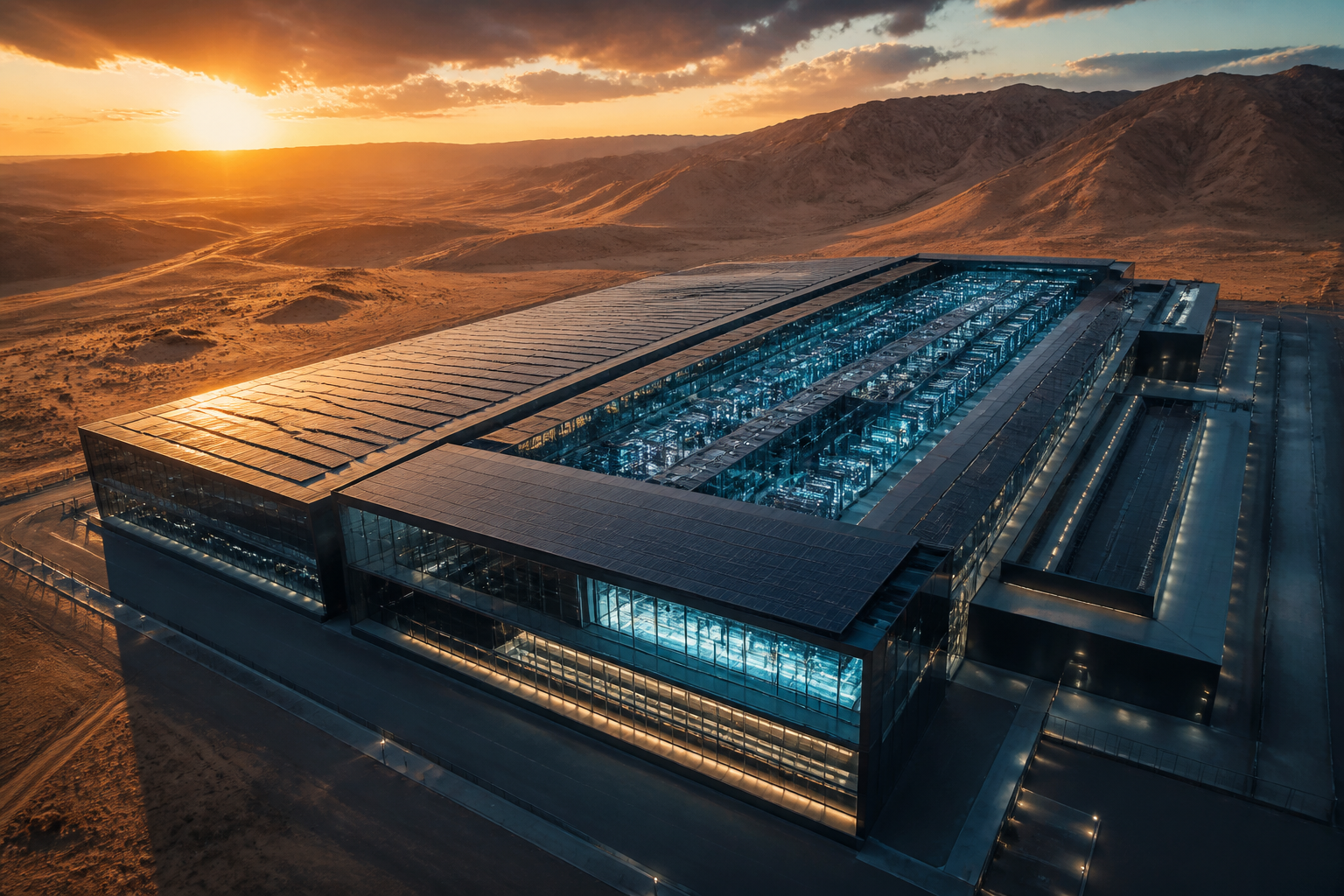
The current obsession with artificial intelligence has precipitated a significant revaluation of the physical world. For years, venture capital was disproportionately allocated to intangible assets, yet the rise of generative models has forced a reckoning with the limitations of the power grid and the scarcity of high-performance silicon. The debate surrounding AI safety and the future of Meta illustrates a broader concern regarding the concentration of compute power. As Dina Powell McCormick of Meta has recently articulated, the case for massive data centre expansion is now being met with a complex mixture of public backlash and local economic optimism. This tension is at the heart of the new industrial policy, where the success of a startup is increasingly dependent on its ability to secure reliable energy and hardware, rather than just elegant code.
Market analysts watching Nvidia and Micron closely recognize that these firms are no longer just suppliers to the gaming or consumer electronics industries. They are the utilities of the twenty-first century. The demand for AI buildout is relentless, yet it faces the friction of real-world logistics. As capital flows into these hardware giants, it creates a gravitational pull that is reshaping the entire startup ecosystem. Founders who previously focused on consumer applications are now pivoting toward the infrastructure layer, seeking to optimize the efficiency of the very data centres that Meta and its peers are racing to construct. This is a hardware-led renaissance that favours scale, capital intensity, and deep technical expertise over the agile, low-overhead models of the past decade.
The Strategic Pivot Toward Ras Al Khaimah
While Silicon Valley remains the intellectual hearth of innovation, the geography of capital is expanding toward more hospitable regulatory and economic climates. The recent surge in American business activity within Ras Al Khaimah in the United Arab Emirates serves as a compelling case study for this decentralization. The UAE has positioned itself not merely as a financial hub, but as a proactive partner for startups that require a stable base for global operations. This migration is driven by a combination of favourable tax regimes and a strategic desire to be closer to the sovereign wealth funds that are increasingly providing the late-stage funding that traditional venture firms are now hesitant to deploy.
Ras Al Khaimah represents a broader trend of emerging jurisdictions competing for high-growth firms by offering specialized zones for technology and professional services. This is particularly attractive for American companies looking to diversify their geopolitical exposure. As the domestic US environment becomes more complex due to regulatory scrutiny and high operational costs, the allure of a neutral, well-capitalized environment in the Middle East becomes irresistible. The influx of US businesses into the northern emirates is a signal that the next phase of global growth will be multipolar, with regional hubs providing the necessary stability for firms involved in sensitive technologies like artificial intelligence and digital finance.
Defense Tech And The Reinvigoration Of The State
The relationship between Silicon Valley and the American defence establishment is undergoing a historic realignment. For decades, the two sectors operated in parallel, often with a degree of mutual suspicion. However, the current geopolitical climate has transformed startups into crucial war contractors. This shift is not merely about procurement, but about a fundamental change in how national security is maintained. The integration of advanced AI into defence systems is now a priority for firms that once focused exclusively on commercial markets. This rearmament of the West via private innovation is a central theme of the current era, as startups are tasked with solving problems that traditional aerospace giants have struggled to address with agility.
Carlyle Group, led by its Chief Executive Officer, has noted the significance of these partnerships, particularly when institutions like MIT collaborate with the private sector to advance AI capabilities. This collaboration is essential for maintaining a competitive edge in an environment where technological superiority is directly linked to economic and military security. The rise of companies that act as bridges between the high-tech sector and the Department of Defense is creating a new class of unicorn startups, ones that are defined by their mission-critical utility rather than their social media engagement. This trend reflects a broader return to the Cold War era model of innovation, where state-sponsored research and private ingenuity combined to produce breakthroughs in materials science and computing.
The Labor Paradox And The AI Job Boom
Despite the pervasive fears of automation-led displacement, the current technological shift is creating a unique labor paradox. While certain roles are undoubtedly being rendered obsolete, the demand for specialists who can manage, maintain, and interpret AI systems is reaching unprecedented levels. This is not a distant prospect but a present reality that is supporting the low jobless claims seen in recent US economic data. The AI job boom is particularly evident in sectors that require a hybrid of domain expertise and technical literacy. This demand is providing a cushion against the inflationary pressures and interest rate anxieties that have otherwise dampened market sentiment.
Furthermore, the partnership between academia and the private sector, such as the Carlyle-supported initiatives at MIT, is crucial for developing the workforce of the future. The challenge for startups is no longer just finding capital, but finding the talent capable of operating at the intersection of complex mathematics and real-world application. This competition for human capital is driving up wages in technical fields and forcing startups to offer more than just equity, they must now offer the opportunity to work on projects of significant national and global consequence. The narrative of AI as a job killer is being challenged by the reality of AI as a massive engine for specialized employment.
Financial Stability In A Volatile Era
The Federal Reserve remains the silent partner in every venture capital discussion. As the Carlyle CEO recently observed, the trajectory of the US economy and the central bank's interest rate decisions are the ultimate arbiters of startup valuations. The era of cheap money is over, and with it, the tolerance for businesses that prioritize growth at the expense of profitability. This new discipline is healthy for the ecosystem in the long run, as it filters out weak business models and forces founders to focus on sustainable revenue streams. The transition is painful, but it is necessary for the next cycle of genuine innovation.
Investors are now looking for defensive qualities in their technology portfolios. This explains the continued interest in Nvidia and other semiconductor firms that possess a clear moat and essential utility. The volatility in these stocks is a reflection of the market trying to price in a future that is still being written, yet the underlying demand for their products remains robust. For startups, the message is clear, the ability to demonstrate a path to positive cash flow is now as important as the technology itself. The financial architecture of the innovation sector is becoming more conservative, mirroring the broader trends in the global economy where resilience is prioritized over raw speed.
The Outlook For A Reshaped Global Order
Looking ahead, the convergence of AI infrastructure, defence necessity, and geopolitical shifts will define the next decade of the startup world. We should expect to see a further concentration of power in firms that control the hardware and the energy required for intelligence, while a new tier of startups will emerge to manage the complex logistics of this new industrial age. The expansion of American business into regions like Ras Al Khaimah will likely accelerate as firms seek to balance their operations across multiple jurisdictions to mitigate the risks of a more fragmented global trade environment.
The tension between the need for rapid AI development and the requirement for safety and oversight will remain a central point of debate. However, the momentum behind the buildout of data centres and the retooling of the military-industrial complex suggests that the technological race is far from reaching a plateau. For the astute investor and the visionary founder, the current landscape offers a rare opportunity to participate in the construction of a new digital and physical reality. The winners of this era will be those who recognize that the most valuable innovations are no longer those that live solely on a screen, but those that provide the backbone for a secure, efficient, and technologically advanced society.