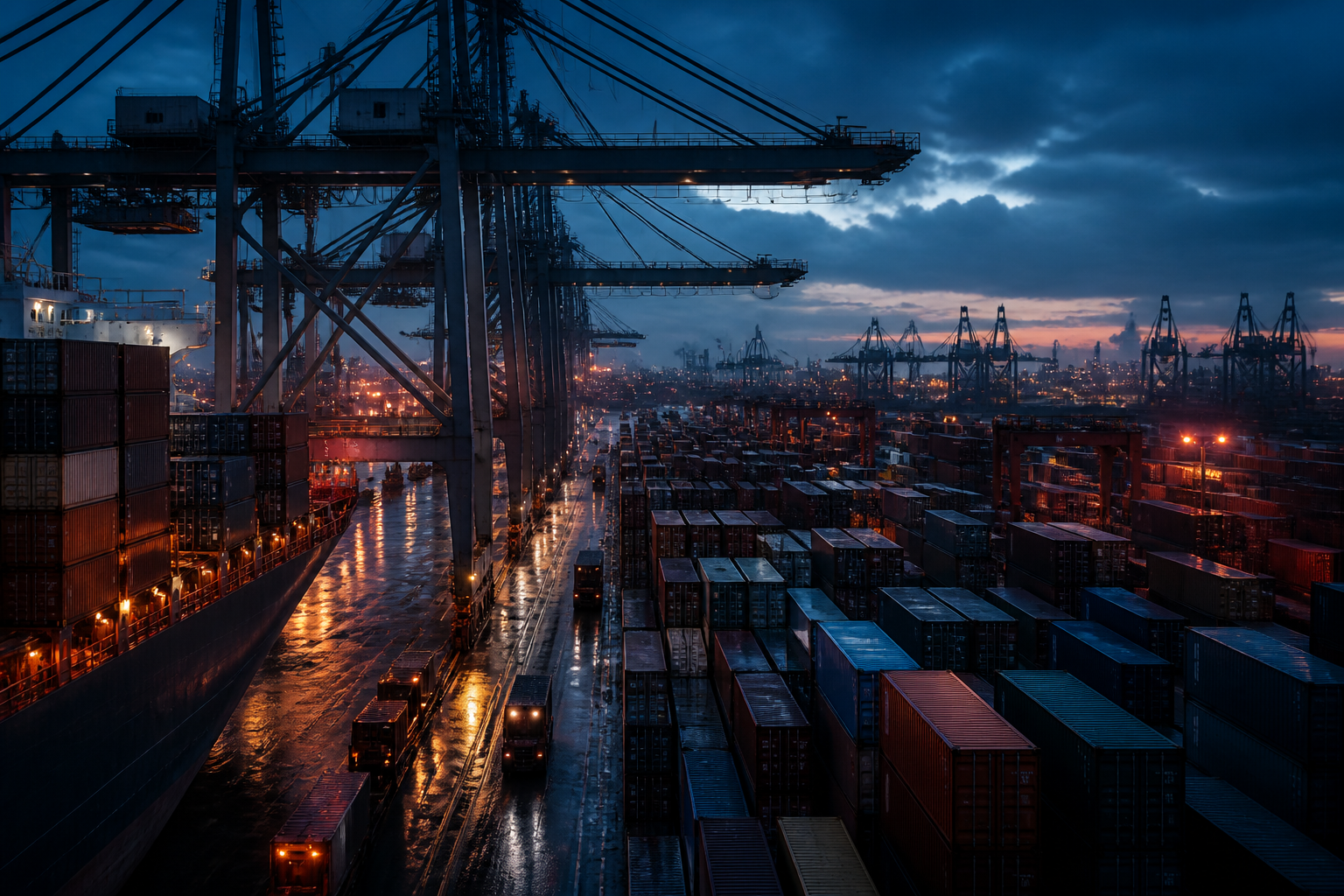
The Neo-Mercantilist Order: Global Industry Under the Weight of Universal Tariffs
A deep analytical dive into the shifting tectonics of global trade, exploring how the recent US tariff escalations, including 50% duties on Canadian goods, are dismantling decades of industrial integration and forcing a costly pivot towards protectionism.
The post-Cold War consensus of uninhibited trade and just-in-time logistics has finally fractured beyond recognition. In the wake of an aggressive shift in American trade policy, specifically the imposition of sweeping tariffs targeting an expansive list of nations, the global industrial complex is navigating a landscape defined by neo-mercantilism rather than liberal cooperation. The White House's announcement of a 50 per cent tariff on the majority of Canadian imports, alongside a broader push for universal levies, suggests that the previous era of globalisation is not merely pausing, but is being systematically dismantled. For the boardroom and the factory floor alike, the implications are profound: the cost of materials is rising, the reliability of supply chains is evaporating, and the very concept of geographical competitive advantage is being rewritten by executive decree.
The Canadian Frontier and the New Protectionism
The decision to levy a 50 per cent tariff on Canadian goods represents a seismic shift for North American industry. For decades, the integrated supply chains connecting Ontario and Quebec with the American Midwest have served as the backbone of the continental automotive and aerospace sectors. Canadian steel, aluminium, and timber are not luxuries but essential feedstock for American manufacturing. By imposing such a punitive barrier, the United States is effectively placing a tax on its own industrial competitiveness. This move signals a total departure from the spirit of the USMCA and its predecessors, suggesting that geographic proximity and historical alliance no longer afford protection from the volatility of Washington’s current trade doctrine. The immediate result for Canadian firms is a desperate scramble to diversify export markets, though for capital-intensive industries such as mining and heavy manufacturing, such pivots cannot be achieved in a single quarter.
Energy Volatility and the Red Sea Imbroglio
Compounding the fiscal pressures of trade barriers is the renewed instability of global energy markets. The recent breach of the $100 per barrel threshold for crude oil follows a series of escalations in the Red Sea, where Houthi militants have targeted shipping vessels with increasing frequency. This disruption of one of the world’s most vital maritime arteries has forced logistics providers to reroute around the Cape of Good Hope, adding weeks to transit times and significantly increasing carbon output and insurance premiums. When oil prices remain elevated, the inflationary pressure on manufacturing is twofold: first through the direct cost of energy and feedstock, and second through the surging costs of freight. For industrial centres in Europe and East Asia, which are heavily reliant on stable maritime passages and affordable energy imports, this combination of geopolitical risk and high input costs threatens to stall a fragile post-pandemic recovery.
The Eroding Promise of the Transatlantic Accord
In the United Kingdom, the narrative of a unique and prosperous trade relationship with the United States is being met with a cold reality. Initial optimists within the City and Westminster had hoped that the UK’s post-Brexit status might allow for a preferential 'side deal' to mitigate the impact of universal tariffs. However, as trade envoys assess the landscape, it is becoming increasingly clear that the UK remains vulnerable to the same protectionist measures applied to the rest of the world. The British manufacturing base, particularly in high-end pharmaceuticals and automotive components, faces a dual threat. It must navigate the regulatory complexities of the European Union while simultaneously attempting to penetrate an American market that is becoming increasingly walled off. The prospect of a 'world-beating' trade deal now appears less like an imminent reality and more like a relic of a more optimistic political era.
Corporate Resilience in an Era of Interventionism
Individual industrial titans are reacting to this era of state interventionism with a mixture of pragmatism and alarm. The recent admission by figures such as Elon Musk regarding strategic missteps highlights the general sense of uncertainty pervading the technology and industrial sectors. Companies that once prioritised the lowest absolute cost of production are now being forced to prioritise 'resilience' and 'friend-shoring,' even at the expense of profitability. The financial markets have responded in kind, with short positions hitting record highs as investor confidence reflects the mounting difficulty of maintaining margins in a high-tariff environment. The tragedy of this shift is that while protectionism is sold as a boon for domestic labour, the reality in the boardroom is often the acceleration of automation as firms seek to offset rising tariff costs by reducing human overhead.
The Logistics of Decoupling and Regional Blocks
As the universal tariff push targets dozens of countries, we are witnessing the emergence of distinct trading blocks that may define the middle of the twenty-first century. The decoupling of the American and Chinese economies was the prologue; the current chapter involves the fragmentation of the entire Western trade architecture. If the United States continues to treat both allies and adversaries as economic competitors to be suppressed through taxation, the inevitable response will be a series of retaliatory measures that further stifle global volume. Regions such as Southeast Asia and India find themselves in a precarious position, attempting to court fleeing capital from China while worrying about their own access to the American consumer market. Industrial strategy is no longer just about engineering or demand; it is now an exercise in geopolitical risk management where a single tweet or executive order can render an entire supply chain obsolete.
Future Outlook: The Permanence of Friction
Looking ahead to the remainder of the decade, the primary characteristic of the global industrial economy will be friction. The cost of transacting across borders will remain elevated, driven not only by tariffs but by the administrative burden of navigating a world without a cohesive rules-based order. We expect to see a sustained period of 're-shoring' that, while benefiting specific domestic regions in the short term, will ultimately lead to higher consumer prices and a slower rate of technological diffusion. The industrial giants that survive this transition will be those that possess the balance sheet to weather prolonged volatility and the political acumen to navigate increasingly nationalist capitals. The era of the seamless global market is dead; in its place is a more expensive, more volatile, and more tribal industrial reality that will require a fundamental reassessment of what it means to be a global business.