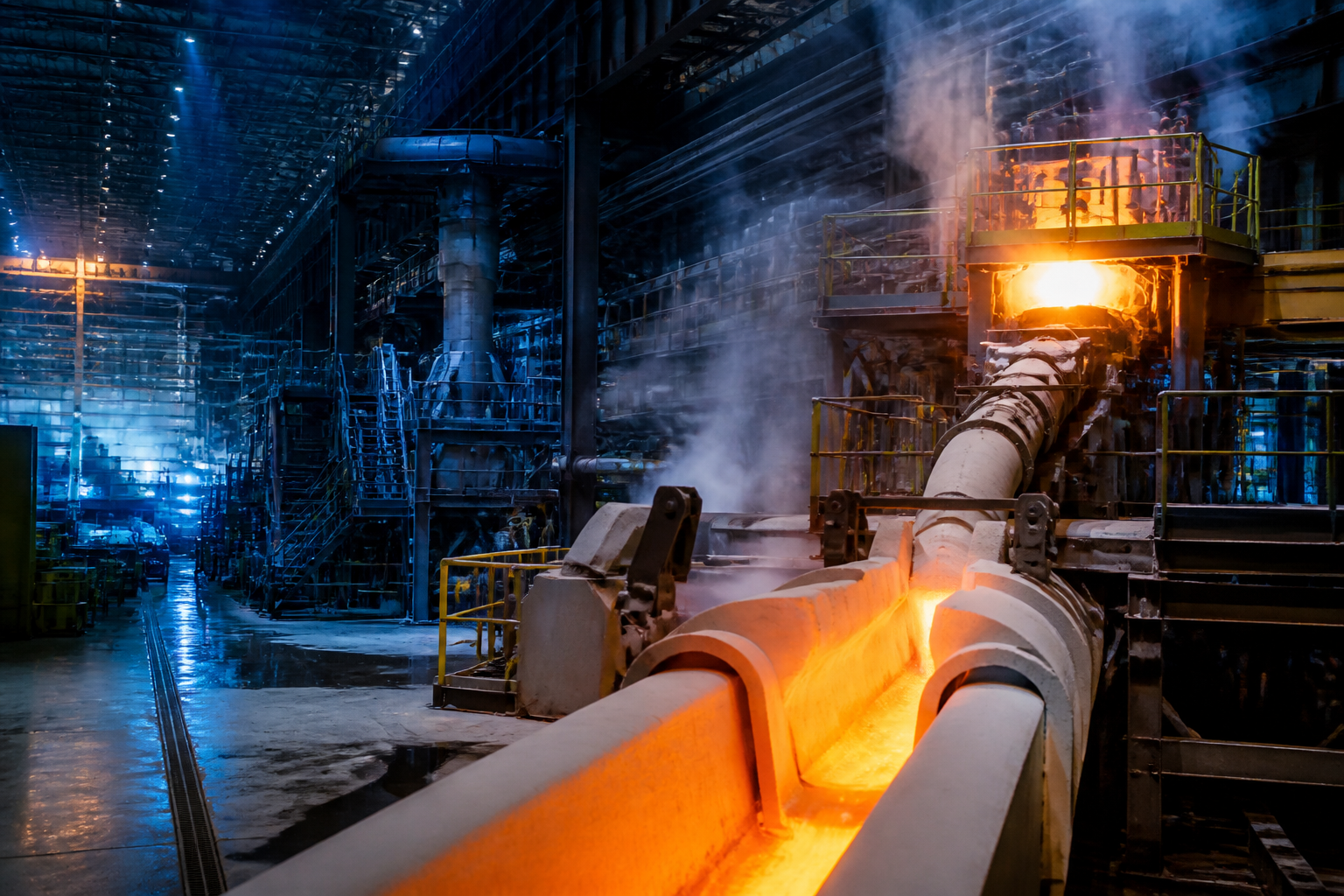
The Industrial Twilight: Re-Shoring, Decarbonisation, and the New Protectionism
An analytical exploration of the systemic shifts in global manufacturing, examining how the convergence of decarbonisation mandates and nationalist industrial policies is dismantling the era of unbridled globalisation.
The post-war consensus that defined the mechanics of global industry for nearly eight decades is currently undergoing a violent dissolution. In its place, a fragmented landscape of 'friend-shoring', aggressive state interventionism, and the frantic pursuit of net-zero compliance has emerged, fundamentally altering the calculus for multinational corporations. Where the lean-manufacturing mandates of the 1990s prioritised cost-efficiency and just-in-time logistics above all else, the contemporary industrialist must now navigate a labyrinth of geopolitical risk, escalating carbon tariffs, and a resurgence of protectionist sentiment that would have been unrecognisable a generation ago. This is not merely a cyclical downturn in the manufacturing index, but a profound, structural shift in the way the physical world is built, processed, and distributed. As the United States, the European Union, and China compete to subsidise their way to dominance in the green-tech sector, the global industrial base is being torn between the necessity of carbon neutrality and the reality of a world where the free flow of capital and goods is no longer a given.
The End of the Arbitrage Era
For nearly thirty years, the primary driver of industrial expansion was the exploitation of labour and regulatory arbitrage. Large-scale manufacturing migrated from the high-cost environments of the Ruhr Valley and the American Midwest to the Special Economic Zones of coastal China and Southeast Asia. This migration was underpinned by a period of relative geopolitical stability and the dominance of the World Trade Organisation. However, the fragility of this model was laid bare by the dual shocks of the COVID-19 pandemic and the subsequent invasion of Ukraine by Russia. These events demonstrated that the efficiencies gained through globalised supply chains were bought at the cost of systemic resilience. Today, companies such as BASF and Volkswagen are grappling with the reality that their energy-intensive operations in Europe are no longer internationally competitive against American counterparts bolstered by the Inflation Reduction Act or Chinese firms benefiting from massive domestic state support.
This shift has triggered an era of internalisation. The 'just-in-time' philosophy is being rapidly replaced by 'just-in-case' strategic stockpiling, necessitating a massive capital investment in local production facilities. This is most visible in the semiconductor industry, where the US CHIPS and Science Act and its European equivalent have mobilised hundreds of billions of dollars to entice the likes of Intel and TSMC to build foundries onshore. Yet, this re-shoring is not a panacea. The cost of building a state-of-the-art fabrication plant in Ohio or Magdeburg is significantly higher than in Hsinchu or Shenzhen, and these costs will inevitably be passed down the value chain, contributing to a structurally higher inflationary environment for the foreseeable future.
The Green Dictate and Industrial Competitiveness
Simultaneously, the industrial sector is facing an existential mandate to decarbonise. In the European Union, the introduction of the Carbon Border Adjustment Mechanism (CBAM) represents a radical attempt to prevent 'carbon leakage' by taxing imports based on their emissions footprint. While intended to protect European manufacturers who are subject to the high costs of the Emissions Trading System (ETS), the mechanism risks igniting a series of trade wars. Heavy industries such as steelmaking and chemical production are the primary targets of these policies. ThyssenKrupp and ArcelorMittal are currently investing billions in hydrogen-ready direct reduced iron (DRI) plants, but the commercial viability of 'green steel' remains precarious without sustained government subsidies and a guaranteed market for more expensive, low-carbon materials.
In North America, the approach is markedly different, relying on the 'carrot' of tax credits rather than the 'stick' of carbon pricing. This has created a massive pull factor, drawing industrial investment away from the continent to the United States. The challenge for global industry is that these divergent regulatory frameworks force companies to maintain bifurcated production lines, one for carbon-restricted markets and another for the rest of the world. This duplication of effort erodes scale economies and further complicates the operational landscape for manufacturing executives who must now be as proficient in environmental law as they are in mechanical engineering.
Geopolitics and the Balkanisation of Technology
Perhaps the most disruptive force in modern industry is the weaponisation of trade. The ongoing 'Tech War' between Washington and Beijing has moved beyond consumer electronics into the bedrock of industrial infrastructure. Export controls on high-end machinery and critical minerals, such as gallium, germanium, and graphite, have become standard tools of statecraft. For a company like Siemens or Schneider Electric, this creates a profound dilemma. Their long-term growth strategies have historically relied on deep integration with the Chinese market, both as a source of demand and as a critical node in their manufacturing networks. Now, they face increasing pressure to 'de-risk', a euphemism for reducing their dependency on Chinese inputs.
This balkanisation extends to the standards and protocols that govern the Fourth Industrial Revolution. As factories become increasingly digitised through the Internet of Things (IoT) and artificial intelligence, the divide between Western-aligned and Chinese-aligned technical ecosystems is widening. We are witnessing the emergence of two distinct industrial spheres, each with its own supply chains, data security requirements, and hardware specifications. This lack of interoperability will stifle innovation in the long term, as the cross-pollination of ideas and technologies that characterised the early part of the century is replaced by a defensive, siloed approach to industrial R&D.
The Labour Paradox in an Automated Age
Even as manufacturing returns to the shores of developed nations, it is returning to a world where human labour is increasingly incidental. The re-shoring of textiles or automotive components does not mean the return of the mass-employment factory of the 1950s. Instead, the 'dark factory', fully automated and requiring minimal human presence, is becoming the goal. However, this transition has highlighted a severe skills gap. There is a surplus of low-skilled manufacturing labour in traditional hubs, but a desperate shortage of the roboticists, data scientists, and systems engineers required to maintain modern production lines. From the engineering clusters of Tokyo to the Midlands in the United Kingdom, the complaint from industry leaders is the same: the education system is failing to keep pace with the technical demands of the modern shop floor.
This labour scarcity is driving further investment in automation, creating a self-reinforcing cycle. Fanuc, ABB, and Kuka are seeing record demand for industrial robots, yet the integration of these systems requires a high level of bespoke engineering. For small and medium-sized enterprises (SMEs), which form the backbone of the industrial supply chain in countries like Germany and Italy, the capital requirements for this level of automation are often prohibitive. Without significant state support or consolidated industry platforms, these smaller players risk being eclipsed by larger conglomerates that can afford the transition to a capital-intensive, labour-light model.
Resource Nationalism and the Battery Race
The industrial transition is also shifting the map of critical dependencies. If the 20th century was defined by the quest for hydrocarbons, the 21st is governed by the pursuit of battery minerals and rare earth elements. This has given rise to a new form of resource nationalism. Countries such as Indonesia and Chile are increasingly demanding that raw materials be processed domestically rather than exported to be refined elsewhere. This 'downstreaming' policy is forcing automotive manufacturers like Tesla, BYD, and Stellantis to involve themselves directly in mining and refining operations, further blurring the lines between different stages of the industrial value chain.
This vertical integration is a survival mechanism. As the transition to electric vehicles (EVs) accelerates, the battery becomes the most significant component of value. The dominance of Chinese firms like CATL and BYD in the battery supply chain has prompted a frantic response from Western governments, who are attempting to build a domestic battery ecosystem from scratch. However, the environmental hurdles to opening new mines in Europe or North America remain formidable, creating a disconnect between the political desire for mineral independence and the regulatory reality of environmental conservation. The result is a widening gap between the ambition of industrial policy and the physical capacity to deliver it.
A New Industrial Architecture
Looking forward, the global industrial landscape will be defined by a movement away from monolithic globalism toward a multi-polar, resilient, and highly regulated framework. The companies that thrive will be those that can master the complexity of a 'multi-local' approach, producing where they sell, sourcing within geopolitical blocs, and achieving radical transparency in their carbon accounting. The era of the single global factory is over. In its place, we are seeing the rise of regional industrial clusters, heavily subsidised by the state and increasingly focused on strategic autonomy over pure profit maximisation.
This environment will necessitate a re-evaluation of the relationship between the state and the private sector. The 'laissez-faire' approach to industrial strategy is being discarded in favour of a more dirigiste model, where governments take an active role in picking winners and securing supply chains. While this may provide a temporary boost to domestic manufacturing in the West, it also risks creating inefficiencies and stifling the creative destruction that drives long-term economic growth. The industrial editor must conclude that while the smoke stacks of the past are disappearing, they are being replaced by a far more complex and politically charged machine. The coming decade will test whether the global economy can survive this transition without descending into an era of sustained trade conflict and technological stagnation. Success will require a delicate balance between the urgent need for a green industrial revolution and the preservation of the open markets that once underwrote global prosperity.