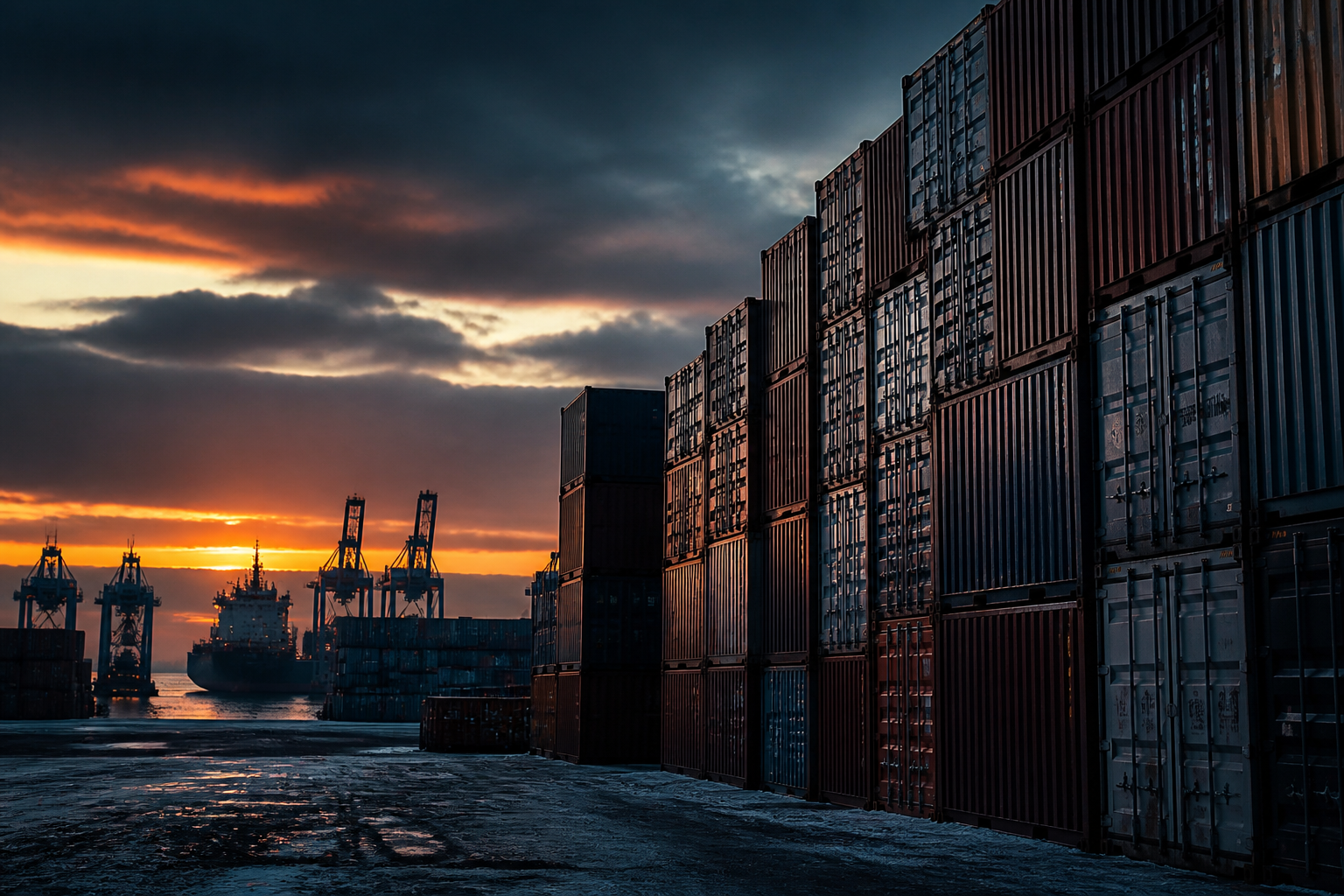
Industrial Realignment: The Return Of Economic Protectionism In A Fragmented World
A deep analytical dive into the escalating global trade wars, examining the impact of the latest US tariffs on international industry, the resilience of emerging markets, and the future of the liberal trade order.
The global industrial complex is currently navigating a period of profound structural metamorphosis, precipitated by a decisive retreat from the liberalised trade axioms that defined the late twentieth century. This shift reached a new intensity this week as the United States administration formalised a sweeping range of tariffs targeting dozens of trade partners, justifying the measures on the grounds of combating forced labour and alleged unfair competitive practices. This escalation signals more than a mere tactical adjustment in Washington; it represents a strategic pivot toward an era of managed trade and industrial regionalism. For multinational corporations that have long relied on the frictionless movement of capital and components, the certainty of the globalised supply chain has been replaced by a volatile environment where geopolitical alignment is increasingly as critical as logistical efficiency.
The Architecture of Global Disruption
The most recent directive from the White House, affecting multiple trading nations across East Asia, South Asia, and parts of Europe, marks the commencement of what is being described by market analysts as a ‘global tariff phase’. By leveraging concerns regarding labour standards and state subsidies, the administration is effectively weaponising the moral and legal frameworks of international trade to reshape the industrial map. This is not isolated protectionism; it is a calculated attempt to disentangle critical sectors from dependencies that are now perceived as national security vulnerabilities. Major industrial indices have responded with predictable trepidation, as investors calculate the cost of this decoupling. Short positions have reached record highs as the market attempts to hedge against the inflationary pressure inherent in such broad protectionist measures, with the nearly four-year bull market facing its most significant structural test to date.
At the heart of this disruption is the tension between the immediate needs of domestic manufacturing and the integrated reality of modern production. Companies operating within high-tech sectors, particularly those reliant on semiconductor fabricated components and lithium-ion storage units, find themselves caught in the crossfire of this regulatory offensive. The immediate consequence of these tariffs is a rise in the input cost for raw materials, a burden that is likely to be passed down the value chain to the consumer. However, the long-term objective of the US policy appears to be the forced repatriation of manufacturing units, a process known as 're-shoring', or at the very least, 'friend-shoring' within allied jurisdictions. This movement necessitates a massive reallocation of capital expenditure, as firms are compelled to build redundant capacity in higher-cost regions to mitigate the risk of sudden border closures or prohibitive fiscal levies.
The Transatlantic and Eurasian Response
European capitals are watching these developments with mounting concern, aware that the precedent set by US unilateralism often forces a reactive stance from Brussels. For the European Union, the challenge is twofold: maintaining an open trade relationship with the United States while preventing a total collapse of its export-led industrial engines. The automotive sector in Germany and the luxury goods markets in France are particularly exposed to any retaliatory measures that might emerge if the trade war widens. Meanwhile, in the East, the reaction has been one of defensive consolidation. While some regional partners have expressed dismay at the forced labour designations, others are repositioning their industrial output toward domestic markets and alternate trade blocs such as the Regional Comprehensive Economic Partnership (RCEP).
In the Eurasian theatre, the conflict is further complicated by the intersection of trade and actual warfare. The recent focus on Russian retail giants, such as Wildberries, highlights the expanding definition of industrial targets. As Ukrainian forces increasingly target the logistics and digital infrastructure of Russian e-commerce and distribution hubs, the line between commercial competition and military strategy has effectively disappeared. This trend of 'securitising' industry suggests that any large-scale enterprise operating in a contested geography must now account for state-level kinetic risks in addition to traditional market risks. The integration of drone technology into the disruption of supply chains represents a paradigm shift for insurers and logistics providers, who must now factor in physical destruction as a routine variable in international commerce.
Labour Standards as Geopolitical Levers
The US administration’s emphasis on forced labour as the primary justification for its latest tariff wave is a sophisticated use of ethical governance to achieve economic ends. While the moral imperatives are clear, the timing and breadth of the application suggest a broader strategic intent to handicap the industrial growth of nations that do not adhere to Western-aligned labour models. This move places immense pressure on bodies like the International Labour Organization (ILO) and the World Trade Organization (WTO) to adjudicate disputes that are as much about national identity and economic sovereignty as they are about the rights of workers. The legal complexity of proving or disproving labour malpractices across thousands of miles of opaque supply chains means that these tariffs could remain in place for years, providing a durable barrier against imports from the targeted jurisdictions.
For industrial conglomerates, this requires an unprecedented level of supply chain transparency. Tier-one and tier-two suppliers must now provide verified documentation of their labour practices, often requiring third-party audits and the implementation of blockchain-based tracking systems. The cost of compliance is significant, particularly for smaller enterprises within the supply network that may lack the administrative infrastructure to meet these rigorous reporting standards. Consequently, we are likely to witness a consolidation in the manufacturing sector, where only the largest and most technologically advanced firms can sustain the burden of compliance, further concentrating industrial power within a few dominant global players.
Market Volatility and the Investor Dilemma
On the financial front, the volatility introduced by the re-emergence of trade barriers has fundamentally altered the calculus for institutional investors. The record-high short positions reported by Yahoo Finance and major institutional desks at the end of last month reflect a profound lack of confidence in the continuity of the post-pandemic recovery. Investors are increasingly wary of the 'tariff overhang', the persistent threat of new trade restrictions that could be announced with little warning, instantly devaluing billions in market capitalisation. This uncertainty is exacerbated by the internal political climate in the United States, where the Department of Justice’s recent activities and the ongoing legal complexities surrounding the administration's power have created a sense of unpredictability in the executive branch’s economic toolkit.
Despite this, certain sectors have seen a flurry of activity as capital rotates away from globalised tech and toward domestic infrastructure and home-building. The light economic calendar for the latter half of July, featuring new home sales and weekly jobless claims, is being scrutinised for signs of a 'soft landing' amidst this trade-induced turbulence. While mortgage rates remain elevated, the push for indigenous industrial capacity is creating localized booms in construction and heavy industry. For the forward-looking investor, the opportunity lies in identifying those firms that are ahead of the curve in the re-shoring process, those that have already diversified their production bases and are less susceptible to the fiscal shocks of the transatlantic trade dispute.
The Digital Frontier and Retail Resilience
The industrial story of 2026 is incomplete without an analysis of the digital retail sector, which has become the primary battleground for market share. The scrutiny of Russian retail giants like Wildberries, often compared to Amazon, illustrates how digital platforms have become critical infrastructure. The resilience of these companies in the face of sanctions and physical conflict demonstrates the flexibility of modern retail models. However, it also invites greater state intervention. We are entering an era where governments view the data and distribution networks of large retailers as strategic assets to be protected or dismantled depending on the geopolitical winds.
In the West, this manifested in the latest DOJ subpoenas and the resulting friction with the media, highlighting the tension between the state's desire for information and the principles of corporate and journalistic independence. As industry becomes more entwined with national security, the autonomy of the private sector is increasingly compromised. The industrialist of the mid-2020s must be as much a diplomat as a businessman, navigating a world where a single tweet or a midnight executive order can render an entire supply route obsolete overnight. The premium on agility has never been higher, even as the regulatory environment becomes more rigid.
Analytical Outlook: The Era of Managed Trade
Looking toward the final quarters of 2026, the trajectory of global industry is clear: we are moving toward a period of 'managed trade' where the free market is subordinated to the interests of the nation-state. The consensus that trade is a mutually beneficial, non-zero-sum game has been effectively dismantled. In its place is a competitive landscape where industrial policy is the primary driver of economic growth. Governments around the world are expected to increase their subsidies for domestic green energy, semiconductor production, and additive manufacturing, creating a series of well-funded but isolated industrial fortresses.
For those operating within the manufacturing sphere, the immediate future holds a difficult transition period marked by higher costs and logistical complexity. However, this realignment also offers a chance for renewal. The focus on ethical labour and environmental standards, while currently used as a tool for trade war, could eventually lead to a more sustainable and humane industrial model. The challenge will be surviving the 'great fragmentation' currently underway. The winners will be those who can leverage technology to offset the costs of localization and those who understand that in the current geopolitical climate, the most important component in any supply chain is political foresight.