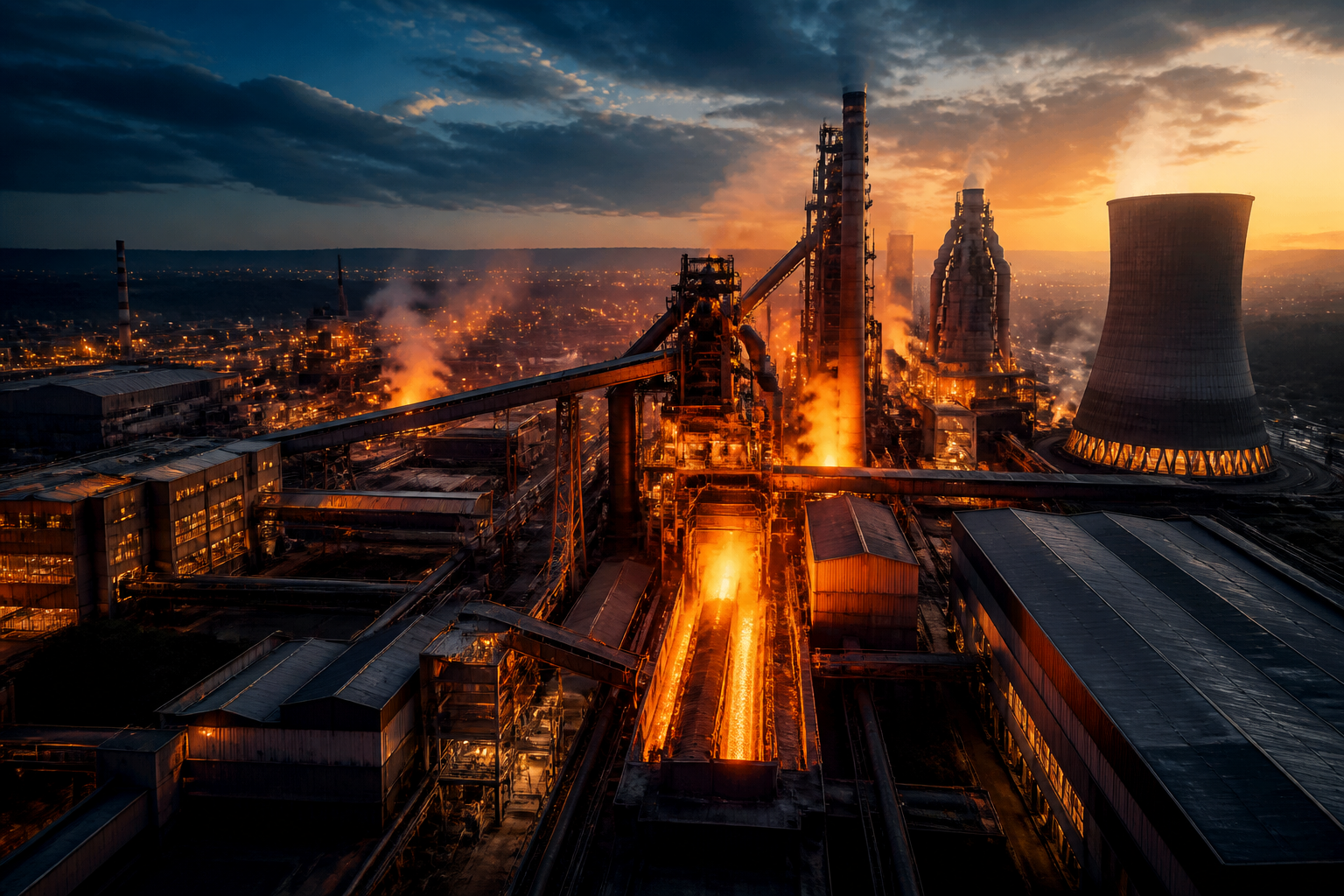
The Dirigiste Dilemma: Industrial Strategy in an Era of Fragile Globalisation
A deep analysis of the return of industrial policy in the West. We examine how the Federal Reserve's interest rate trajectory and the UK's new political landscape are reshaping the global manufacturing and tech sectors.
The contemporary global industrial landscape is currently undergoing its most profound transformation since the conclusion of the Second World War. For decades, the prevailing orthodoxy of the 'Washington Consensus' dictated that the role of the state was to retreat, leaving the efficient allocation of capital to the invisible hand of the market. However, recent geopolitical tremors, exacerbated by the fragility of supply chains exposed during the pandemic and the escalating technological rivalry between Washington and Beijing, have precipitated a resurgence of dirigisme. From the United States’ Inflation Reduction Act to the European Union’s Green Deal Investment Plan, the world’s major economies are no longer merely referees of competition but active participants in the industrial arena. This pivot reflects a fundamental reassessment of value, where national resilience and decarbonisation are now weighted as heavily as raw economic efficiency. Yet, as central banks, led by the Federal Reserve, navigate a precarious path through inflationary pressures and high interest rates, the fiscal sustainability of these state-led interventions remains a subject of intense debate among policymakers and institutional investors alike.
The Monetary Shadow Over Industrial Expansion
The trajectory of global industry remains inextricably linked to the deliberations of the Federal Open Market Committee. While the American economy has displayed a remarkable degree of resilience, the persistence of elevated interest rates continues to exert a cooling effect on capital-intensive sectors. As noted in recent deliberations by the Federal Reserve, the timing of potential rate cuts remains a point of volatility for global markets. For industrial titans, high borrowing costs are not merely an accounting inconvenience; they represent a significant barrier to the long-term capital expenditure required for the next generation of manufacturing technology. The 'higher for longer' interest rate environment has forced a de-risking of balance sheets, with firms increasingly internalising their financing or delaying ambitious greenfield projects. Consequently, the industrial sector finds itself in a state of suspended animation, awaiting a definitive signal that the cost of capital will subside sufficiently to justify the massive deployments of liquidity required for the energy transition.
The British Pivot and the European Continent
In the United Kingdom, the recent political transition under Prime Minister Keir Starmer has signaled a renewed emphasis on institutional stability and industrial partnership. The new administration faces the daunting task of revitalising a British economy that has grappled with sluggish productivity growth and the lingering complexities of post-Brexit trade relations. The proposed establishment of a National Wealth Fund suggests a move towards a more interventionist stance, aimed at crowding in private investment for critical infrastructure and emerging green industries. This aligns the UK more closely with the broader European trend of 'strategic autonomy.' Across the Channel, the European Union is attempting to reconcile its strict state-aid rules with the necessity of competing against the massive subsidies offered by China and the United States. The challenge for the Continent lies in preventing a subsidy race that could fragment the internal market while simultaneously ensuring that European industry remains a global leader in high-value manufacturing and sustainable technology.
Sovereignty as the New Economic Benchmark
The traditional metrics of industrial success, such as unit labour costs and proximity to consumer markets, are increasingly being overshadowed by the concept of 'friend-shoring.' The geopolitical friction between the West and the East has redefined the calculus of risk. Multinational corporations are no longer solely focused on cost-optimisation; they are prioritising the security of their supply chains. This shift is particularly evident in the semiconductor and electric vehicle battery sectors, where the concentration of production in East Asia is now perceived as a strategic vulnerability rather than an economic advantage. The U.S. CHIPS and Science Act represents the vanguard of this movement, attempting to repatriate the production of essential technologies that underpin everything from sophisticated weaponry to civilian telecommunications. However, this re-industrialisation comes at a cost, as the duplication of supply chains inevitably leads to higher inflationary pressures and a less efficient global division of labour.
Labour Disruption and the Productivity Paradox
Central to the future of industry is the evolving role of the workforce in an age of rapid automation and artificial intelligence. Despite the anxieties surrounding job displacement, the immediate challenge for most industrialised nations is a chronic shortage of skilled labour. Data from the global labour market indicates that the mismatch between existing skill sets and the requirements of 'Industry 4.0' is widening. While companies like Siemens and General Electric invest heavily in industrial software and additive manufacturing, the human capital required to operate these systems remains in short supply. This shortage is exerting upward pressure on wages, further complicating the inflation mandates of central banks. Furthermore, the industrial sector is the primary theatre for the application of generative AI, which promises a leap in productivity that could offset the demographic headwinds facing most developed economies. The success of this transition will depend on whether the public and private sectors can collaborate effectively on large-scale vocational retraining programmes.
Trade Barriers and the Return of Tariffs
The ghost of protectionism, once thought exorcised by the World Trade Organisation, has returned to the forefront of international commerce. The proliferation of tariffs and non-tariff barriers, particularly in the automotive and solar sectors, marks a departure from the era of hyper-globalisation. The imposition of duties on Chinese electric vehicles by both the US and the EU serves as a pragmatic admission that market forces alone cannot counter the effects of state-subsidised competition. This new trade reality presents a double-edged sword for industrial conglomerates. While domestic producers may benefit from a shielded market in the short term, the resultant increase in the price of intermediate goods can erode the competitiveness of downstream industries. Moreover, the retaliatory potential of such measures threatens to disrupt the global trade architecture that has sustained corporate earnings for decades. Navigating this web of regulatory and territorial complexity requires a level of diplomatic acumen that few corporate boards were prepared for in the preceding decade.
The Outlook for a Fragmented Prosperity
Looking ahead, the industrial world is moving towards a period of fragmented prosperity. The era of the truly 'global' company is being replaced by a more regionalised model, where production is aligned with geopolitical blocs. While this shift enhances national security and provides a buffer against external shocks, it also implies a higher cost of living and potentially slower global growth. The coming eighteen months will be critical, as the lag effects of previous monetary tightening fully manifest in the real economy. If inflation continues to moderate without precipitating a deep recession, the industrial sector may find the 'soft landing' it seeks, allowing the transition to a greener, more resilient infrastructure to accelerate. However, the risk remains that the fiscal burden of high interest rates and massive industrial subsidies will eventually test the limits of sovereign credit. In this high-stakes environment, the winners will be those industries that can marry technological innovation with a profound understanding of the new geopolitical geography.